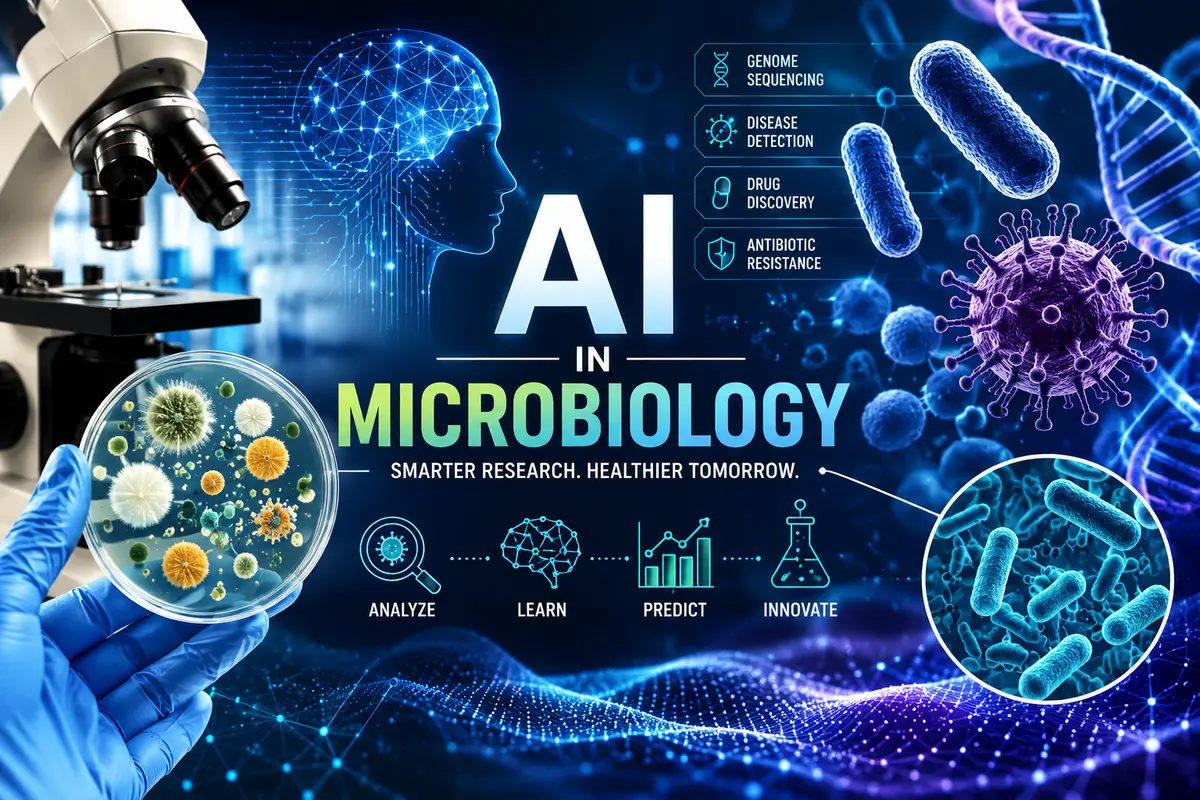
What is Artificial Intelligence in microbiology? Learn how AI helps diagnose diseases, identify microbes, predict antibiotic resistance, and transform modern healthcare.
Introduction
Imagine you visit a doctor because you have a high fever. Traditionally, a laboratory technician collects your sample, performs several tests, and waits for the microorganisms to grow before identifying the exact cause of the infection. This process can take hours or even several days. Now imagine a smart computer system that can analyze the same laboratory data within minutes, identify the disease-causing microorganism with high accuracy, and even suggest the most effective antibiotic. This is no longer science fiction—it’s the power of Artificial Intelligence (AI) in microbiology.
Just as Google Maps finds the fastest route by analyzing millions of data points in real time, Artificial Intelligence helps microbiologists analyze vast amounts of laboratory data, recognize hidden patterns, and make faster, more accurate decisions. AI is transforming microbiology by improving disease diagnosis, identifying bacteria and viruses, predicting antibiotic resistance, supporting drug discovery, and enhancing patient care.
In this article, you’ll learn what Artificial Intelligence in microbiology is, how it works, its real-world applications, benefits, challenges, and why it is becoming one of the most exciting innovations in modern medical science.
Learn more about Artificial Intelligence from IBM.
What is artificial intelligence?
The goal of the computer science field of artificial intelligence (AI) is to create intelligent systems that can carry out tasks that often call for human intelligence. Learning from data, identifying patterns, resolving issues, comprehending language, making choices, and consistently enhancing performance via experience are some of these activities.
AI systems employ algorithms and machine learning approaches to evaluate vast amounts of data, find hidden links, and make precise predictions or judgments with little assistance from humans, in contrast to conventional computer programs that adhere to predetermined instructions.
Artificial intelligence helps scientists in the discipline of microbiology by recognizing microbes, evaluating complex laboratory data, anticipating antibiotic resistance, speeding up illness diagnosis, and assisting with the creation of drugs and vaccines. AI is becoming a crucial tool in contemporary biomedical research and healthcare as a result.
Read about advances in microbial genomics and bioinformatics at NCBI.
What is Artificial Intelligence in microbiology?
The use of intelligent computer systems to assist microbiologists in the faster and more accurate detection, identification, analysis, and prediction of microbes and infectious diseases is known as artificial intelligence in microbiology.
The use of artificial intelligence (AI) technologies, including machine learning, deep learning, computer vision, and data analytics, to analyze microbiological data, identify microorganisms, diagnose infectious diseases, forecast antimicrobial resistance, and aid in the creation of novel medications and vaccines is known as AI in microbiology.
AI systems can quickly evaluate massive amounts of laboratory data, identify intricate patterns, and offer precise, data-driven insights, in contrast to conventional microbiological techniques that frequently call on operator observation and interpretation. This reduces human error and allows microbiologists to make conclusions more quickly and accurately.
AI is used in contemporary microbiology labs to identify bacteria, viruses, fungi, and parasites from microscopic images; automate laboratory processes; analyze genomic sequences; forecast disease outbreaks; track antimicrobial resistance; and help physicians choose the best course of action. As a result, AI has developed into a potent instrument for enhancing customized healthcare, speeding up research, and increasing diagnostic accuracy.
How Does AI Work in Microbiology?
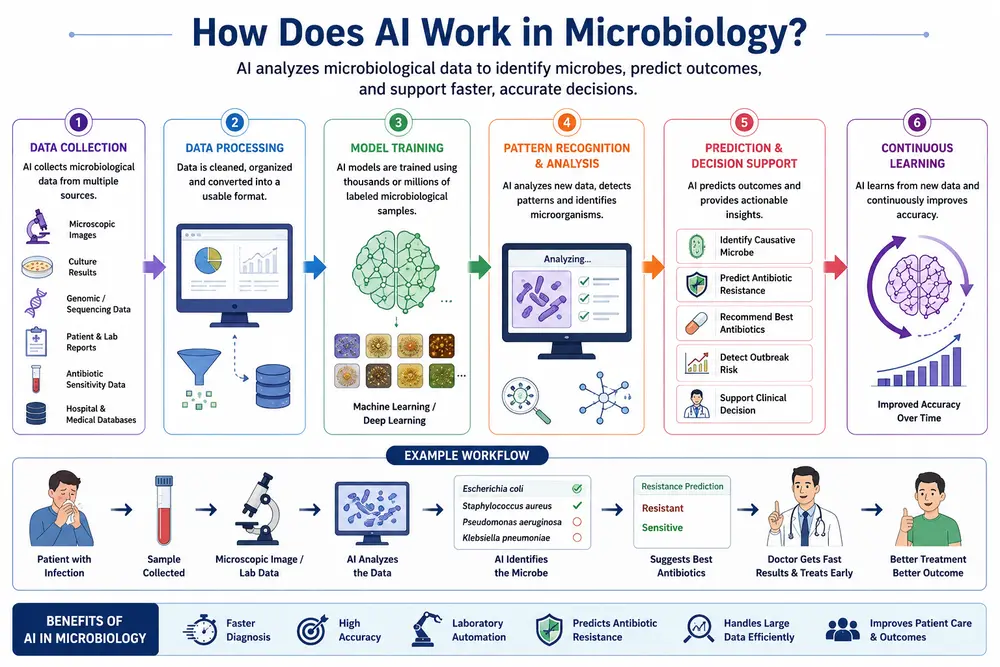
In order to find trends, make predictions, and help scientists make quicker and more accurate judgments, artificial intelligence (AI) in microbiology gathers and analyzes vast amounts of microbiological data. AI uses sophisticated algorithms to process laboratory data, identify microorganisms, and quickly deliver insightful information rather than depending just on human observation.
Step 1: Data Collection
Gathering microbiological information from several sources, including:
- Microscopic pictures of viruses, parasites, fungi, and bacteria.
- Results of the culture test.
- Data from genome and DNA sequencing.
- Laboratory reports for patients.
- Results of tests for antibiotic susceptibility.
- Hospital and medical databases.
The AI system performs better with more and more accurate datasets.
Step 2: Data Processing
The gathered data is arranged, cleaned, and transformed into a format that AI systems can comprehend. This phase enhances the quality of analysis by eliminating redundant, inaccurate, or missing data.
Step 3: Machine Learning Model Training
Thousands or even millions of previously labeled microbiological samples are used to train AI systems. The model gains the ability to identify distinctive traits of various bacteria and illness patterns throughout training.
For instance, the AI model learns to differentiate between Escherichia coli and Staphylococcus aureus based on their size, shape, staining properties, and microscopic appearance after examining thousands of microscope images.
Step 4: Pattern Recognition and Analysis
After being educated, AI automatically examines fresh lab data and contrasts it with previously identified patterns. It can identify germs, find commonalities, and spot anomalies that might be hard for the human eye to see.
The speed and precision of microbiological examination are greatly increased by this procedure.
Step 5: Prediction and Decision Support
With the data analyzed, AI is able to:
- Determine which microbes cause sickness.
- Antimicrobial resistance prediction
- Make recommendations for the best antibiotics.
- Early detection of disease outbreaks
- Help medical professionals choose the right remedies.
These forecasts aid medical professionals and microbiologists in making well-informed clinical judgments.
Step 6: Continuous Learning
AI’s capacity to advance over time is one of its biggest advantages. The AI system keeps learning as more laboratory data becomes available, improving its accuracy and adjusting to trends of antibiotic resistance and newly emerging diseases.
Process explained with Example
Imagine a patient with a severe bloodstream infection. Traditionally, laboratory technicians examine cultures and microscopic slides manually, which may take one to three days. An AI-powered microbiology system can analyze digital microscope images, compare them with thousands of stored examples, identify the microorganism within minutes, predict antibiotic resistance, and recommend suitable treatment options. This allows doctors to begin appropriate therapy much earlier, improving patient outcomes.
History and Evolution of AI in Microbiology
1950s–1960s: AI’s beginnings
- After Alan Turing introduced the idea of machine intelligence, AI became a recognized scientific field.
- Logical reasoning and problem-solving were the main topics of early AI research.
- During this time, there were no direct applications in microbiology.
1970s and 1980s—Expert Systems
- Expert systems powered by AI were brought to the medical field.
- These systems helped diagnose infectious diseases by using pre-established rules.
- Computer-assisted interpretation of laboratory results was first used in microbiology labs.
1990s: The Age of Digital Laboratories
- Computerized databases and laboratory information systems were implemented in clinical microbiology labs.
- AI algorithms were progressively introduced for preliminary interpretation and data arrangement.
- Systems for automated microbial identification have grown in popularity.
2000s-Machine Learning
- Large-scale microbiological dataset analysis was enhanced using machine learning approaches.
- AI started to assist: identification of bacteria, testing for antimicrobial susceptibility, analysis of DNA sequences, and monitoring epidemiology.
2010s: Revolution in Deep Learning
- Image recognition was greatly improved by deep learning.
- AI correctly assessed: slides stained with Gram, morphology of colonies, microscopic pictures, and plates of culture.
- AI and whole genome sequencing made it possible to quickly identify pathogens and look into outbreaks.
2020s–Present
- AI is crucial to quick identification of pathogens, antimicrobial resistance prediction, drug development, development of vaccines, support for clinical decision-making, monitoring pandemics (such as COVID-19), analysis of metagenomics, and accurate medical care.
Why is AI Needed in Modern Microbiology?
Large volumes of data are produced by modern microbiology through genome sequencing, molecular diagnostics, culture methods, and microscopy. Microbiologists may more quickly and reliably examine this complex data with the aid of artificial intelligence (AI), which enhances patient care, disease detection, and laboratory efficiency. Need for AI in Modern Microbiology:
- Quick Microorganism Identification: AI shortens the time needed for diagnosis by rapidly identifying bacteria, viruses, fungi, and parasites using microscopic images, culture plates, and molecular data.
- Enhanced Diagnostic Precision: High-precision analysis of lab results by machine learning algorithms reduces human error and facilitates precise identification of infectious pathogens.
- Large-Scale Data Management: Large datasets from metagenomics, genomic sequencing, and lab information systems are produced by modern microbiology. For useful clinical and scientific applications, AI effectively processes and interprets this data.
- Antimicrobial Resistance (AMR) Prediction: AI predicts antibiotic resistance by analyzing microbial genetic data and susceptibility patterns, assisting medical professionals in selecting the best course of action.
- Quicker Identification of Illnesses: By identifying trends in lab data, imaging, and patient records, artificial intelligence (AI) facilitates the early detection of infectious diseases and permits prompt medical intervention.
- Laboratory Work Automation: AI reduces human labor and boosts laboratory efficiency by enabling automated colony counting, microbiological identification, picture analysis, and report preparation.
- Assistance in the Development of Drugs and Vaccines: By evaluating biological data and forecasting possible treatment targets, AI speeds up the development of novel antimicrobial medications and vaccines.
- Public Health and Outbreak Surveillance: AI assists public health authorities in putting preventive measures into place by tracking the transmission of pathogens, monitoring disease trends, and forecasting epidemics.
- Accurate Healthcare: AI combines clinical data unique to each patient with microbiological discoveries to promote individualized treatment plans and enhance patient outcomes.
- Progress in Research: AI helps researchers comprehend host-pathogen relationships, find new biomarkers, identify novel microorganisms, and analyze complex biological datasets.
Applications of AI in Microbiology
By increasing the speed, accuracy, and efficiency of laboratory diagnosis, microbial identification, antibiotic resistance prediction, and infectious disease surveillance, artificial intelligence (AI) has emerged as a crucial tool in contemporary microbiology. Large and complicated microbiological datasets that are challenging to comprehend using traditional techniques are analyzed by AI.
- Identification of Microorganisms: AI employs microscopic images, culture features, biochemical test findings, and molecular data to help identify bacteria, viruses, fungi, and parasites quickly and accurately.
- Automated Microscopy: With little assistance from humans, deep learning algorithms identify and categorize microorganisms using Gram-stained smears, blood smears, and other microscopic pictures.
- Infectious Disease Clinical Diagnosis: AI supports early and precise diagnosis of infectious diseases by integrating test results, patient history, and clinical symptoms.
- Prediction of Antimicrobial Resistance (AMR): By evaluating microbial genomes and antibiotic sensitivity data, AI forecasts antimicrobial resistance, assisting medical professionals in choosing the best course of treatment.
- Analysis of the Genome and Metagenome: Large-scale genomic and metagenomic information is processed by AI to identify infections, find mutations, categorize microbes, and investigate microbial diversity.
- Drug Development and Discovery: By detecting possible therapeutic targets and forecasting drug–microbe interactions, AI speeds up the discovery of novel antibiotics and antimicrobial substances.
- Development of Vaccines: AI shortens the time needed for vaccine development by identifying antigenic proteins, forecasting immune responses, and optimizing vaccine design.
- Automation in Laboratories: AI increases laboratory efficiency by enabling automated colony counting, culture interpretation, quality control, workflow management, and report production.
- Monitoring Diseases and Forecasting Outbreaks: AI keeps an eye on epidemiological data to track the spread of pathogens, identify disease outbreaks, and assist with public health decision-making.
- Customized Healthcare: AI recommends customized treatment plans and enhances patient outcomes by fusing clinical data unique to each patient with microbiological results.
- Data analysis and bioinformatics: AI supports microbiological research by analyzing intricate biological information, protein structures, gene expression levels, and microbial interactions.
- Microbiology of the Environment and Food: AI is used to monitor water quality, identify foodborne pathogens, examine environmental microbes, and enhance food safety and quality management.
AI in Clinical Microbiology
By increasing the speed, precision, and effectiveness of infectious illness diagnosis, artificial intelligence (AI) is revolutionizing clinical microbiology. AI analyzes test findings, detects diseases, forecasts antibiotic resistance, and helps physicians make well-informed treatment decisions by combining machine learning, deep learning, and data analytics.
- Quick Pathogen Recognition: AI swiftly and precisely identifies bacteria, viruses, fungi, and parasites by analyzing data from culture plates, microscopy, biochemical testing, and molecular diagnostic methods.
- Automated Microscopy: In order to identify microorganisms with less human error and quicker reporting, deep learning algorithms analyze blood smears, Gram-stained smears, and other clinical specimens.
- Interpretation of Cultural Findings: AI improves laboratory throughput and diagnostic precision by identifying colony morphology, counting colonies, and evaluating culture properties.
- Testing for Antimicrobial Susceptibility (AST): AI helps physicians choose the best antimicrobial treatment by analyzing data on antimicrobial susceptibility and forecasting patterns of antibiotic resistance.
- Healthcare-Associated Infection (HAI) Detection: AI supports infection prevention and control initiatives by tracking hospital laboratory data and patient information to detect healthcare-associated infections early.
- Molecular Diagnostics: AI quickly detects and characterizes infectious agents by interpreting metagenomic data, PCR, real-time PCR, and next-generation sequencing (NGS).
- Monitoring and Identification of Outbreaks: AI monitors disease transmission, detects outbreaks, and supports public health surveillance by analyzing laboratory and epidemiological data.
- Assistance with Clinical Decisions: AI helps medical professionals with diagnosis and therapy planning by integrating microbiological discoveries with patient history, clinical symptoms, and laboratory reports.
- Automation in Laboratories: By automating specimen processing, colony counting, image analysis, quality control, and report production, artificial intelligence (AI) increases laboratory productivity.
- Tailored Care: AI improves patient outcomes and decreases unnecessary antibiotic use by combining microbiological and clinical data to prescribe tailored antimicrobial therapy.
AI in Disease Diagnosis
Because it allows for quick, precise, and data-driven examination of clinical and laboratory data, artificial intelligence (AI) has emerged as a crucial tool in the diagnosis of diseases. AI in microbiology combines patient data, lab test results, medical imaging, and molecular diagnostics to identify infectious infections early and help medical personnel make prompt treatment decisions.
- Early Illness Identification: AI detects infectious illnesses early on, enabling timely treatment and lowering disease consequences, by analyzing clinical signs, test results, and patient history.
- Quick Identification of Pathogens: AI speeds up the diagnosis process by helping to detect bacteria, viruses, fungi, and parasites from microscopy, biochemical testing, culture results, and molecular diagnostic methods.
- Analysis of Medical Images: Gram-stained smears, blood smears, chest X-rays, CT scans, and microscopic pictures are analyzed using deep learning algorithms to identify aberrant results and disease-causing microorganisms with high accuracy.
- Support for Molecular Diagnostics: For quick and precise pathogen detection, artificial intelligence (AI) analyzes data produced by Polymerase Chain Reaction (PCR), real-time PCR, next-generation sequencing (NGS), and other molecular techniques.
- Antimicrobial Resistance Prediction: AI helps doctors administer effective antimicrobial medication by analyzing microbial genomes and antimicrobial susceptibility data to forecast trends of antibiotic resistance.
- Systems for Clinical Decision Support (CDSS): AI helps medical personnel choose the right diagnostic tests and treatment regimens by integrating laboratory reports, microbiological discoveries, and patient medical information.
- Monitoring Diseases and Identifying Outbreaks: AI tracks pathogen transmission, detects illness outbreaks, and supports public health initiatives by monitoring laboratory and epidemiological data.
- Customized Diagnosis: AI creates customized diagnostic evaluations and treatment suggestions by fusing microbiological data with patient-specific clinical information.
Explore infectious disease resources from the CDC.
AI in Microbial Identification
By facilitating the quick, precise, and automated detection of microorganisms, artificial intelligence (AI) has greatly enhanced microbiological identification. AI is more effective than traditional methods for identifying bacteria, viruses, fungi, and parasites by analyzing microbiological data from microscopy, culture characteristics, biochemical tests, and genetic procedures.
- Automated Microscopic Examination: AI analyzes blood smears, Gram-stained smears, and other microscopic images using deep learning algorithms to quickly identify and categorize bacteria.
- Using Culture Plates for Identification: AI aids in the precise identification of microbiological species by identifying colony morphology, color, size, texture, hemolysis patterns, and growth parameters on culture media.
- Examination of Biochemical Test Outcomes: AI accurately identifies microorganisms and minimizes human interpretation errors by interpreting biological responses and comparing them with reference databases.
- Identification of Molecules: AI quickly and accurately identifies microorganisms by analyzing data produced by Polymerase Chain Reaction (PCR), real-time PCR, DNA sequencing, and next-generation sequencing (NGS).
- Mass Spectrometry with MALDI-TOF: For quick microbiological identification, AI analyzes protein fingerprint spectra produced by MALDI-TOF mass spectrometry and compares them with reference databases.
- Analysis of Metagenomics: AI analyzes metagenomic sequencing data to directly identify microorganisms from complex clinical or environmental samples without the need for culture.
- Identification of New and Uncommon Pathogens: By identifying intricate patterns in genomic and microbiological databases, AI can detect uncommon or recently discovered infections.
- Assistance with Clinical Decisions: AI helps physicians choose the right antibiotic treatment by combining laboratory results, patient data, and microbial identification results.
AI in Antibiotic Resistance Prediction
A significant global public health concern is antibiotic resistance, which is brought on by the growth of bacteria that are resistant to widely used antibiotics. By evaluating microbiological, genomic, and clinical data, artificial intelligence (AI) aids in the prediction of antimicrobial resistance (AMR), facilitating the early identification of resistant organisms and assisting with the proper selection of antibiotics.
- Analysis of Antimicrobial Susceptibility Data: Antimicrobial susceptibility testing (AST) findings are analyzed by AI to find patterns of resistance and forecast how well antibiotics will work against particular microbes.
- Genomic Analysis: In order to identify resistance genes, mutations, and genetic markers linked to antibiotic resistance, AI analyzes bacterial genome sequences.
- Drug Resistance Prediction: Even before traditional laboratory results are available, machine learning models estimate whether a bacterium is likely to be susceptible or resistant to specific medications.
- Early Multidrug-Resistant Organism (MDRO) Detection: AI assists in identifying germs that are resistant to multiple drugs, including methicillin-resistant MRSA, or Staphylococcus aureus; enterococci resistant to vancomycin (VRE); and enterobacterales resistant to carbapenem (CRE). This facilitates prompt patient care and infection control.
- Assistance with Clinical Decisions: AI recommends the best antibiotic treatment by combining microbiological results, patient history, and area resistance patterns.
- Monitoring Antimicrobial Resistance: AI keeps an eye on resistance patterns in communities and hospitals, assisting public health officials in identifying new resistance and putting preventative measures in place.
- Antibiotic Stewardship Optimization: By encouraging the prudent use of antibiotics, cutting down on needless prescriptions, and preventing the emergence of resistance, AI aids antimicrobial stewardship initiatives.
- Discovery of Drugs: AI speeds up the discovery of antibiotics by helping researchers find novel antimicrobial chemicals and forecast how well they will work against resistant microbes.
The World Health Organization provides detailed information on antimicrobial resistance.
AI in Drug Discovery
Drug discovery benefits greatly from artificial intelligence (AI), which speeds up the process of finding and creating novel medications. Large datasets, such as chemical compounds, protein structures, and microbial genomes, are analyzed by AI to find possible therapeutic targets and forecast the efficacy and safety of novel drug candidates. Additionally, it assists scientists in creating novel antibiotics, refining medication compounds, and cutting down on the time and expense involved in drug development.
AI is very helpful in microbiology when it comes to finding new antimicrobial drugs to fight microbes that are resistant to antibiotics.
- Drug Target Identification: AI examines proteins, metabolic pathways, and microbial genomes to find possible therapeutic targets necessary for microbes to survive and proliferate.
- Finding Novel Antibiotics: Researchers can find novel antibiotics to combat resistant bacteria by using machine learning algorithms to examine millions of chemical compounds for molecules with antimicrobial activity.
- Design and Optimization of Drugs: AI helps researchers optimize compounds prior to laboratory testing by predicting the chemical structure, biological activity, and toxicity of therapeutic candidates.
- Drug-Target Interaction Prediction: AI models assist in finding the best therapeutic possibilities by forecasting how medications will interact with microbial proteins and enzymes.
- Repurposing Drugs: AI dramatically cuts down on development time and expense by identifying currently approved medications that might be useful against novel or emerging infectious diseases.
- Online Screening: AI reduces the amount of compounds that need to be tested experimentally by quickly screening vast chemical libraries to find interesting drug candidates for laboratory assessment.
- Drug Toxicity Prediction: Prior to clinical trials, AI assesses the safety profile of new medications by forecasting toxicity and potential side effects.
- Customized Healthcare: AI combines clinical, genetic, and microbiological data to suggest tailored antimicrobial treatments based on the unique characteristics of each patient.
- Clinical Trial Acceleration: AI increases the effectiveness of drug development by identifying appropriate patients, forecasting treatment outcomes, and analyzing clinical trial data.
AI in Microbiome Research
The community of microorganisms (bacteria, fungi, viruses, and archaea) and their genetic material found in a particular habitat, such as the human gut, skin, oral cavity, or soil, is referred to as the microbiome. By detecting microbial communities, evaluating huge and complicated sequencing information, and comprehending their function in health, disease, and the environment, artificial intelligence (AI) has emerged as a crucial tool in microbiome research.
- Microbiome Data Analysis: To identify microbial species and calculate their abundance, artificial intelligence (AI) analyzes massive datasets produced by metagenomic research and next-generation sequencing (NGS).
- Classification of Microbial Communities: Researchers can compare healthy and pathological microbiomes by using machine learning algorithms that categorize microbial communities according to their diversity and composition.
- Predicting Diseases: AI enables early diagnosis and risk assessment by identifying microbiome patterns linked to conditions like colorectal cancer, obesity, diabetes, and inflammatory bowel disease.
- Identification of Biomarkers: AI finds microbial biomarkers that can be used to diagnose diseases, predict outcomes, and track how well treatments are working.
- Microbiome Functional Analysis: By examining genes and metabolic pathways, AI forecasts the biological activities and metabolic processes of microbial populations.
- Customized Healthcare: AI supports individualized treatment plans, such as food advice and microbiome-based treatments, by combining microbiome data with clinical and genomic data.
- Development of Drugs and Probiotics: AI supports the creation of probiotics, prebiotics, and medications that target the microbiome by identifying helpful microbes and forecasting their therapeutic potential.
- Applications in Agriculture and the Environment: AI monitors environmental health, enhances crop yield, and promotes sustainable agriculture by analyzing soil, water, and plant microbiomes.
AI in Food Microbiology
In food microbiology, artificial intelligence (AI) is being utilized more and more to enhance food safety, quality assurance, and the quick identification of foodborne pathogens. AI evaluates industrial, environmental, and microbiological data to detect contamination, forecast microbial development, and aid in food sector decision-making. This guarantees adherence to food safety regulations and minimizes foodborne infections.
- Foodborne Pathogen Identification: AI uses genomic data, pictures, and microbiological test results to quickly identify foodborne diseases like Escherichia coli, Salmonella, Listeria monocytogenes, and Campylobacter.
- Microbial Growth Prediction: The growth and survival of microorganisms under various storage circumstances, such as temperature, pH, moisture, and packing, are predicted by machine learning models.
- Forecast for Shelf Life: AI helps manufacturers cut down on food waste by estimating the shelf life of food goods by examining environmental factors and microbiological development patterns.
- Monitoring Food Quality: To guarantee food safety, AI continuously assesses microbiological quality during food production, processing, storage, and transportation.
- Automated Analysis of Images: AI quickly identifies and counts microorganisms by analyzing microscopic pictures, culture plates, and colony morphology.
- Evaluation of Risk: AI supports preventive food safety measures by assessing contamination risks through the analysis of manufacturing processes, environmental conditions, and historical microbiological data.
- Traceability and Outbreak Detection: By evaluating epidemiological and microbiological data, AI assists in locating the origin of foodborne illness outbreaks, facilitating quick product recalls and outbreak management.
- Automation in Laboratories: AI increases laboratory productivity and lowers human error by automating colony counts, microbiological identification, data analysis, and report preparation.
AI in Environmental Microbiology
Environmental microbiology is using artificial intelligence (AI) more and more to investigate microorganisms found in soil, water, air, and other habitats. Large environmental and microbiological datasets are analyzed by AI in order to detect microbial populations, track environmental quality, forecast pollution, and aid in the sustainable management of natural resources. Compared to traditional procedures, it allows for faster and more precise analysis.
- Examining Microbial Communities in the Environment: AI helps researchers comprehend microbial diversity and ecosystem processes by analyzing metagenomic and sequencing data to identify microorganisms found in soil, water, air, and other environmental samples.
- Monitoring Water Quality: By evaluating microbiological and environmental data, AI finds microbial contamination in wastewater and drinking water, allowing for the early detection of waterborne pathogens.
- Analysis of the Soil Microbiome: In order to measure soil health, nutrient cycling, and agricultural productivity, machine learning algorithms analyze soil microbial populations.
- The use of bioremediation: AI finds microbes that can break down contaminants, including heavy metals, plastics, pesticides, and petroleum hydrocarbons, enhancing bioremediation techniques.
- Monitoring of Pollution: AI tracks changes in ecosystems brought on by industrial and agricultural activity and forecasts how environmental pollution may affect microbial populations.
- Research on Climate Change: AI helps scientists comprehend microbial contributions to climate change by investigating the function of environmental microbes in the carbon, nitrogen, and methane cycles.
- Monitoring of Diseases: AI supports early warning systems for disease outbreaks by monitoring environmental samples for infections that could endanger the health of humans, animals, and plants.
- Analysis of Environmental Data: AI combines environmental, chemical, and microbiological databases to find trends, forecast ecological shifts, and aid in environmental decision-making.
AI in Laboratory Automation
By increasing the speed, precision, and productivity of microbiology labs, artificial intelligence (AI) is revolutionizing laboratory automation. AI automates standard laboratory processes such specimen processing, microbial identification, colony counting, antibiotic susceptibility testing, and report production by combining machine learning, robotics, digital imagery, and laboratory information systems (LIS). This promotes prompt clinical decision-making, lowers human error, and boosts productivity.
- Automated Processing of Specimens: Standardized laboratory procedures are ensured by AI-enabled robotic devices that automate specimen receiving, labeling, inoculation, streaking, incubation, and sample tracking.
- Automated Colony Counting and Detection: AI reduces human labor by accurately and consistently detecting, counting, and classifying microbial colonies from digital photos of culture plates.
- Identification of Microorganisms: AI employs microscope images, colony morphology, biochemical test findings, and molecular diagnostic data to identify bacteria, fungi, viruses, and parasites.
- Automated Testing for Antimicrobial Susceptibility (AST): AI helps microbiologists choose the best antimicrobial treatment, anticipates resistance trends, and evaluates antimicrobial susceptibility test results.
- Electronic Microscopy: For quick microorganism identification and categorization, deep learning algorithms examine Gram-stained smears and other microscopic preparations.
- Information Management in Laboratories: AI works in tandem with Laboratory Information Systems (LIS) to quickly generate reports, monitor workflow, validate results, and organize laboratory data.
- Error detection and quality control: AI continuously keeps an eye on laboratory procedures to spot anomalous test findings, find instrument flaws, and guarantee adherence to quality control requirements.
- Report Creation and Assistance with Decisions: AI helps microbiologists and physicians make decisions by automatically compiling laboratory results into standardized reports.
Benefits of AI in Microbiology
By increasing the speed, accuracy, and efficiency of laboratory diagnosis, microbial identification, antibiotic resistance prediction, and research, artificial intelligence (AI) has emerged as a crucial tool in contemporary microbiology. AI facilitates laboratory automation, handles massive and intricate microbiological datasets, and helps medical professionals make evidence-based decisions.
- Quick Identification of Microorganisms: Using microscopy, culture characteristics, biochemical testing, and molecular diagnostic data, AI makes it possible to quickly and accurately identify bacteria, viruses, fungi, and parasites.
- Enhanced Diagnostic Precision: By analyzing laboratory and clinical data, machine learning algorithms decrease human error and increase the precision of infectious illness diagnosis.
- Early Identification of Diseases: By identifying minute patterns in microbiological and clinical data, AI can identify infectious diseases early on and enable prompt treatment.
- Antimicrobial Resistance Prediction: By evaluating genetic and antimicrobial susceptibility data, AI forecasts antimicrobial resistance (AMR), assisting medical professionals in choosing the best medications.
- Automation in Laboratories: AI increases laboratory productivity by automating repetitive operations like specimen processing, colony counting, image analysis, microbiological identification, and report preparation.
- Effective Examination of Big Data: AI quickly examines microbial, metagenomic, and genomic datasets that are challenging to understand with traditional techniques.
- Development of Drugs and Vaccines: By discovering pharmacological targets and forecasting biological action, AI expedites the development of novel antibiotics, antimicrobial agents, and vaccines.
- Monitoring and Controlling Diseases: AI supports public health initiatives, including infection control, by tracking pathogen transmission, identifying outbreaks, and monitoring trends in infectious diseases.
- Customized Healthcare: AI combines clinical data unique to each patient with microbiological results to suggest tailored treatment plans and enhance patient outcomes.
- Assistance with Innovation and Research: AI advances microbiological research by helping researchers investigate microbial genetics, host-pathogen interactions, microbial ecology, and biomarker identification.
Limitations and Challenges
By enhancing illness diagnosis, microbial identification, laboratory automation, and antimicrobial resistance prediction, artificial intelligence (AI) has completely transformed microbiology. But despite all of its benefits, AI has a number of drawbacks and difficulties with regard to data quality, infrastructure, cost, ethics, and clinical application. The safe and efficient application of AI in microbiology depends on resolving these issues.
- The Need for Superior Data: For training, AI systems need big, precise, and well-annotated microbiological datasets. The precision and dependability of AI predictions can be diminished by inadequate or low-quality data.
- Expensive Implementation: Not all laboratories can afford the substantial financial outlay needed to deploy AI software, automated lab equipment, high-performance computers, and maintenance systems.
- Security and Privacy of Data: Sensitive patient and lab data is processed by AI systems. One of the biggest challenges is safeguarding private data from cyber attacks and illegal access.
- The Need for Qualified Experts: AI systems must be operated and maintained by qualified microbiologists, bioinformaticians, data scientists, and information technology specialists in order to be implemented successfully.
- Limited Applicability: AI models that were trained on data from one lab or area could not function as effectively in other populations or lab environments.
- Potential for Diagnostic Mistakes: Faulty predictions, false-positive or false-negative results, and improper therapeutic judgments can all result from biased or faulty training data.
- Reliance on Cutting-Edge Infrastructure: In environments with limited resources, AI applications might not have access to dependable computers, digital lab equipment, internet connectivity, and laboratory information systems.
- Regulatory and Ethical Issues: To guarantee patient safety and accountability, the clinical application of AI necessitates appropriate validation, regulatory approval, transparency, and ethical principles.
- Constant Updating Is Necessary: New infections and antimicrobial resistance mechanisms frequently arise as a result of the constant evolution of microorganisms. For AI models to remain accurate, they need to be updated often.
- Human expertise cannot be replaced: The expertise, experience, and clinical judgment of microbiologists and other medical professionals cannot be replaced by AI; it is only a decision-support tool.
Future Scope of AI in Microbiology
It is anticipated that artificial intelligence (AI) will become more significant in microbiology in the future by enhancing public health surveillance, drug discovery, laboratory automation, and illness detection. AI applications in microbiological research and clinical practice will be further expanded by developments in machine learning, genomics, and bioinformatics.
- Faster Disease Diagnosis: AI will make it possible to use cutting-edge diagnostic technology to quickly and accurately identify infectious diseases.
- Advanced Microbial Identification: Using automated image analysis and genome sequencing, AI will enhance the identification of bacteria, viruses, fungi, and parasites.
- Precision Medicine: By combining clinical, genetic, and microbiological data, AI will enable individualized treatment.
- Finding New Antibiotics and Vaccinations: AI will hasten the creation of cutting-edge antimicrobial medications and vaccinations to fight newly emerging infectious diseases.
- Enhanced Laboratory Automation: Microbial identification, specimen processing, antimicrobial susceptibility testing, and report creation will all be automated by AI-powered labs.
- Antimicrobial Resistance (AMR) Prediction: AI will enhance early AMR prediction and monitoring, facilitating efficient antibiotic management.
- Disease Surveillance and Outbreak Prediction: AI will improve worldwide surveillance systems by tracking the spread of infectious illnesses and early outbreak detection.
- Microbiome and Genomic Research: AI will progress metagenomics, microbial genomics, and microbiome studies, resulting in novel findings in environmental microbiology and human health.
Read the latest microbiology research published by ASM.
AI vs Traditional Microbiology (comparison table)
| Aspect | AI-Based Microbiology | Traditional Microbiology |
|---|---|---|
| Approach | Uses Artificial Intelligence, machine learning, and automation | Relies on manual laboratory techniques and expert interpretation |
| Microbial Identification | Rapid and automated identification using image analysis, genomics, and AI algorithms | Identification based on culture, microscopy, and biochemical tests |
| Speed of Diagnosis | Faster results may be available within minutes to hours | Slower; often requires 24–72 hours or longer |
| Accuracy | High accuracy with quality data and trained AI models | Depends on laboratory procedures and microbiologist’s expertise |
| Data Analysis | Efficiently analyzes large genomic and microbiological datasets | Manual analysis; limited ability to process large datasets |
| Laboratory Automation | Highly automated specimen processing, colony counting, and reporting | Mostly manual with limited automation |
| Antimicrobial Resistance Prediction | Predicts resistance using genomic and AI-based analysis | Based mainly on conventional antimicrobial susceptibility testing (AST) |
| Human Error | Reduced through automation and standardized analysis | Greater possibility of manual interpretation errors |
| Cost | High initial setup and maintenance costs | Lower initial investment but higher labor requirements |
| Role of Experts | Supports microbiologists in decision-making | Relies primarily on the knowledge and experience of microbiologists |
| Applications | Clinical diagnostics, genomics, microbiome research, outbreak surveillance, drug discovery | Routine diagnosis, microbial isolation, culture, staining, and biochemical identification |
| Limitations | Requires high-quality data, advanced infrastructure, and regular model updates | Time-consuming, labor-intensive, and slower for complex analyses |
Conclusion
In contemporary microbiology, artificial intelligence (AI) has become one of the most revolutionary technologies. AI has greatly increased the speed, accuracy, and efficiency of disease diagnosis, microbial identification, antimicrobial resistance prediction, drug discovery, microbiome research, food and environmental microbiology, and laboratory automation by fusing machine learning, deep learning, computer vision, and data analytics with traditional microbiological techniques.
In the end, AI improves patient care and public health by enabling microbiologists to examine large and complicated information, automate repetitive laboratory processes, and make evidence-based clinical decisions.
Despite these outstanding developments, AI still confronts significant obstacles, such as the requirement for high-quality data, sophisticated infrastructure, qualified personnel, ethical issues, data protection, and ongoing model validation. Therefore, rather than taking the role of microbiologists’ knowledge, skills, and clinical judgment, AI should be seen as a potent decision-support tool.
Future developments in genomics, bioinformatics, artificial intelligence, and digital healthcare are anticipated to further transform microbiology by facilitating quicker diagnosis, personalized medicine, intelligent lab systems, and more efficient infectious disease prevention and control. AI is so well-positioned to become a crucial part of contemporary microbiology, spurring advancements in clinical diagnosis, research, and international healthcare.
Frequently Asked Questions
1. How is artificial intelligence used in microbiology?
Answer: Artificial Intelligence (AI) is used in microbiology to rapidly identify microorganisms, diagnose infectious diseases, predict antimicrobial resistance, analyze genomic and microbiome data, automate laboratory procedures, assist in drug and vaccine discovery, and monitor disease outbreaks. By analyzing large amounts of microbiological data quickly and accurately, AI improves diagnostic accuracy, laboratory efficiency, and patient care.
2. Can AI take over microbiology?
Answer: No. Artificial Intelligence (AI) cannot completely take over microbiology. AI is a powerful tool that assists microbiologists by automating routine laboratory tasks, analyzing complex data, and improving diagnostic accuracy. However, human expertise is still essential for interpreting results, making clinical decisions, solving complex cases, and ensuring patient safety. Therefore, AI complements microbiologists rather than replaces them.
3. What is the definition of artificial intelligence?
Answer: Artificial Intelligence (AI) is a branch of computer science that enables machines and computer systems to perform tasks that normally require human intelligence, such as learning, reasoning, problem-solving, decision-making, and pattern recognition
4. Is there a future for microbiology?
Answer: Yes. Microbiology has a bright future due to advances in Artificial Intelligence (AI), genomics, biotechnology, precision medicine, vaccine development, and infectious disease research. Microbiologists will continue to play a vital role in healthcare, pharmaceuticals, food safety, environmental protection, and public health.
5. What is the future of AI in microbiology?
Answer: The future includes faster disease diagnosis, precision medicine, laboratory automation, improved drug discovery, advanced microbial identification, and better outbreak surveillance.
References
- Prescott’s Microbiology. (2020). Prescott’s Microbiology (11th ed.). McGraw-Hill Education. Brock Biology of Microorganisms. (2021).
- Brock Biology of Microorganisms (16th ed.). Pearson Education. Jawetz, Melnick & Adelberg’s Medical Microbiology. (2023).
- Jawetz, Melnick & Adelberg’s Medical Microbiology (29th ed.). McGraw-Hill Education. Bailey & Scott’s Diagnostic Microbiology. (2021).
- Bailey & Scott’s Diagnostic Microbiology (15th ed.). Elsevier.
- Manual of Clinical Microbiology. (2019). American Society for Microbiology (ASM) Press.
- Food Microbiology. (Latest Edition). McGraw-Hill Education.
- Modern Food Microbiology. (Latest Edition). Springer.
- Environmental Microbiology (3rd ed.). Academic Press.
- Artificial Intelligence: A Modern Approach. (2021). Pearson Education.
- World Health Organization. Antimicrobial Resistance Reports.
- Centers for Disease Control and Prevention. Antibiotic Resistance Threats Reports.