
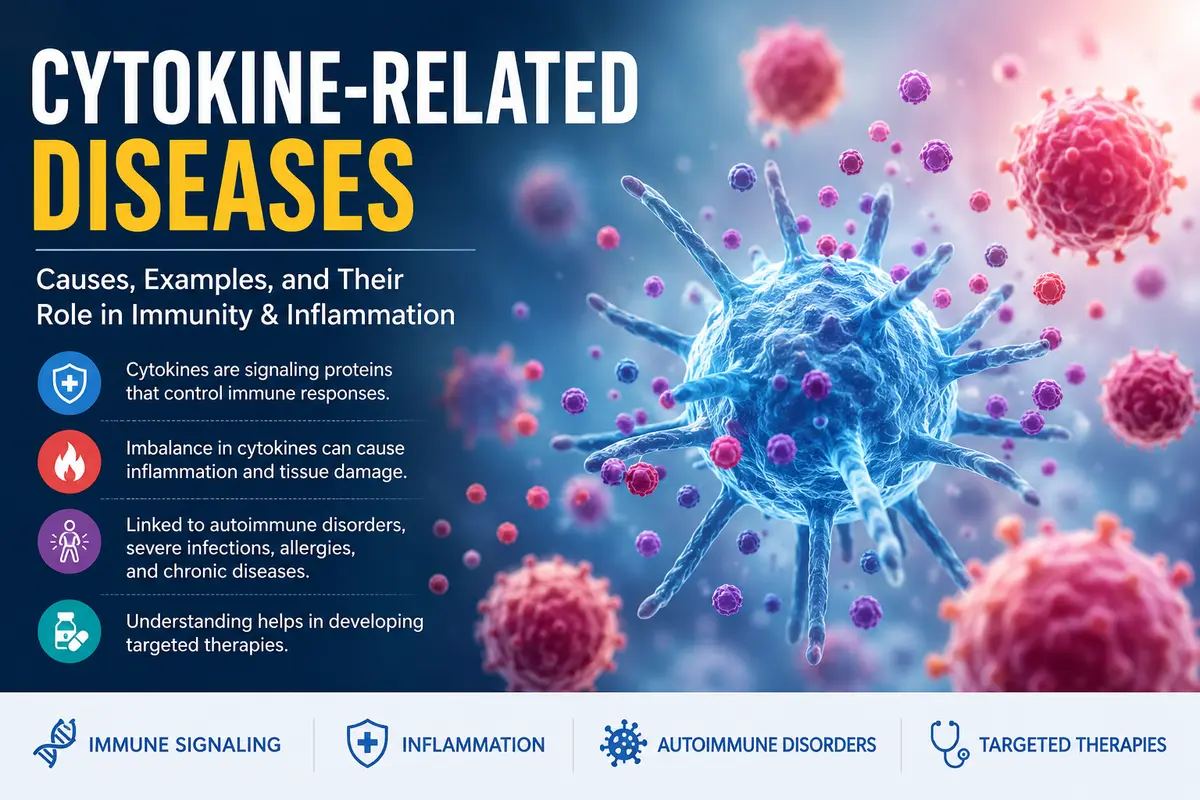
Learn what are cytokine-related diseases are, how abnormal cytokine signaling affects the immune system, common examples, causes, and their role in inflammation and immunity.
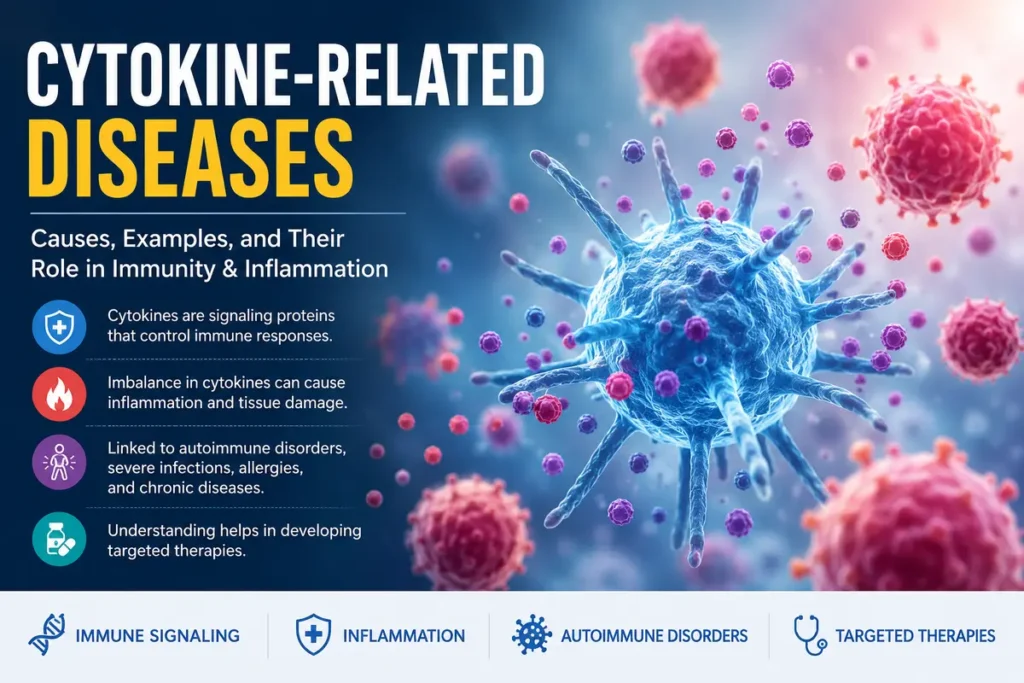
Introduction
Imagine your home’s fire alarm system. When there is a small amount of smoke, the alarm alerts everyone so they can quickly put out the fire. But if the alarm keeps ringing even after the fire is gone—or starts ringing without any fire at all—it creates panic, confusion, and unnecessary damage.
Our immune system works in a similar way. Cytokines are tiny signaling proteins that act like the body’s alarm and communication system. They help immune cells talk to one another, coordinate defenses against infections, and promote healing. However, when cytokines are produced in excessive amounts, too little, or at the wrong time, they can cause the immune system to attack healthy tissues or fail to respond properly to infections. These conditions are known as cytokine-related diseases.
Cytokine-related diseases include autoimmune disorders, chronic inflammatory diseases, allergies, and severe infections where abnormal cytokine activity plays a major role. Understanding these diseases helps researchers develop targeted therapies that can control harmful inflammation while preserving the body’s natural immune defense.
What are cytokine-related diseases?
Dysfunction of the complex regulatory networks controlling expression of cytokines and their receptors has been associated with several diseases. Genetic flaws in cytokines, their receptors, or molecules involved in cytokine-mediated signal transduction result in cytokine shortages. Defense against certain pathogen families may be compromised by further cytokine network flaws.
For instance, people with a defective receptor for IFN-y are prone to mycobacterial infections rarely seen in the general population. Besides the diseases caused by genetic defects in cytokine activity, several other pathologic states are caused by overexpression or underexpression of cytokines or cytokine receptors. Some examples of such diseases are given below together with a description of therapies designed to prevent the possible damage caused by cytokine activity.
1. Septic Shock Is Not Rare and Is Potentially Deadly
Bacterial infections remain a major cause of septic shock despite the widespread use of antibiotics. It may develop within a few hours of infection by certain bacteria, including Staphylococcus aureus, E. coli, Klebsiella pneumoniae, Pseudomonas aeruginosa, Neisseria meningitidis, and Enterobacter aerogenes.
Bacterial septic shock is one type of condition that is included under the general heading of sepsis. Bacterial infection, in turn, can be caused by sepsis, trauma, injury, ischemia (a decrease in blood supply to an organ or tissue), and certain cancers. The 13th leading cause of death in the United States, sepsis is also the most common cause of death in U.S. hospital intensive care units.
Whatever the underlying cause, sepsis is characterized by an overwhelming production of proinflammatory and fever-inducing cytokines such as TNF-a and IL-1B. . The cytokine imbalance leads to changes in body temperature, changes in respiration, and elevated white blood cell counts, as well as capillary leak, tissue damage, disseminated intravascular coagulation, and fatal organ failure.
Bacterial septic shock is frequently caused by the binding of bacterial cell wall endotoxins to innate immune system pathogen receptors such as Toll-like receptors on dendritic cells and macrophages, resulting in the production of IL-1 and TNF-α at levels that result in pathological capillary permeability and loss of blood pressure. Injection of mice with recombinant TNF-α alone can induce a state resembling bacterial septic shock in the absence of any bacterial infection.
Several studies provide hope that neutralization of TNF-α or IL-1 activity by monoclonal antibodies or antagonists will prevent the development of fatal shock. In one such investigation, monoclonal antibodies to TNF-α protected animals from endotoxin-induced shock. In another, injection of a recombinant IL-1 receptor antagonist (IL-1Ra), which blocks binding of IL-1 to the IL-1 receptor as described above, resulted in a threefold decrease in mortality.
However, individuals with severe disease benefit little from antibodies against TNF-a, and neutralizing TNF-a does not always stop the progression of septic shock. This seeming paradox was somewhat clarified by recent investigations that tracked the cytokine profiles of septic shock patients across time.
Neutralizing TNF-α and IL-1β is particularly helpful in the early stages of sepsis since these cytokines grow quickly. In fact, early management can completely prevent sepsis in animal tests. However, the levels of TNF-α and IL-1β drastically decrease about 24 hours after sepsis begins, and other variables take precedence. IL-6, MIF, and CCL-8 are important cytokines in the later stages of sepsis. The process behind bacterial septic shock and other types of sepsis is still being thoroughly studied, and in the near future, improvements in treatments for this deadly condition are anticipated.
2. Superantigen Induction of T-Cell Cytokine Secretion Causes Bacterial Toxic Shock
Toxins that function as superantigens are produced by a range of bacteria. Superantigens attach to MHC Class II molecules at a site outside of the groove that antigenic peptides typically occupy. T-cell activation is therefore triggered by their binding to a portion of the T-cell receptor’s VB chain that is outside the normal antigen-binding region. This implies that all T lymphocytes with a specific Vẞ domain can be activated concurrently by a given superantigen. Regardless of the antigenic specificity of their normal antigen-binding site, superantigens can activate a huge number of T lymphocytes due to their unique binding ability.
A given superantigen can elicit a response from 5% or more of the T-cell population, despite the fact that less than 0.01% of T cells react to a particular conventional antigen. A number of illnesses, including food poisoning and bacterial toxic shock, have been linked to bacterial superantigens. These bacterial superantigens include pyrogenic exotoxins from Streptococcus pyrogenes, Mycoplasma arthritidis supernatant (MAS), a number of enterotoxins, exfoliation toxins, and toxic shock syndrome toxin (TSST1) from Staphylococcus aureus.
These superantigens activate a large number of T cells, which leads to an overabundance of cytokines being produced. For instance, it has been demonstrated that the TSST1 induces very high amounts of TNF-a and IL-1. These high cytokine concentrations can cause systemic reactions such as fever, extensive blood clotting, and shock, similar to bacterial septic shock.
Apart from the aforementioned diseases where cytokines or their receptors are directly involved, new data has shown the significance of cytokine involvement in the most significant public health issue currently plaguing the developed world: the rising incidence of Type 2 diabetes.
3. Myeloid and Lymphoid Cancers Are Associated with Cytokine Activity
Certain kinds of cancer have been linked to abnormalities in the production of cytokines or their receptors. Cervical and bladder cancer cells, myeloma and plasmacytoma cells, and cardiac myxoma (a benign heart tumor) all release excessively high amounts of IL-6. IL-6 seems to function autocratically to promote cell proliferation in myeloma and plasmacytoma cells.
The growth of myeloma cells cultured in vitro is reduced when monoclonal antibodies to IL-6 are introduced. On the other hand, a huge, lethal expansion of plasma cells known as plasmacytosis has been observed in transgenic mice that express high quantities of IL-6. Additionally, as previously mentioned, individuals with a variety of blood cell malignancies have high serum concentrations of SIL-2R, which may hinder a strong anti-tumor response.
4. Many of the 1918 Spanish Influenza Deaths May Have Been Caused by Cytokine Storms.
Extremely high quantities of cytokines can occasionally be secreted in response to a particularly virulent infection. These cytokines then feed back on the immune cells to stimulate even more cytokines. These positive feedback loops typically serve as efficient means of immune amplification; self-regulating immunological mechanisms, such as the activation of regulatory T cells, typically keep them in check.
On the other hand, certain viruses trigger a limited, excessive reaction that leads to extraordinarily high cytokine release. For instance, if this happens in the lungs, the localized edema, inflammation, and increase in capillary permeability may result in the buildup of fluids and leukocytes that obstruct the airways, exacerbating symptoms or perhaps leading to mortality before the cytokine levels can be managed. Why certain viruses cause these cytokine storms while others do not is unknown.
There is some evidence that the severe acute respiratory syndrome (SARS) epidemic of 1993 may have caused a similar, unregulated immune cell cytokine secretion. Historical records describing the symptoms of the 1918 Spanish influenza pandemic indicate that the massive deaths associated with that pandemic most likely resulted from cytokine storms. When leukocytes from a graft—typically a bone marrow transplant—mount an immune reaction against the host, transplant physicians also notice this event.
Treatments that work for patients experiencing cytokine storms are still being researched. Steroidal and nonsteroidal anti-inflammatory medicines are now available to patients, but new therapies that are specifically targeted at reducing cytokine secretion and/or activity are undergoing testing.
Conclusion
Cytokine-related diseases arise when the body’s immune signaling system becomes unbalanced. While cytokines are essential for coordinating immune responses, tissue repair, and protection against infections, their excessive or insufficient production can lead to serious health conditions such as septic shock, toxic shock syndrome, certain cancers, autoimmune disorders, and cytokine storms. These disorders highlight the critical role cytokines play in maintaining immune homeostasis.
Advances in immunology have significantly improved our understanding of how cytokines contribute to disease development. This knowledge has led to the development of targeted therapies, including monoclonal antibodies and cytokine inhibitors, that can reduce harmful inflammation without completely suppressing the immune system. As research continues, cytokine-based diagnostics and treatments are expected to become even more precise, offering improved outcomes for patients suffering from immune-mediated and inflammatory diseases.
A detailed explanation of cytokines and their role in immunity is available from the National Institutes of Health.
FAQs
1. What happens when cytokines are too high?
Answer: When cytokine levels become too high, they can trigger excessive inflammation, causing symptoms such as fever, fatigue, muscle pain, and tissue damage. In severe cases, an uncontrolled immune response known as a cytokine storm can develop, leading to low blood pressure, organ failure, and potentially life-threatening complications.
2. What increases cytokines in the body?
Answer: What Increases Cytokines in the Body?
Several factors can increase cytokine production in the body, including:
Bacterial, viral, or fungal infections
Autoimmune diseases
Chronic inflammation
Physical injury or trauma
Stress and obesity
Certain cancers
Exposure to toxins or allergens
These factors activate the immune system, leading to increased cytokine release to fight infection or repair damaged tissues. Excessive cytokine production, however, can contribute to inflammatory diseases.
3. What diseases are linked to cytokines?
Answer: Abnormal cytokine activity is associated with several diseases, including:
Rheumatoid arthritis
Psoriasis
Inflammatory bowel disease (IBD)
Systemic lupus erythematosus (SLE)
Sepsis and septic shock
Cytokine storm syndrome
Asthma and allergies
Certain cancers, such as multiple myeloma and lymphoma
These diseases occur when cytokines are produced in excessive or insufficient amounts, leading to abnormal immune and inflammatory responses.
4. What are the symptoms of high cytokines?
Answer: High levels of cytokines can cause excessive inflammation, leading to symptoms such as the following:
Fever
Fatigue and weakness
Muscle and joint pain
Headache
Swelling and redness
Rapid heartbeat
Shortness of breath
Low blood pressure (in severe cases)
In extreme situations, an excessive release of cytokines, known as a cytokine storm, can lead to organ failure and become life-threatening.
5. What are the 5 inflammatory cytokines?
Answer: The five major inflammatory cytokines are:
Tumor Necrosis Factor-alpha (TNF-α): Initiates inflammation and helps fight infections but can cause tissue damage when overproduced.
Interleukin-1 (IL-1): Promotes fever, inflammation, and activation of immune cells.
Interleukin-6 (IL-6): Regulates inflammation, stimulates immune responses, and triggers the acute-phase response.
Interleukin-8 (IL-8/CXCL8): Attracts neutrophils to sites of infection and inflammation.
Interferon-gamma (IFN-γ): Activates macrophages and enhances immune defense against viruses and intracellular pathogens.
Together, these cytokines coordinate the body’s inflammatory response, but excessive production can contribute to autoimmune diseases, chronic inflammation, and cytokine storms.
References
- Owen, J. A., Punt, J., & Stranford, S. A. (2013). Kuby Immunology (7th ed.). W. H. Freeman and Company.
- Abbas, A. K., Lichtman, A. H., & Pillai, S. (2022). Cellular and Molecular Immunology (10th ed.). Elsevier.
- Murphy, K., & Weaver, C. (2022). Janeway’s Immunobiology (10th ed.). Garland Science.
- Delves, P. J., Martin, S. J., Burton, D. R., & Roitt, I. M. (2023). Roitt’s Essential Immunology (14th ed.). Wiley-Blackwell.
- Kumar, V., Abbas, A. K., & Aster, J. C. (2024). Robbins & Cotran Pathologic Basis of Disease (11th ed.). Elsevier.
- Rich, R. R. (Ed.). (2023). Clinical Immunology: Principles and Practice (6th ed.). Elsevier.
- Medzhitov, R. (2008). Origin and physiological roles of inflammation. Nature, 454(7203), 428–435.
- Dinarello, C. A. (2000). Proinflammatory cytokines. Chest, 118(2), 503–508.
- Tisoncik, J. R., Korth, M. J., Simmons, C. P., Farrar, J., Martin, T. R., & Katze, M. G. (2012). Into the eye of the cytokine storm. Microbiology and Molecular Biology Reviews, 76(1), 16–32.