Introduction
Ever wonder why most of us get over a cold or how vaccines help protect us from disease? The answer is immunology.
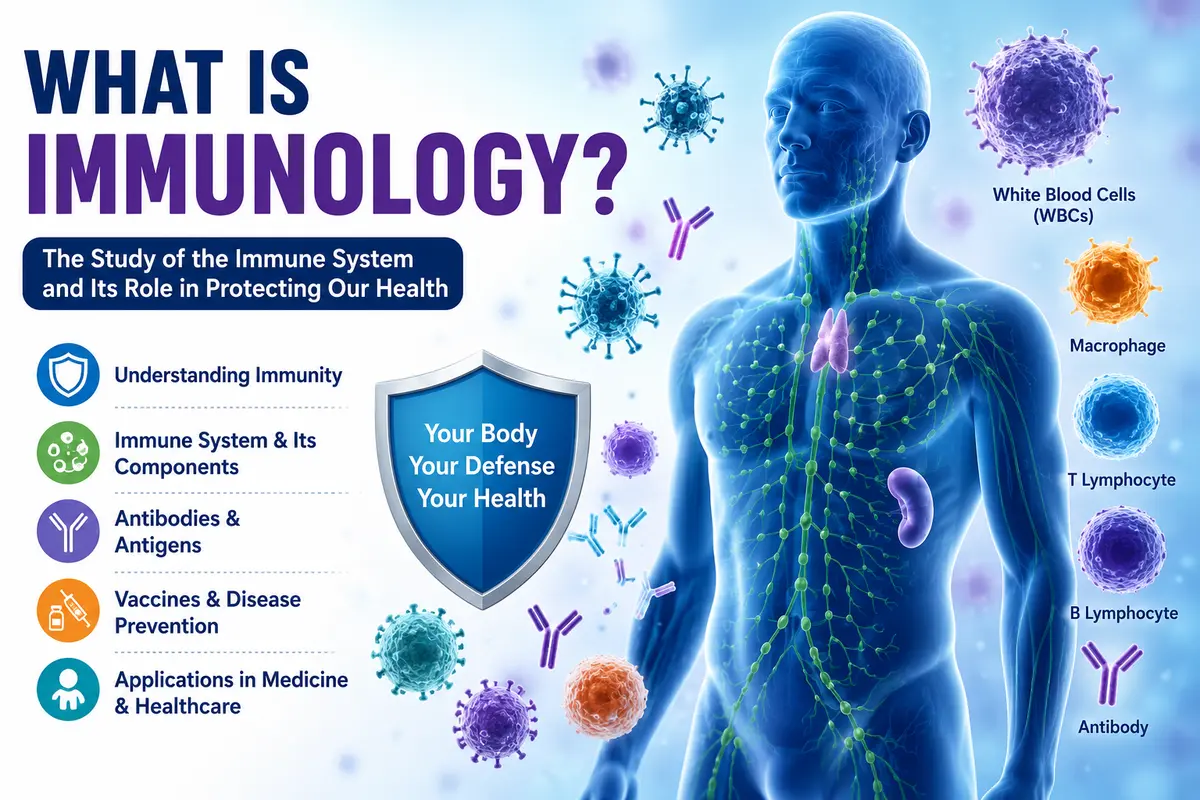
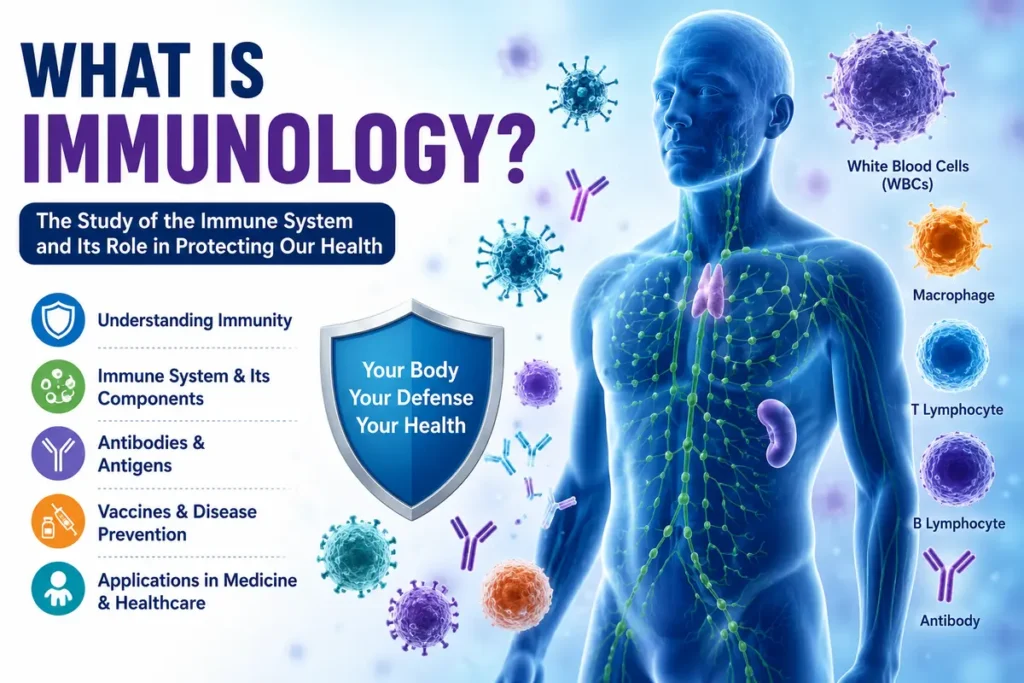
Simply put, immunology is the study of the body’s immune system. The immune system is the natural defense system that protects us from harmful germs like bacteria, viruses, fungi, and parasites. It helps us understand how our body recognizes, fights, and remembers these disease-causing organisms to keep us healthy.
Think of your body as a big office building, and the immune system is the security team.
- Harmful germs are like burglars trying to break into the building.
- Security guards are always on watch at each entrance.
- They stop quickly and remove the threat when they detect an intruder.
- If the same intruder returns later, the guards immediately recognize it and react even faster.
Your immune system works the same way. It recognizes harmful microbes, attacks them, and remembers them so it can offer quicker protection in the future. That’s the principle behind vaccination, too.
Why is it important to learn about immunology? Immunology tells us how our body remains healthy and fights diseases. It tells us how vaccines work, why some people develop allergies, how autoimmune diseases happen, and how we use the immune system to treat diseases such as cancer.
Whether you are a student, practitioner, or just someone who wants to know more about their health, learning the basics of immunology will help you make informed choices about disease prevention and overall health.
According to the World Health Organization (WHO), immunization is one of the most effective public health interventions for preventing infectious diseases.
What Is Immunology?
Immunology is one of the most important branches of biology and medicine, as it helps us to understand how the body protects itself from diseases. Every day our bodies are exposed to millions of harmful microorganisms—bacteria, viruses, fungi, and parasites. Fortunately, the immune system is hard at work identifying, fighting, and remembering these harmful invaders. This incredible defense system is the focus of a field of science called immunology.
Immunology Definition
Immunology is a branch of biology and medical science that investigates the immune system, its structure and functions, cells and tissues, organs, and the body’s defense mechanisms against infections and diseases.
It also considers the immune system’s response to pathogenic microorganisms, vaccines, allergies, autoimmune disorders, and cancer.
In simple words, immunology is the study of the immune system and how it protects the body from diseases.”
Meaning of Immunology
The term “immunology” just refers to the study of immunity.
Immunity is the body’s natural ability to recognize and fight off harmful pathogens such as bacteria, viruses, fungi, and parasites. When these pathogens enter the body, the immune system recognizes them, attacks them, and often remembers them so it can protect us more quickly in the future.
Simply put, immunology is the science of how our body’s immune system protects us from disease.
Origin of the Word “Immunology”
The Latin and Greek roots of the word “immunology” are as follows:
- Immunis (Latin) means “free from disease, protected, or exempt.”
- “Logia” (λoγοα) is Greek for “the study of a subject.”
When paired:
The scientific study of immunity or defense against illness is known as immunology.
After researchers found that immunization might protect the human body from infectious diseases, the subject of immunology started to grow quickly, resulting in numerous advancements in public health and medicine.
Why Is It Called Immunology?
Because immunity—the body’s capacity to fend off illness—is the main emphasis of the field, it is called immunology. Immunology researchers look into issues like the following:
- How does the immune system identify dangerous microorganisms?
- How are infections eliminated by white blood cells?
- Why do immunizations offer protection for a long time?
- What causes allergies?
- Why do autoimmune illnesses occur when the body’s own tissues are attacked by the immune system?
- How may cancer and other illnesses be treated using the immune system?
Immunology has emerged as one of the key sciences for enhancing human health and creating novel medical interventions as a result of providing answers to these concerns.
What Is the Immune System?
The body’s natural defensive system, the immune system, guards against dangerous microbes such as bacteria, viruses, fungi, and parasites. It is composed of an intricate web of cells, tissues, organs, and proteins that cooperate to recognize and eliminate infections that cause illness while maintaining the body’s health.
Imagine your body’s immune system as a round-the-clock security force. The immune system defends your body against dangerous bacteria, much like security personnel guard a building from attackers. The immune system promptly identifies and combats any infection that enters the body, and it frequently retains this information so that it can react even more swiftly in the event that the same pathogen reappears.
Body’s Defense Mechanism
The body’s first line of defense against illnesses and infections is the immune system. The food we consume, the surfaces we touch, and the air we breathe all expose us to many microbes on a daily basis. Some of these microorganisms can be harmful, but the majority are innocuous.
The immune system keeps an eye out for anything that doesn’t belong in the body. Specialized immune cells recognize invasive infections as foreign, initiate an immune response, eradicate the threat, and restore damaged tissues. Usually, we are unaware that this procedure is taking place.
If your body were a mall, the immune system would be the security division.
The body is small.
Security guards are the immune system.
Viruses and bacteria are intruders.
Security alarm = immune response
White blood cells are security personnel who eliminate invaders.
Memory cells are a security database that keeps track of past intruders.
The immune system keeps dangerous viruses from making us ill, much as security guards keep robbers from doing damage.
Main Functions of the Immune System
The immune system keeps the body healthy by carrying out a number of vital tasks.
1. Identifies Dangerous Invaders-Bacteria, viruses, fungi, parasites, and poisons are among the foreign substances that the immune system continuously searches the body for.
2. Prevents Infections—Immune cells target and eliminate dangerous microorganisms before they have a chance to spread throughout the body.
3. Generates Antibodies—Antibodies, which are proteins that identify and neutralize particular pathogens, are produced by specialized white blood cells.
4. Recalls Past Infections—Memory cells stay in the body after battling an infection. The immune system reacts considerably more quickly if the same virus reappears, frequently averting disease. This is how immunization works.
5. Eliminates Damaged Cells—The immune system promotes tissue regeneration following infections or injuries and aids in the removal of dead, damaged, or aberrant cells.
6. Offers Protection Against Specific Cancers—Certain aberrant cells can be identified by immune cells and eliminated before they become cancerous.
Components of the Immune System
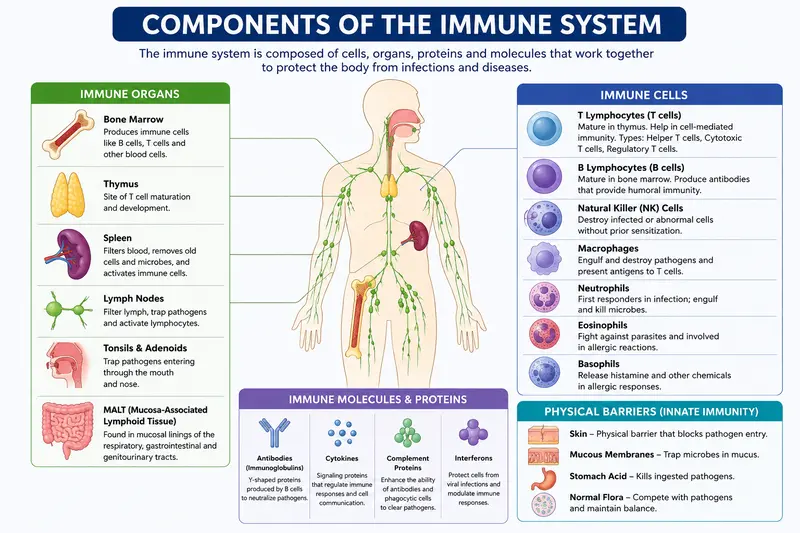
The immune system consists of many organs, tissues, cells, and molecules that work together to defend the body.
| Component | Function |
|---|---|
| Bone Marrow | Produces blood cells, including white blood cells. |
| Thymus | Helps T lymphocytes (T cells) mature. |
| Spleen | Filters blood and removes pathogens. |
| Lymph Nodes | Trap germs and activate immune cells. |
| Lymphatic Vessels | Transport lymph and immune cells throughout the body. |
| White Blood Cells (Leukocytes) | Detect and destroy pathogens. |
| Antibodies | Bind to specific pathogens and help neutralize them. |
| Complement Proteins | Assist immune cells in destroying microbes. |
| Skin and Mucous Membranes | Act as the body’s first physical barrier against infection. |
For additional information about immune cells and their functions, visit the National Institutes of Health (NIH) immunology resources.
How Does the Immune System Work?
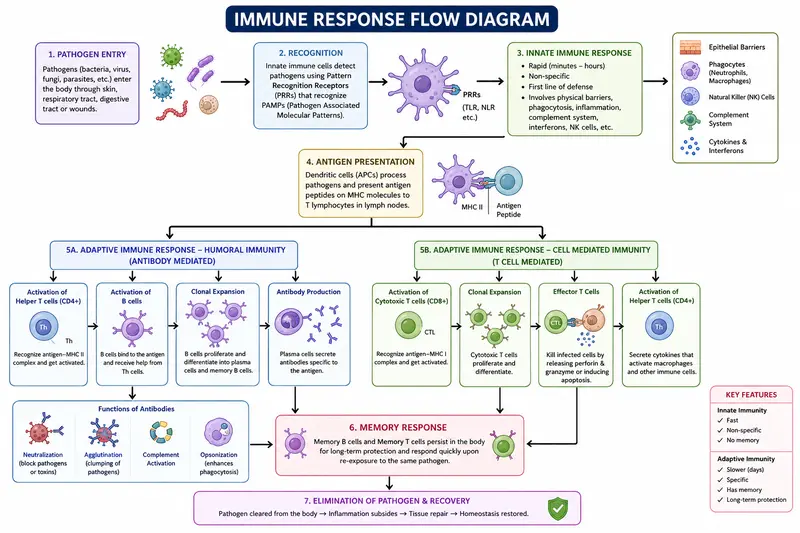
Your body is shielded from dangerous germs, including bacteria, viruses, fungi, and parasites, by the immune system, which functions as a well-coordinated defense force. It continuously keeps an eye on your body, recognizes foreign invaders, uses specialist immune cells to destroy them, and remembers them to offer quicker defense in the future.
Let’s examine this procedure in detail.
Step 1: The Body Is Infected by a Germ
- When a pathogen—a dangerous microorganism—enters the body through the mouth, nose, eyes, skin cuts, or contaminated food or water, the immune response starts.
- Typical pathogens consist of bacteria, viruses, fungi, and parasites
- For instance, cold viruses enter your body through your mouth or nose when you have a cold.
Step 2: The Germ Is Found by Immune Cells
- Specialized immune cells recognize the infection as foreign as soon as it enters the body.
- These cells search for distinct chemicals on the surface of bacteria known as antigens.
- Among the earliest immune cells that identify infections are dendritic cells, macrophages, and neutrophils.
Step 3: The germ is attacked by white blood cells
- Leukocytes, a variety of white blood cells, cooperate to eliminate the invasive infection after the alarm is activated.
- Every type has a distinct function: Bacteria are swiftly engulfed and destroyed by neutrophils, macrophages eliminate dead cells and ingest pathogens, and natural killer (NK) cells eliminate aberrant and virus-infected cells. T cells, or T lymphocytes, coordinate the immune response and directly destroy infected cells.
- The infection is stopped from spreading throughout the body by this concerted effort.
Step 4: Production of Antibodies
- B lymphocytes (B cells), a different kind of white blood cell, start making antibodies at the same time.
- Y-shaped proteins called antibodies attach themselves particularly to pathogen antigens.
- They assist by: eliminating poisons and viruses, marking pathogens for elimination, Keeping bacteria from infecting healthy cells, and assisting other immune cells in eliminating the infections
- The immune response is extremely targeted since each antibody is made to identify a single disease.
Step 5: The germ is remembered by memory cells
- The immune system retains a tiny quantity of memory B cells and memory T cells after the virus has been eradicated.
- For months, years, or even a lifetime, these cells stay in the body.
- If the same infection re-enters the body: It is instantly recognized by memory cells; the production of antibodies is significantly quicker. Before the infection may produce a significant sickness, it is eliminated.
- Vaccines are effective because they provide long-term protection.
Immune Response Flow Diagram
Types of Immunity
The body’s capacity to defend itself against illnesses and infections is known as immunity. Each of the four primary forms of immunity has a distinct function in protecting the body. Types of immunity are as follows:
1. Natural immunity
- The body’s initial line of protection is innate immunity. It operates instantly, is present from birth, and offers general defense against all infections.
- Skin, mucous, stomach acid, neutrophils, and macrophages are a few examples.
2. Immunity that Adapts
- After being vaccinated or exposed to a disease, adaptive immunity develops. It produces memory cells that offer long-term defense and is unique to certain bacteria.
- Examples include immunity following immunization or chickenpox.
3. Immunity in Action
- When the body creates its own antibodies following an infection or immunization, this is known as active immunity. It takes time to form but offers durable protection.
- Examples include COVID-19 vaccination and measles illness.
4. Inactive Immunity
- When pre-made antibodies are obtained from another source, passive immunity develops. It doesn’t create memory cells and offers instantaneous but transient protection.
- Examples include rabies immunoglobulin and breast milk from a mother.
The British Society for Immunology provides beginner-friendly explanations of innate and adaptive immunity.
Comparison Table:
| Type of Immunity | Source | Response Time | Memory Cells | Duration | Example |
|---|---|---|---|---|---|
| Innate Immunity | Present from birth | Immediate | No | Lifelong (non-specific) | Skin, mucus |
| Adaptive Immunity | Infection or vaccination | Slow (first exposure) | Yes | Long-lasting | Chickenpox immunity |
| Active Immunity | The body produces antibodies | Slow | Yes | Long-lasting | Vaccines |
| Passive Immunity | Antibodies from another source | Immediate | No | Short-term | Breast milk, antiserum |
Types of White Blood Cells (WBCs)
The body’s defense cells, known as white blood cells or leukocytes, guard against infections, eliminate dangerous substances, and bolster the immune system. White blood cells come in five primary varieties, each with a distinct purpose.
- Neutrophils—The most prevalent type of white blood cells, neutrophils are the first to arrive at the infection site. By absorbing bacteria and fungus, they eliminate them (phagocytosis).
- Lymphocytes—B cells, T cells, and natural killer (NK) cells are examples of lymphocytes. They generate antibodies, eliminate contaminated cells, and use memory cells to offer sustained protection.
- Monocytes—The biggest white blood cells are called monocytes. They mature into dendritic cells and macrophages, which eliminate dead cells and engulf infections.
- Eosinophils—Eosinophils are crucial for allergic reactions, asthma, and the fight against parasitic infections.
- Basophils—Histamine and heparin, which are released by basophils, aid in the induction of allergic reactions and inflammation.
| White Blood Cell | Main Function | Helps Fight |
|---|---|---|
| Neutrophils | Engulf and destroy pathogens | Bacteria and fungi |
| Lymphocytes | Produce antibodies and destroy infected cells | Viruses and specific pathogens |
| Monocytes | Become macrophages and clean up pathogens | Bacteria, viruses, and dead cells |
| Eosinophils | Destroy parasites and regulate allergies | Parasites and allergens |
| Basophils | Release histamine during immune response | Allergic reactions and inflammation |
What Are Antigens and Antibodies?
Antibodies and antigens are vital components of the immune system. While antibodies aid the body in identifying and eliminating dangerous germs, antigens initiate an immune response.
An Antigen: What Is It?
- Any foreign material that enters the body and triggers an immune response is called an antigen. The surfaces of bacteria, viruses, fungi, parasites, poisons, and other dangerous materials frequently include antigens.
- For instance: Pollen, bacteria, viruses, and toxins
- Definition: A foreign material that sets off the body’s immunological reaction is called an antigen.
An Antibody: What Is It?
- In reaction to a particular antigen, B lymphocytes (B cells) create a Y-shaped protein known as an antibody. Antibodies attach to antigens, neutralize them, and assist immune cells in eliminating the dangerous invaders.
- Definition: The immune system produces antibodies, which are protective proteins that recognize and eliminate particular antigens.
Lock-and-Key Comparative Analysis
- Consider an antigen as a lock and an antibody as the key to it.
- An antigen is like a lock, and an antibody is like a key.
- Each antibody exclusively attaches to the particular antigen it was intended to identify, just like a key only fits its matching lock. The immune system may target dangerous germs without harming healthy cells because of this exact matching.
Branches of Immunology
Each of the many specialized subfields of immunology focuses on a distinct facet of the immune system and its function in both health and illness.
1. Clinical Immunology
- Immune system disorders, such as allergies, autoimmune illnesses, immunodeficiency disorders, and immune-related infections, are the focus of clinical immunology. It also emphasizes how these illnesses are diagnosed and treated.
2. Cellular Immunology
- Cellular immunology examines how immune cells—such as T cells, B cells, neutrophils, macrophages, and natural killer (NK) cells—interact during an immunological response in order to protect the organism.
3. Molecular Immunology
- The molecules involved in immune responses, such as antibodies, antigens, cytokines, receptors, and immunological signaling pathways, are the focus of molecular immunology. It aids in the molecular understanding of immunological systems by scientists.
4. Tumor Immunology
- The study of tumor immunology looks at how the immune system identifies and combats cancer cells. Immune checkpoint inhibitors and CAR T-cell therapy are examples of cancer immunotherapies that this branch promotes.
5. Transplant Immunology
- The study of the immune reaction to transplanted organs and tissues is known as transplant immunology. Through immunosuppressive treatments, it seeks to increase transplant success and prevent organ rejection.
6. Veterinary Immunology
- Animal immune systems are the main focus of veterinary immunology. It aids in the creation of vaccinations, the diagnosis of illnesses, and the enhancement of wildlife, pets, and cattle health.
7. Immunogenetics
- Immunogenetics investigates how genes and the immune system interact. It investigates how genetic differences affect immunological responses, illness susceptibility, and organ transplant compatibility.
8. Mucosal Immunology
- Mucosal immunology is the study of the immune system of the body’s mucosal surfaces, including the digestive, urogenital, and respiratory systems. It looks into how these tissues retain tolerance to safe drugs while protecting against infections.
| Branch | Main Focus |
|---|---|
| Clinical Immunology | Diagnosis and treatment of immune-related diseases |
| Cellular Immunology | Immune cells and their functions |
| Molecular Immunology | Antibodies, antigens, cytokines, and immune molecules |
| Tumor Immunology | Immune response against cancer |
| Transplant Immunology | Organ transplantation and rejection |
| Veterinary Immunology | Immune system in animals |
| Immunogenetics | Genetic control of immune responses |
| Mucosal Immunology | Immunity at mucosal surfaces (gut, lungs, etc.) |
Importance of Immunology
Because immunology helps us understand how the immune system defends the body against illness, it is essential to modern medicine. It has aided in the creation of vaccinations, better cancer and infection therapies, successful organ transplants, and biotechnological advancements.
WHO’s immunization program explains how vaccines have significantly reduced the burden of infectious diseases worldwide.
1. Vaccine
- The development of vaccines is based on immunology. Vaccines provide long-term protection against illnesses, including measles, polio, hepatitis, and COVID-19, by teaching the immune system to identify dangerous pathogens and develop antibodies and memory cells.
- You can learn more about recommended vaccines from the CDC Vaccines and Immunization resource
2. Organ Transplantation
- Immunology aids medical professionals in understanding how the immune system reacts to transplanted tissues. Additionally, it encourages the use of immunosuppressive medications to lower the risk of organ rejection and increase the success of transplants.
3. Cancer Treatment
- Cancer immunotherapy, which employs the body’s immune system to recognize and eliminate cancer cells, was developed as a result of immunology. Many cancer patients now have better results because to treatments like CAR T-cell therapy and monoclonal antibodies.
4. Infectious Diseases
- Scientists can better understand how the body combats illnesses brought on by bacteria, viruses, fungus, and parasites by studying immunology. This information aids in the creation of improved infectious disease therapies, diagnostic procedures, and vaccinations.
5. Autoimmune Diseases
- Autoimmune illnesses, in which the immune system unintentionally targets healthy bodily tissues, are diagnosed and treated with the use of immunology. Rheumatoid arthritis, multiple sclerosis, type 1 diabetes, and systemic lupus erythematosus are a few examples.
6. Biotechnology
- By facilitating the creation of monoclonal antibodies, diagnostic kits, vaccines, biosimilars, and novel treatments utilized in medical research and healthcare, immunology plays a crucial role in biotechnology.
Common Diseases Related to the Immune System
| Disease | Cause | Common Examples | Key Symptoms |
|---|---|---|---|
| Allergy | Overactive immune response to harmless substances (allergens) | Pollen allergy, Food allergy, Dust allergy | Sneezing, itching, rash, watery eyes |
| Autoimmune Disease | The immune system mistakenly attacks the body’s own tissues | Rheumatoid arthritis, Type 1 diabetes, Lupus | Joint pain, inflammation, fatigue |
| Immunodeficiency | Weak or damaged immune system unable to fight infections effectively | AIDS, Severe Combined Immunodeficiency (SCID) | Frequent or severe infections |
| Cancer (Immune-related) | The immune system fails to recognize or destroy abnormal cancer cells | Leukemia, Lymphoma, Multiple myeloma | Fatigue, weight loss, swollen lymph nodes |
Applications of Immunology
There are several uses for immunology in healthcare and medicine. It aids in illness prevention, enhances diagnosis, and creates cutting-edge remedies.
1. Development of Vaccines—The development of vaccines is based on immunology. Vaccines defend against infectious diseases by stimulating the immune system to develop memory cells and antibodies.
2. Research on COVID-19: Understanding the immune response to SARS-CoV-2 was made possible by immunology, which accelerated the development of COVID-19 vaccines, diagnostic procedures, and therapeutic approaches.
3. Immunotherapy for Cancer—Cancer immunotherapy, which uses the body’s immune system to identify and eliminate cancer cells, has been made possible by immunology. CAR T-cell therapy and immune checkpoint inhibitors are two examples.
4. Diagnostic Examinations- Immunological principles are the basis of many laboratory examinations. In order to diagnose illnesses, tests like ELISA, fast antigen testing, antibody tests, and pregnancy tests identify particular antigens or antibodies.
5. Typing of Blood—By recognizing particular antigens on red blood cells, immunology is used to define ABO and Rh blood types. Safe blood transfusions depend on accurate blood typing.
6. Transplanting organs—Immunology directs the use of immunosuppressive medications to lower the risk of organ rejection and assists in matching donors and recipients through tissue compatibility testing.
Career Opportunities in Immunology
Immunology offers diverse career opportunities in healthcare, research, biotechnology, pharmaceuticals, and academia. Professionals in this field contribute to disease prevention, diagnosis, treatment, and the development of new medical technologies.
| Career | Primary Role |
|---|---|
| Research Scientist | Conducts immunology and biomedical research |
| Clinical Immunologist | Diagnoses and treats immune system disorders |
| Medical Laboratory Scientist | Performs immunological and diagnostic laboratory tests |
| Biotechnology Researcher | Develops vaccines, diagnostic kits, and biologics |
| Vaccine Scientist | Researches and develops preventive vaccines |
| Pharmaceutical Researcher | Develops drugs and immunotherapies |
| Professor/Academician | Teaches immunology and conducts academic research |
Interesting Facts About Immunology
These intriguing details about the immune system demonstrate its amazing capacity to defend the human body.
1. The immune system remembers things.
- It remembers many pathogens and can react much more quickly if they re-enter the body after battling specific diseases or becoming vaccinated.
2. Every day, billions of blood cells are produced by bone marrow.
- Within minutes, the innate immune system reacts.
- Before the adaptive immune system fully activates, it offers quick defense against pathogens.
3. Each antibody has a high degree of specificity.
- Similar to how a key only fits its matching lock, each antibody identifies and attaches to a certain antigen.
4. During childhood, the thymus is at its most active.
- It is crucial to the growth and development of T lymphocytes (T cells).
5. Millions of lives have been saved by immunology.
- Vaccines, cancer immunotherapy, organ transplantation, and better therapies for autoimmune and infectious disorders are all results of advances in immunology.
Conclusion
Immunology is much more than the study of the immune system. It is the foundation of modern medicine and one of the most important fields in biological science. Immunology has revolutionized healthcare and continues to save millions of lives around the world. From safeguarding the body against harmful pathogens to the development of vaccines, cancer immunotherapies, organ transplantation, and advanced diagnostic techniques—immunology has done it all.
By learning the basics of immunology, we can understand how our body’s natural defenses work, why immunizations are important, how immune disorders develop, and how scientists use the immune system to treat complex diseases.
So, if you are a student, a healthcare professional, a researcher, or just someone interested in human health, possessing good knowledge of immunology will provide you with valuable insights into how diseases can be prevented, diagnosed, and treated.
As medical science advances, immunology will be leading innovation that improves global health. Learning about the principles of the immune system today, we can better understand the remarkable remarkablekacableiological processes that protect us every day and open the door to future medical breakthroughs.
Frequently Asked University Questions (Previous 5 Years)
Long Answer Questions (8–10 Marks)
- Define immunology. Explain the structure and functions of the immune system.
- Describe the organs and cells of the immune system with a neat labeled diagram.
- Explain innate immunity and adaptive immunity. Compare their characteristics.
- Discuss the types of immunity with suitable examples.
- Explain the mechanism of immune response with the help of a flowchart.
- Describe the structure, functions, and types of white blood cells (WBCs).
- Explain antigens and antibodies. Describe the lock-and-key model of antigen-antibody interaction.
- Discuss the branches of immunology and their applications in modern medicine.
- Explain the importance and applications of immunology in healthcare and biotechnology.
- Write detailed notes on vaccines and the role of immunology in disease prevention.
Short Answer Questions (3–5 Marks)
- Define immunology.
- What is immunity?
- Differentiate between innate and adaptive immunity.
- What are antigens and antibodies?
- Explain the functions of neutrophils.
- Describe the role of B lymphocytes.
- Write a short note on T lymphocytes.
- What are memory cells?
- Explain passive immunity with examples.
- Define active immunity.
- List the primary lymphoid organs.
- List the secondary lymphoid organs.
- What are lymph nodes?
- State the functions of the spleen.
- Explain the role of bone marrow in immunity.
- What is immunological memory?
- Mention the major branches of immunology.
- What is immunotherapy?
- Write the importance of vaccines.
- Explain the role of antibodies in the immune response.
Very Short Answer Questions (1–2 Marks)
- Define immunology.
- Define immunity.
- Name the primary lymphoid organs.
- Name the secondary lymphoid organs.
- What are leukocytes?
- Which cells produce antibodies?
- Which immune cells are called “memory cells”?
- Expand ELISA.
- What is an antigen?
- What is an antibody?
- Name any two phagocytic cells.
- Which organ matures T cells?
- Which organ produces blood cells?
- Name the first line of defense in the human body.
- Which type of immunity is produced by vaccination?
- Give one example of passive immunity.
- Which white blood cell is most abundant?
- Which immune cells destroy virus-infected cells?
- What is the function of macrophages?
- Name any two autoimmune diseases.
FAQs
1. What is immunology?
Answer: Immunology is the branch of biology and medical science that studies the immune system and how it protects the body from infections and diseases. It focuses on how the body recognizes, fights, and remembers harmful microorganisms such as bacteria, viruses, fungi, and parasites.
2. What is ADCC in immunology?
Answer: ADCC is the process by which immune cells, especially NK cells, kill antibody-coated infected or cancerous cells.
3. What is TCR in immunology?
Answer: TCR is a receptor on T cells that recognizes antigens presented by MHC molecules and triggers the immune response.
4. What is an epitope in immunology?
Answer: An epitope is the specific region of an antigen that is recognized by antibodies or T-cell receptors.
5. What is avidity in immunology?
Answer: Avidity is the total binding strength between an antibody and an antigen when multiple binding sites interact simultaneously.
References
- Janeway’s Immunobiology,Murphy, K., & Weaver, C. (2022). Janeway’s Immunobiology (10th ed.). W. W. Norton & Company.
- Kuby Immunology,Owen, J. A., Punt, J., & Stranford, S. A. (2019). Kuby Immunology (8th ed.). W. H. Freeman.
- Cellular and Molecular Immunology, Abul K. Abbas, Andrew H. Lichtman, & Shiv Pillai. (2025). Cellular and Molecular Immunology (10th ed.). Elsevier.
- Roitt’s Essential Immunology, Peter J. Delves, Seamus J. Martin, Dennis R. Burton, & Ivan M. Roitt. (2021). Roitt’s Essential Immunology (14th ed.). Wiley-Blackwell.
- World Health Organization. (2024). Immunization and vaccines. Available at: World Health Organization.
- Centers for Disease Control and Prevention. (2024). Vaccines and Immunization. Available at: CDC Vaccines & Immunization.
- National Institutes of Health. Immunology resources. Available at National Institutes of Health.
- British Society for Immunology. Immunology explained. Available at: British Society for Immunology.