
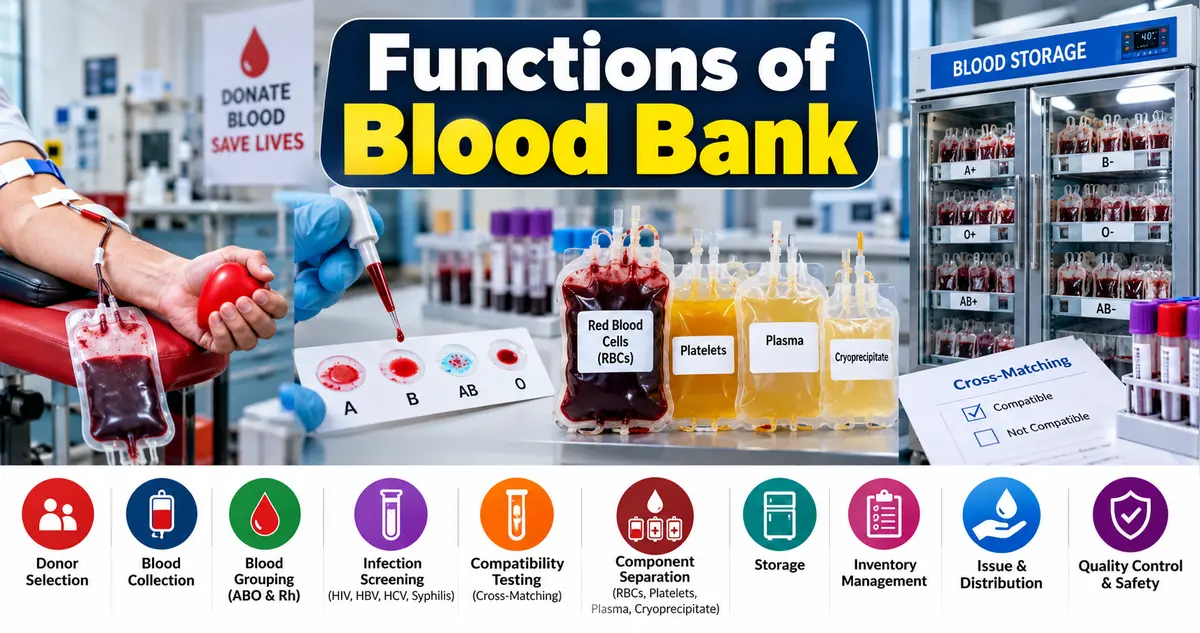
Learn the functions of blood bank, including blood collection, grouping, infection screening, cross-matching, component preparation, storage, distribution, and quality control.
Introduction
A blood bank is a part of the healthcare system. It gathers, checks, prepares, and stores. Gives blood and blood parts to patients who need transfusion. The main aim of a blood bank is to make sure that safe matching and high-quality blood are ready when they are required. Blood banks help a lot during surgeries, accidents, complications of childbirth, severe anemia, cancer treatment, trauma care, and many other medical emergencies. The World Health Organization says that blood services must guarantee the collection, testing, processing, storage, and distribution of blood and blood products.
What Is a Blood Bank?
A blood bank is a place where people give blood. The blood is gathered, checked, prepared, kept safe, and then used when someone needs it. Blood banks today do a lot more than just keep blood. They do important jobs in labs and help with patient care, including
- Blood donor selection and screening
- Blood collection
- Blood grouping
- Testing for transfusion-transmissible infections
- Compatibility testing
- Separation of blood into components
- Proper storage of blood and blood components
- Maintenance of blood inventory
- Issue and distribution of compatible blood
- Quality control and documentation
- Transfusion safety and hemovigilance
Main Functions of Blood Bank
Blood Donor Recruitment and Selection
One of the jobs of a blood bank is to collect blood from people who are able to give blood. Before someone gives blood, they are checked to make sure it is safe for them to do so. The steps might include:
- Donor registration
- Medical history
- Basic health assessment
- Evaluation of eligibility
- Hemoglobin assessment
- Blood pressure and pulse assessment
- Counselling and informed consent
The aim is to protect both the donor and the patient receiving the blood. WHO recommends strengthening systems for regular, voluntary, unpaid blood donation.
Collection of Blood
Blood banks gather blood from people who’re eligible to donate. They use sterile blood collection bags and follow strict procedures to make sure everything is safe. When the blood is collected, it is carefully labelled. This label includes the donor’s identification and details about the donation.
Identification and record keeping are very important. If mistakes happen at this point, it can risk the safety of the blood transfusion process. After a whole-blood donation, the blood is processed. This means it is separated into parts so that each component can be used based on what the patient needs.
Blood Grouping
Blood grouping is another job at a blood bank. The blood is checked to find out the persons:
- ABO blood group
- RhD status
The major ABO groups are
- A
- B
- AB
- O
Each group may be Rh-negative. Correct blood grouping is essential for selecting blood for transfusion. WHO guidance includes ABO and Rh testing as part of the testing process for donated blood.
Screening for Transfusion-Transmissible Infections
One of the important functions of a blood bank is to make sure that blood that people donate is safe for the people who receive it. Blood that is given is checked for infections that can spread through blood transfusions. The World Health Organization says that blood banks should check donated blood for infections such as
- HIV
- Hepatitis B
- Hepatitis C
- Syphilis
Depending on the rules and policies of each country, more tests might be done. Only blood that passes the required safety standards should be used for transfusion.
Compatibility Testing and Cross-Matching
Blood bank labs do testing to make sure the blood is right before it is given to a patient. The goal is to check if the blood from a donor matches the blood of the person who needs it. Important steps may include:
- Verification of the patient’s blood group
- Selection of an appropriate blood unit
- Antibody screening
- Compatibility testing/cross-matching
- Final identification checks
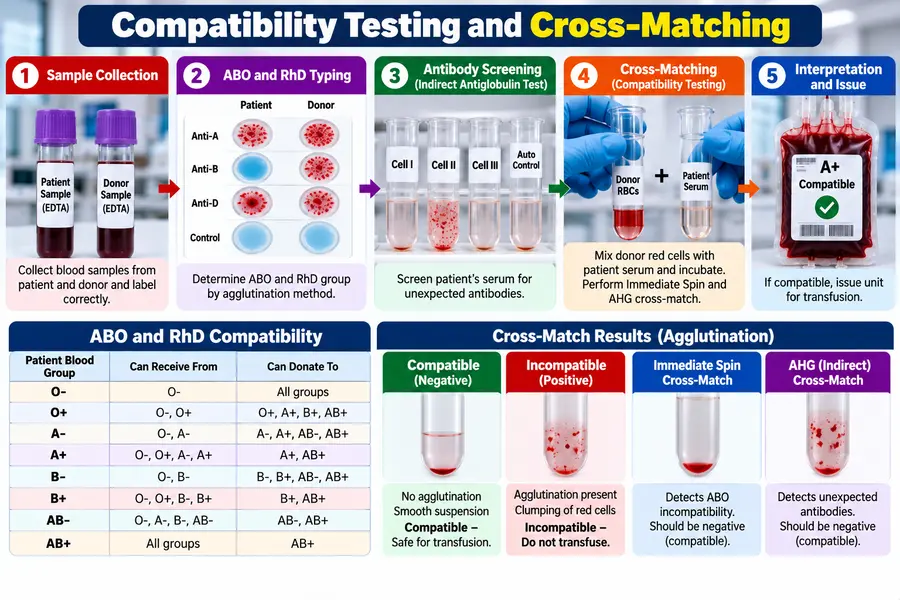
Compatibility testing helps lower the chance of reactions during blood transfusions. These reactions happen when the blood given doesn’t match the patient’s blood. The World Health Organization materials say that compatibility testing must be done before any blood is given to a patient. It’s a step to keep patients safe.
Separation of Blood Components
A major function of blood banks is blood component preparation. Of using every donation as whole blood, donated blood can be separated into different components, such as red blood cells, plasma, platelets, and other specific parts. This allows for targeted treatment and helps make the most of each donation.
- Red Blood Cells—Red blood cells are primarily used to improve oxygen-carrying capacity, such as in significant blood loss or certain forms of anemia.
- Platelets—Platelets are used when patients require platelet support, particularly in conditions associated with low platelet counts or impaired platelet function.
- Plasma—Plasma contains proteins and clotting factors and may be used when replacement of plasma components is clinically indicated.
- Cryoprecipitate—Cryoprecipitate is a concentrated plasma component containing specific clotting proteins and may be used in selected bleeding disorders.
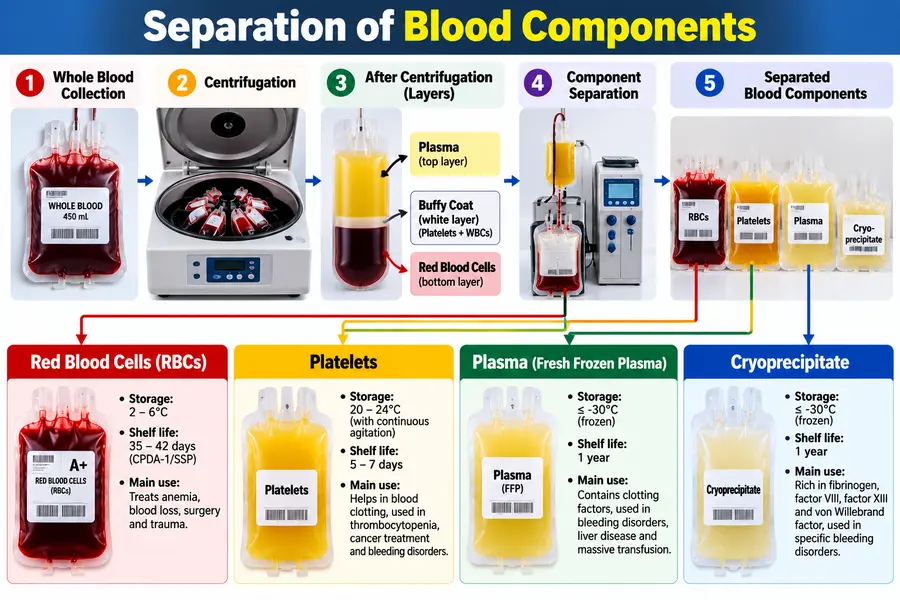
Component separation means that one donation can help more than one patient if the component separation is used correctly. Also read https://microbiologyworld.in/how-to-isolate-hematopoietic-stem-cells.
Proper Storage of Blood and Blood Components
Blood banks must keep blood components stored under the conditions. Different types of blood. Like cells, platelets, and plasma. Need specific temperatures and environments to stay safe and effective.
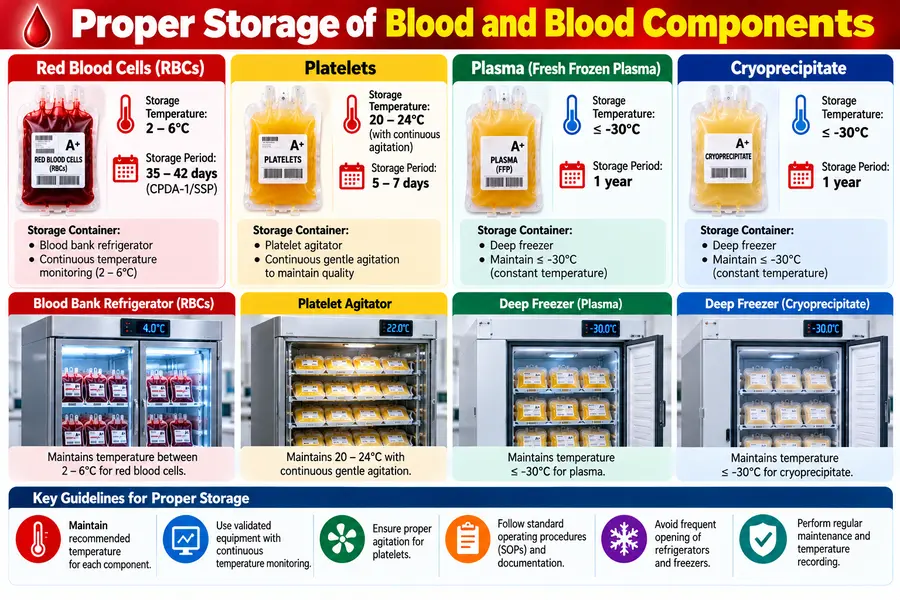
To meet these needs, blood banks use equipment. Refrigerators and freezers keep blood cool. Platelet storage units are designed to hold platelets at the temperature and gently agitate them. Temperature monitoring systems track conditions around the clock. When blood moves from one place to another, insulated containers help keep it at the right temperature.
These tools are used as required by the rules for each blood component. Proper storage is not optional. If temperatures are too high or too low or if storage conditions are not right, the blood can lose its quality. This can make it unsafe to use.
The World Health Organization, or WHO, says blood and blood components must be stored in controlled, monitored, and documented ways. This means every step in storage must be carefully managed and recorded. It’s not about the temperature. It’s about the system of care and safety.
Maintenance of Blood Inventory
Blood banks maintain an inventory of available blood groups and blood components. Inventory management helps the blood bank:
- Know how much blood is available
- Identify different blood groups
- Monitor expiry dates
- Reduce wastage
- Prepare for emergencies
- Respond to hospital requirements
Good inventory management is particularly important because blood has a limited storage life and cannot simply be stored indefinitely.
Issue and Distribution of Blood
Another important function is providing blood and blood components to patients or hospital departments. Before issuing a blood unit, the blood bank checks the identification and compatibility information.
The WHO recommends checking the patient identification and the details on the compatibility label before blood products are collected from the blood bank.
Emergency Blood Supply
Blood banks play a vital role during emergencies. Blood may be required urgently during:
- Road traffic accidents
- Major trauma
- Emergency surgery
- Severe bleeding
- Obstetric emergencies
- Certain cancer treatments
- Severe anemia
- Other life-threatening conditions
Maintaining an adequate and safe blood supply allows healthcare facilities to respond more effectively to emergencies.
Quality Control
Quality control is essential throughout blood bank operations. It covers activities such as
- Blood collection
- Laboratory testing
- Component preparation
- Storage
- Equipment monitoring
- Reagent quality
- Documentation
- Blood issue
- Staff training
WHO emphasizes quality systems, standards, documentation, training, and quality assessment as important components of safe blood services.
Record Keeping and Documentation
Blood banks maintain detailed records related to:
- Donor information
- Blood collection
- Blood grouping
- Laboratory testing
- Blood components
- Storage
- Compatibility testing
- Blood issue
- Transfusion-related events
- Discarded or expired units
Accurate documentation provides traceability and supports blood safety and quality management.
Prevention of Transfusion Reactions
Blood banks contribute to reducing transfusion-related risks by ensuring:
- Correct patient identification
- Correct blood grouping
- Appropriate compatibility testing
- Proper storage
- Accurate labelling
- Safe issue of blood products
- Documentation and monitoring
Hemovigilance systems are also used to identify, investigate, and prevent transfusion-related adverse events.
Safe Transportation of Blood
Blood, as well as its components, often has to travel between blood centers, hospitals, laboratories, or other clinical areas. It is essential that transport keeps the conditions for each blood component. Blood transport gear may consist of:
- Validated transport containers
- Insulated boxes
- Temperature-monitoring devices
- Appropriate packaging systems
WHO identifies blood transportation as an important part of the blood transfusion system.
Why Are Blood Banks Important?
Blood banks are essential because they help maintain a safe and reliable supply of blood and blood components. They support patients undergoing:
- Major operations
- Trauma treatment
- Cancer therapy
- Childbirth-related emergency care
- Treatment of severe anemia
- Treatment of inherited blood disorders
- Transplantation and other complex procedures
WHO notes that safe blood products support many critical medical and surgical services and contribute to saving millions of lives.
List of Blood Banks in India
| Sr. No. | Blood Bank Name | City | State |
|---|---|---|---|
| 1 | Indian Red Cross Society – National Headquarters | New Delhi | Delhi |
| 2 | AIIMS Blood Centre | New Delhi | Delhi |
| 3 | Jamshedpur Blood Bank | Jamshedpur | Jharkhand |
| 4 | Indian Red Cross Society Blood Centre | Mumbai | Maharashtra |
| 5 | Pitampura Regional Blood Transfusion Centre | Delhi | Delhi |
| 6 | Medical College and Hospital Blood Bank | Kolkata | West Bengal |
| 7 | Osmania General Hospital Blood Bank | Hyderabad | Telangana |
| 8 | Indian Red Cross Society, Karnataka State Branch | Bengaluru | Karnataka |
| 9 | Government Multispeciality Hospital Blood Bank | Chandigarh | Chandigarh |
| 10 | Indian Red Cross Society Blood Centre | Vadodara | Gujarat |
Conclusion
The work of a blood bank goes beyond just keeping blood. Today a blood bank takes care of the chain of keeping blood safe—from choosing donors and collecting blood to testing it making blood parts storing it checking for a good match delivering it and watching for problems.
By keeping lab rules right storage conditions, clear records and solid quality checks a blood bank makes sure that patients get blood that is safe a good match and of high quality when they need it most. I know how important it is that a blood bank delivers blood.
FAQs
1. What is the main function of a blood bank?
Answer: The main function of a blood bank is to collect, test, process, store, and supply safe and compatible blood and blood components for patients.
2. What tests are performed in a blood bank?
Answer: Common tests include ABO and RhD blood grouping, screening for transfusion-transmissible infections, antibody testing, and compatibility testing.
3. What are the main blood components prepared by a blood bank?
Answer: The major components include red blood cells, platelets, plasma, and, where prepared, cryoprecipitate.
4. Why is blood grouping important?
Answer: Blood grouping helps identify compatible blood for transfusion and reduces the risk associated with incompatible blood.
5. Why is blood storage important?
Answer: Proper storage maintains the quality and safety of blood components until they are required for transfusion.
6. What infections are screened in donated blood?
Answer: WHO recommends screening donated blood for HIV, hepatitis B, hepatitis C, and syphilis.
References
- World Health Organization. (2026). Blood safety and availability. https://www.who.int/news-room/fact-sheets/detail/blood-safety-and-availability
- World Health Organization. (n.d.). Blood products. https://www.who.int/health-topics/blood-products
- World Health Organization. (2009). Guidelines and principles for safe blood transfusion practice. https://www.who.int/publications/m/item/guidelines-and-principles-for-safe-blood-transfusion-practice—introduction
- World Health Organization. (2010). Aide-mémoire for national health authorities and hospital management: Clinical transfusion process and patient safety. https://www.who.int/publications/i/item/WHO-EHT-10.05
- Directorate General of Health Services, Ministry of Health and Family Welfare, Government of India. (n.d.). Blood transfusion services. https://dghs.mohfw.gov.in/bts.php
- World Health Organization. (n.d.). Safe and rational clinical use of blood. https://www.who.int/teams/health-product-policy-and-standards/standards-and-specifications/blood-and-products-of-human-origin/patient-blood-management-and-clinical-use-of-blood/clinical-use