
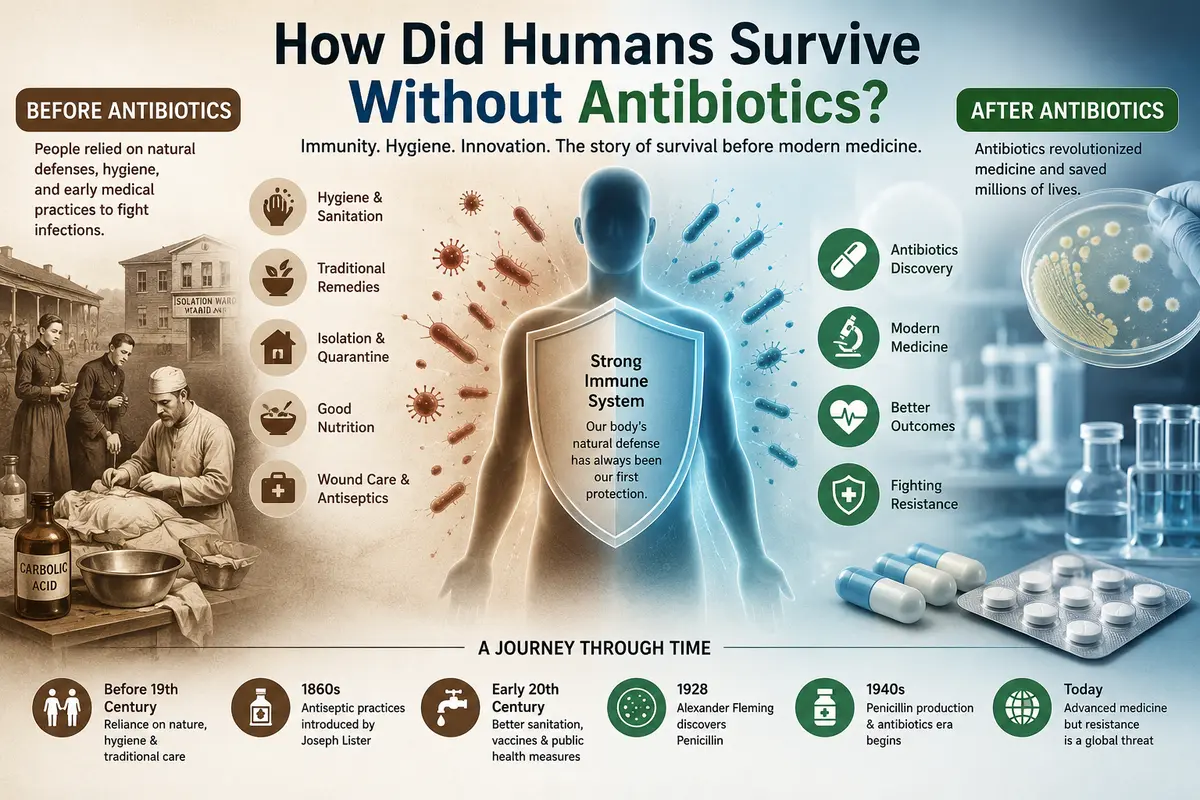
Discover how humans survived without antibiotics through immunity, hygiene, sanitation, wound care, and early medical treatments—and why infections were once so dangerous.
Introduction
Imagine waking up with a fever, sore throat, or infected wound. Today you can see a doctor and have a test done, and if a bacterial infection is diagnosed, you can be prescribed the right antibiotic. Within days, the infection may start to improve. But did you ever wonder what happened to people who got the same infections hundreds of years ago when there were no antibiotics?
Before modern antibiotics came into play, the human body had to fight many infections, mostly with the help of its own immune system. People also used wound care, hygiene, isolation, nutrition, traditional remedies, and other medical practices. But this did not mean that infections were harmless or easy to treat. Today they are often manageable, but sometimes serious or even deadly.
So how did humans live without antibiotics? The answer is a combination of the body’s remarkable immune defenses, improved hygiene and sanitation, natural recovery from many infections, and the development of early medical practices. At the same time, history also teaches us that survival in the pre-antibiotic age came with a tremendous price. Understanding this fascinating period allows us to understand the impact of antibiotics on medicine and also the significance of maintaining their effectiveness today.
So basically, humans lived through it without antibiotics because our bodies have always had strong natural defenses, but it was much more precarious to survive before modern medicine.
What Did People Do Before Antibiotics?
Humans had no alternative to antibacterial medications prior to the widespread availability of antibiotics. Rather, the body’s natural defenses, supportive care, wound care, hygiene, seclusion, sanitation, and, where accessible, medical procedures were all necessary to survive an infection. It is crucial to distinguish these approaches from antibiotics, though, as many serious infections are still difficult or impossible to treat, and the majority of traditional medicines are not clinically proven antibiotics.
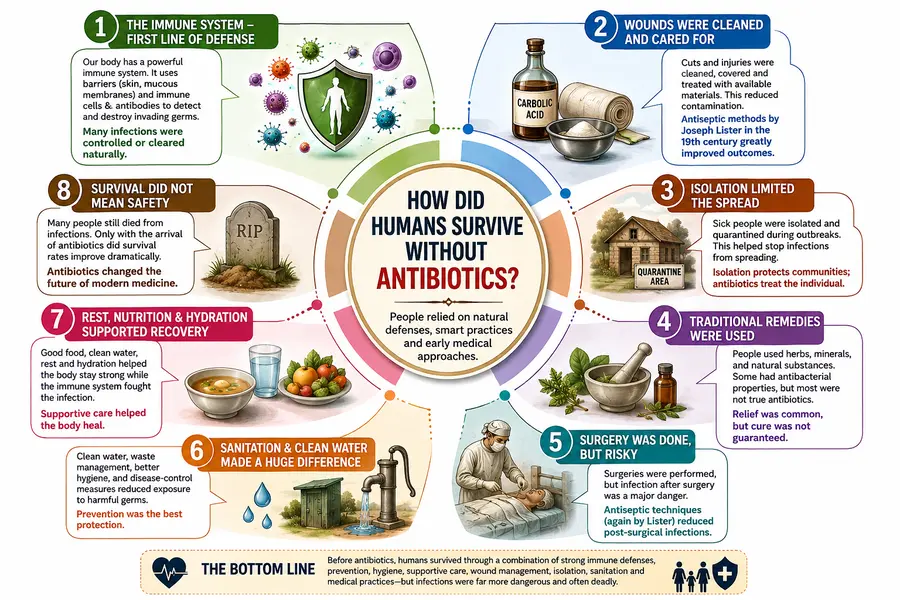
1. The Immune System Was the first line of defense.
The fact that humans have always had an immune system is the most significant response to the question, “How did humans survive without antibiotics?”
Through cellular and chemical reactions as well as physical barriers like skin and mucous membranes, the innate immune system offers prompt defenses against invasive germs. Innate immune systems are able to identify and combat an infectious organism if it manages to enter the body. Then, the adaptive immune system can produce more specialized cells and antibodies.
This indicates that not all bacterial infections could be cured without the use of an antibiotic. The immune system alone was able to control or eradicate several infections.
This should not be misinterpreted, though. Survival from every virus is not guaranteed by a healthy immune system. The bacterium, its virulence, the place of infection, the amount of the infectious dose, and the individual’s general health all affect the result.
Innate immunity, humoral and cellular immunity, host protective responses, and immunological responses to infectious pathogens are all considered essential elements of infectious disease in Murray’s Medical Microbiology.
2. Wounds Were Cleaned and Cared For
Microorganisms may enter the body through a cut or wound. In order to survive injuries, basic wound care was crucial.
In order to clean, cover, drain, or otherwise treat wounds, people employed various techniques in various cultures and historical eras. While some methods might have decreased contamination, others might have been more detrimental.
Antiseptic surgery’s subsequent advancement showed how significantly lowering microbial contamination could enhance results. An essential stage in this change was the nineteenth-century work of Joseph Lister. Fitzharris’s The Butchering Art explains how antiseptic procedures and germ theory changed surgery and how postoperative infection was a significant issue.
3. Isolation Helped Limit the Spread of Infection
One of the more effective tactics prior to antibiotics was occasionally stopping infections before they spread to other people.
During infectious illness outbreaks, communities employed quarantine and isolation measures. Experience demonstrated that keeping sick people apart might stop the spread of some diseases, even if people did not always understand microbes or transmission methods.
Antibiotics treat susceptible bacterial infections in individuals; isolation and quarantine primarily reduce transmission between people.
The history of public health demonstrates that treating infectious diseases required much more than just medication. The evolution of public health responses to infectious diseases is examined in George Rosen’s A History of Public Health, along with water supply, sewage disposal, maternal health, and nutrition.
4. Traditional Remedies Were Used—but They Were Not All Antibiotics
Throughout history, people have treated illnesses using a variety of substances, including plants, minerals, and animal products. Compounds with antibacterial activity may have been present in several traditional treatments, and many natural items have been studied for their potential medical benefits.
It’s possible that a traditional medicine had no antimicrobial action, only alleviated symptoms rather than curing the infection, or included an antibacterial component that wasn’t adequately standardized, purified, dosed, or tested to work as a modern antibiotic.
5. Surgery Was Performed, but Infection Was a Major Threat
Although surgery was practiced long before antibiotics, one of the main risks of the pre-antibiotic and pre-antiseptic periods was postoperative infection.
Surgeons could conduct big procedures in nineteenth-century hospitals, but patients were often at risk of postoperative infection. A significant shift in surgical practice was brought about by the discovery of antiseptic procedures.
Here, Joseph Lister’s work is especially significant. Fitzharris explains how Lister addressed surgical infection using the growing knowledge of microbes and antiseptic techniques. Carbolic acid was used in wound and surgical procedures as part of his strategy.
6. Sanitation and Clean Water Made a Huge Difference
One of the most common misunderstandings readers make is assuming that increases in survival from infectious diseases can be solely attributed to antibiotics.
Public health initiatives like the following might lessen contact with infectious germs:
- Cleaner living conditions
- better food hygiene,
- better waste management,
- sewage disposal,
- cleaner drinking water, and
- disease-control measures
Infectious disease control is positioned within this larger growth of public health, which also includes community health, water, sewage, and nutrition, according to George Rosen’s A History of Public Health.
Sometimes the best way to survive an infection was to prevent exposure to the pathogen in the first place.
7. Rest, Nutrition and Hydration Supported Recovery
Medical care frequently concentrated on helping the patient survive the sickness while the body coped with the infection when precise antibiotic medication was not available.
During illness, rest, a healthy diet, and staying hydrated can assist regular physiological processes. While supportive care can be crucial while the immune system reacts to an infection, it does not actively eradicate microorganisms.
Supportive care helps the patient cope with illness; antibiotics directly target susceptible bacteria.
Consequently, it would be deceptive to claim that patients “used rest instead of antibiotics.” Rest was not a substitute antibiotic; rather, it was supportive care.
8. Survival Did Not Mean Safety
Humans survived without antibiotics, but they did not survive every infection.
The body’s immune system or supportive care likely eliminated many infections, while isolation, cleanliness, and hygiene decreased exposure and transmission. However, severe bacterial infections have the potential to be fatal.
The potential for such a significant shift is demonstrated by the history of penicillin. The creation and therapeutic application of penicillin, as well as its effects on serious bacterial diseases, including pneumonia and blood poisoning, are described in Eric Lax’s book The Mold in Dr. Florey’s Coat.
Humans survived through a combination of natural immune defenses, prevention, hygiene, supportive care, wound management, isolation, sanitation and medical practices—but many people still died from infections that became treatable after the antibiotic era began
Did the Human Immune System Fight Infections Without Antibiotics?
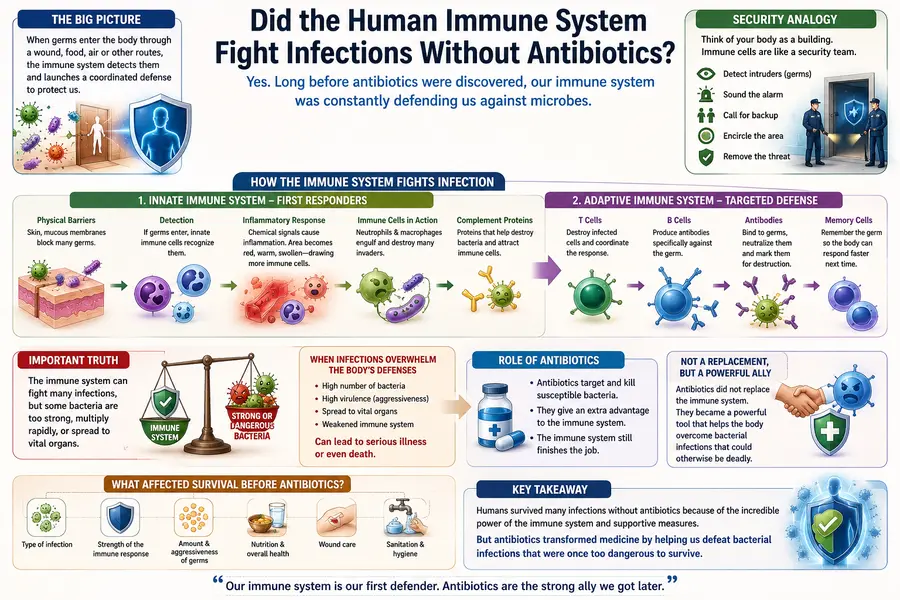
Indeed. Long before antibiotics were developed, the human immune system was battling microbes. The immune system detects the presence of hazardous germs and initiates a coordinated response when they enter the body through a wound, contaminated food, the respiratory tract, or another pathway. In order to identify and combat invasive bacteria, the innate immune system first uses physical barriers, inflammatory reactions, complement proteins, and immune cells like neutrophils and macrophages. Immune cells and other protective materials are drawn to the afflicted location by inflammation.
The adaptive immune system steps in if the infection persists, generating more targeted reactions via T cells, B cells, and antibodies. When unwelcome intruders enter a building, security professionals identify them, sound an alert, encircle the area, and attempt to eliminate the threat. Think of this procedure as your body’s security squad. In a similar vein, immune cells recognize, confine, and aid in the removal of pathogenic pathogens.
The immune system did not, however, eliminate the need for antibiotics. The body’s defenses can manage many infections, but certain bacterial infections have the potential to overpower them, spread to vital organs, or result in potentially fatal consequences. While the patient’s immune system continues to be crucial in eliminating the infection, antibiotics offer an extra weapon by combating vulnerable microorganisms. This explains why humans were able to withstand several diseases before the development of medicines, but it is false to believe that individuals had “stronger immunity” in the past.
The type of infection, the individual’s immune response, the quantity and aggressiveness of the invasive organisms, and supportive or preventive measures like nutrition, wound care, and sanitation all affected survival. Therefore, the creation of antibiotics did not take the role of the immune system; rather, it provided medicine with a potent instrument that might assist the body in overcoming bacterial illnesses that may have otherwise grown serious or lethal.
Why Didn’t Everyone Die From Bacterial Infections?
Not all bacterial infections develop into serious or fatal conditions. The human body has multiple defense mechanisms that can either stop microbes from starting an infection or get rid of them once they get inside. Many infectious organisms are controlled by the skin, mucous membranes, stomach acid, innate immune responses, inflammation, immune cells, antibodies, and other immunological systems. Furthermore, not all germs are dangerous. Large colonies of microorganisms, including several beneficial or harmless bacteria that aid in regular processes like digestion and defense against specific infections, are naturally present in the human body.
The immune system has a greater chance to limit and eradicate an infection if it stays localized rather than spreading throughout the body, even when disease-causing microorganisms enter the body. Although protection varies widely depending on the organism and the individual, prior exposure to particular diseases may also offer some immunological memory.
But being able to survive without the use of antibiotics does not mean that you are immune to bacterial illness. Infections like pneumonia, tuberculosis, bacterial meningitis, wound infections, and sepsis did cause many individuals to become gravely ill or pass away. The type and virulence of the bacteria, the location and intensity of the infection, the age and nutritional status of the individual, and the efficacy of their immune response all influenced the result.
When the immune system was unable to suppress an infection, doctors had significantly less effective treatments prior to the development of modern antibiotics. Because of this, the right response is not that people were inherently immune to bacteria, but rather that the body’s defenses effectively managed many infections, although severe infections could—and often did—lead to fatal consequences. Later, this was altered by antibiotics, which offered a successful cure for a variety of bacterial infections.
How Dangerous Were Infections Before Antibiotics?
Infectious diseases were one of the biggest risks to human life prior to the development of modern medicines, and infections that are now frequently curable may turn deadly with few treatment choices. While tuberculosis can last for years and progressively harm the lungs and other organs, pneumonia can develop into a serious respiratory infection. Inflammation surrounding the brain and spinal cord could be fatal if bacterial meningitis spreads quickly.
A seemingly little cut could develop into an infected wound, which would allow germs to penetrate deeper tissues and perhaps result in sepsis, a potentially fatal systemic reaction to infection. Bacteria could enter wounds and grow in injured tissue, making infection a significant concern following surgery. Additionally, infections connected to childbirth could pose a threat to mothers during the postpartum phase.
Serious bacterial infections could not be consistently eradicated by wound care, antiseptic procedures, isolation, sanitation, supportive care, and other methods. Therefore, the invention and widespread use of antibiotics marked a significant shift in medicine: diseases that previously carried a high risk of serious complications or even death may become considerably more manageable with the right therapy when caused by susceptible bacteria.
How Did Surgery Work Without Antibiotics?
Before the invention of current antibiotics, surgery was practiced for thousands of years, but one of its biggest risks was infection. Bacteria entering a wound might cause serious infection, gangrene, sepsis, or even death. Surgeons could remove damaged tissue, heal injuries, amputate limbs, and carry out other surgeries.
Although their techniques weren’t always supported by science, early surgeons employed a variety of wound cleansing and dressing techniques. When physicians became more aware of the link between microbes and infection, a significant change took place. Microbial contamination during surgery was lessened thanks to the development of antiseptic procedures, especially Joseph Lister’s work in the nineteenth century.
The danger of infection was further decreased by subsequent developments in sterilization, hand hygiene, surgical tools, operating room cleanliness, and aseptic technique. Therefore, poor hygiene → infection detection → antisepsis → sterilization and aseptic surgery → antibiotics can be seen as a progression in the history of surgery. The necessity of hygiene, sterilization, and infection-control methods was not replaced by antibiotics, which eventually introduced another potent layer of protection and made many surgical operations safer.
What Were Antiseptics, and Why Were They Important?
Chemicals known as antiseptics are administered to living tissues, such as skin or wounds, to lessen the risk of infection by reducing or inhibiting the growth of germs. Through the work of Joseph Lister, who applied the growing knowledge of microbes to surgical practice and encouraged the use of carbolic acid to lessen contamination during surgeries and wound care, their significance became particularly evident in the nineteenth century. Lister’s work contributed to the creation of contemporary antiseptic and aseptic procedures and established the idea that suppressing microbes might significantly enhance surgical outcomes.
However, it’s crucial to distinguish between antiseptics and antibiotics. Antiseptics are mainly used externally to living tissue to lessen germs at a specific location, while antibiotics are antimicrobial medications used to treat bacterial illnesses that the body is vulnerable to. Antiseptic procedures represented a significant turning point in the development of contemporary medicine, along with hand hygiene, tool sterilization, environmental cleanliness, and other infection-control techniques.
What Medicines Were Used Before Modern Antibiotics?
Antimicrobial medicines existed prior to the invention of current antibiotics. Traditional medical preparations and herbal medicines have been used for ages to treat a variety of ailments, but their efficacy varied greatly, and many had not been studied or standardized by science.
Later, as modern pharmacology developed, some significant examples emerged: quinine was used to treat malaria, despite the fact that quinine is not an antibiotic because malaria is caused by Plasmodium parasites rather than bacteria; Salvarsan (arsphenamine), which was introduced in the early 20th century, became an important treatment for syphilis caused by Treponema pallidum; and sulfonamides, which were introduced in the 1930s, became some of the first widely used systemic antibacterial medications before penicillin revolutionized the treatment of infectious diseases.
As a result, “before antibiotics” does not mean “before all antimicrobial medications.” Instead, it depicts a time when doctors had significantly fewer trustworthy and efficient antibacterial medications, and there were still few options for treating many dangerous bacterial diseases. The development of current antimicrobial therapy can be explained by this trend from conventional treatments and early antibacterial substances to sulfonamides and ultimately penicillin.
When Were Antibiotics Discovered?
The history of antibiotics is a tale of incremental scientific advancement rather than a singular discovery. In 1928, Scottish bacteriologist Alexander Fleming made a significant discovery when he noticed that a mold that had unintentionally grown on a Staphylococcus culture plate created a compound that prevented the growth of surrounding germs. He gave the antibiotic agent the name penicillin.
Fleming’s discovery did not, however, instantly result in a medication that was readily accessible. In order to analyze penicillin, create techniques for its extraction and purification, show its therapeutic potential, enhance its stability and manufacturing, and ultimately produce it on a big scale, years of additional research were needed.
Researchers like Howard Florey, Ernst Chain, and their associates were instrumental in transforming penicillin from a laboratory observation into a useful medication in the early 1940s. Penicillin became more widely accessible for patients with severe bacterial infections thanks to large-scale manufacture during World War II.
As a result, it would be more true to state that Fleming discovered penicillin’s antibacterial properties in 1928, but that finding was later developed into one of the most significant medical advances of the 20th century by researchers and industry.
How Did Antibiotics Change Human Life?
By making many formerly dangerous bacterial diseases curable and many medical operations safer, the development of powerful antibiotics radically changed modern medicine. Antibiotics became crucial for treating infections like sepsis and pneumonia as well as for safeguarding patients undergoing trauma care, major surgery, and other invasive procedures where bacterial infections could otherwise be fatal.
Because chemotherapy and anti-rejection medications can impair immunity and make bacterial infections especially hazardous, their significance extends beyond contemporary cancer treatment and organ transplantation.
As a result, antibiotics are now a crucial auxiliary tool for numerous medical specialties, such as difficult surgery, cancer treatment, organ transplantation, and critical care. Nevertheless, the human immune system was not replaced by antibiotics. Rather, they gave medicine an additional potent weapon against vulnerable bacteria, enabling the body’s immune system and antimicrobial therapy to cooperate. For this reason, one of the most significant turning events in the history of medicine is the discovery and development of antibiotics.
Before and After Antibiotics: How Did Medical Treatment Change?
Effective antibiotics revolutionized the treatment of bacterial illnesses, but it’s crucial to keep in mind that the medical revolution included more than just antibiotics. Better health outcomes were also significantly influenced by advancements in nutrition, diagnostics, antisepsis, sterilization, sanitation, cleanliness, immunization, and supportive care. The general differences between the pre-antibiotic era and contemporary medical care are shown in the table below.
| Before Modern Antibiotics | After Effective Antibiotics Became Available |
|---|---|
| Many serious bacterial infections had very limited specific treatment options. | Many bacterial infections became treatable with appropriate antibiotics when the bacteria were susceptible. |
| A wound infection could progress to severe infection, sepsis, or death. | Appropriate antibiotic therapy, combined with wound care and other medical treatment, can substantially improve outcomes for susceptible bacterial infections. |
| Surgery carried a significant risk of postoperative infection. | Antibiotics, together with sterilization, aseptic technique, antisepsis, and modern infection control, have made many surgical procedures much safer. |
| Treatment often depended heavily on supportive care while the immune system fought the infection. | Supportive care can be combined with targeted antimicrobial treatment when antibiotics are clinically appropriate. |
| Serious infections such as bacterial pneumonia, meningitis, and bloodstream infections could have very poor outcomes. | Effective antibiotics have greatly improved the prognosis of many serious bacterial infections. |
| Doctors had fewer reliable options when an infection became severe. | Modern medicine has multiple approaches, including microbiological diagnosis, antimicrobial therapy, intensive care, drainage or surgery when needed, and supportive treatment. |
| Infection was a major threat following injuries and invasive procedures. | Antibiotic treatment and, in selected circumstances, preventive antibiotic use can help reduce the risk or severity of certain bacterial infections. |
How Did Humans Survive Without Antibiotics?
In certain circumstances, individuals can survive without antibiotics; however, the type, severity, and location of the infection, as well as the individual’s general health and immunological response, will determine whether or not they can safely recover without them.
When the body’s immune system effectively combats the germs, some bacterial infections may go away on their own, but others can worsen quickly and become potentially fatal if proper treatment is not received. Antibiotics are therefore not used in modern medicine just because a patient exhibits symptoms like fever or inflammation; instead, they are meant to treat specific bacterial infections rather than viral illnesses like influenza and most common colds.
However, just because humans survived before the invention of antibiotics does not mean that they are no longer needed. When a doctor decides that an antibiotic is necessary, following the doctor’s instructions can help avoid complications and speed up healing. Without the proper medical advice, antibiotics should not be started, discontinued, skipped, or shared since improper or needless use can lead to antibiotic resistance.
What Happens When Antibiotics Stop Working?
Antibiotic resistance, a condition in which bacteria have evolved the capacity to withstand exposure to antibiotics that would typically kill them or stop their growth, is typically the issue when antibiotics stop working against a bacterial illness.
Due to genetic alterations or acquired resistance mechanisms, resistant bacteria may survive when susceptible bacteria are exposed to an antibiotic; these surviving bacteria can then proliferate and spread. Infections may become more challenging to treat as resistance grows, perhaps necessitating the use of various antibiotics, longer courses of treatment, or more intensive medical care.
Because of this, antibiotics shouldn’t be viewed as painkillers that only cause symptoms to go away. The type of bacteria and its resistance pattern are two examples of the variables that affect how well antibiotics function against susceptible bacteria. The spread and effects of antibiotic resistance can be lessened by appropriate antibiotic usage, infection prevention, vaccination, hygiene, and accurate diagnosis.
To put it simply, exposure to antibiotics causes selection pressure, which leads to the elimination or inhibition of susceptible bacteria, the survival of resistant bacteria, their multiplication and spread, and the difficulty of treatment.
FAQs
1. How did humans survive before antibiotics?
Answer: Humans survived before antibiotics mainly because the immune system could eliminate many infections on its own, while people also relied on wound care, hygiene, sanitation, isolation, supportive care, and traditional medical practices. However, survival did not mean infections were harmless—many people died from serious bacterial diseases such as pneumonia, tuberculosis, meningitis, sepsis, and infected wounds. Antibiotics later provided an additional powerful tool to treat many bacterial infections that the body could not control alone.
2. What did people use before antibiotics?
Answer: Before modern antibiotics, people relied on the immune system, wound cleaning, rest, nutrition and hydration, sanitation, isolation, antiseptic practices, surgery, and traditional/herbal remedies. Later, medicines such as quinine, Salvarsan, and sulfonamides provided specific treatments for certain infections before antibiotics became widely available.
3. What Is Antibiotic Resistance?
Answer: Antibiotic resistance occurs when bacteria develop the ability to survive or resist antibiotics that would normally kill them or stop their growth. As a result, infections can become harder to treat and may require alternative medicines or longer treatment.
4. Difference Between Bactericidal and Bacteriostatic Antibiotics
Answer: Difference Between Bactericidal and Bacteriostatic Antibiotics
Bactericidal antibiotics directly kill bacteria, whereas bacteriostatic antibiotics primarily stop bacteria from growing and multiplying, allowing the immune system to help clear the infection.
5. What Are Broad-Spectrum Antibiotics?
Answer: Broad-spectrum antibiotics are antibiotics that are effective against a wide range of bacteria, including different types of Gram-positive and Gram-negative bacteria. They are often used when the specific bacterium causing an infection is not yet known, but unnecessary use can disrupt normal microbiota and contribute to antibiotic resistance.
6. What Are Narrow-Spectrum Antibiotics?
Answer: Narrow-spectrum antibiotics are antibiotics that act against a limited range of bacteria, usually targeting specific groups such as Gram-positive or Gram-negative bacteria. They are preferred when the causative bacterium is known because they can target the infection more specifically while generally causing less disruption to the body’s normal microbiota than broad-spectrum antibiotics.
7. How Do Bacteria Become Resistant to Antibiotics?
Answer: Bacteria become resistant to antibiotics through genetic mutations or by acquiring resistance genes from other bacteria. When an antibiotic is used, susceptible bacteria are killed or inhibited, while resistant bacteria survive, multiply, and spread. Incorrect or unnecessary antibiotic use can accelerate this selection process, making infections increasingly difficult to treat.
References
- Murray, P. R., Rosenthal, K. S., & Pfaller, M. A. (2025). Medical microbiology (10th ed.). Elsevier. Excellent primary textbook for bacterial infections, host defenses, antibiotics, antimicrobial resistance, and infectious diseases. The 10th edition was published in 2025 and is the current edition listed by Elsevier.
- Rosen, G. (2015). A history of public health (Rev. expanded ed.). Johns Hopkins University Press. Particularly useful for your sections on sanitation, clean water, sewage disposal, infectious disease control, nutrition, and the development of public health.
- Fitzharris, L. (2017). The butchering art: Joseph Lister’s quest to transform the grisly world of Victorian medicine. Scientific American/Farrar, Straus and Giroux. Useful for the history of surgery, surgical infection, antiseptic practices, and Joseph Lister’s contribution to safer surgery.
- Lax, E. (2004). The mold in Dr. Florey’s coat: The story of the penicillin miracle. Henry Holt and Company. Useful for explaining the development of penicillin and the transition from Fleming’s observation to practical antibiotic treatment.
- Waksman, S. A. (1953). My life with the microbes. Simon and Schuster. Useful historical background for the development of antimicrobial research and the discovery of antibiotic substances.