Types, Ray Diagrams, and Functions of Condensers, Eyepieces, and Objectives: Powerful & Amazing Explanations
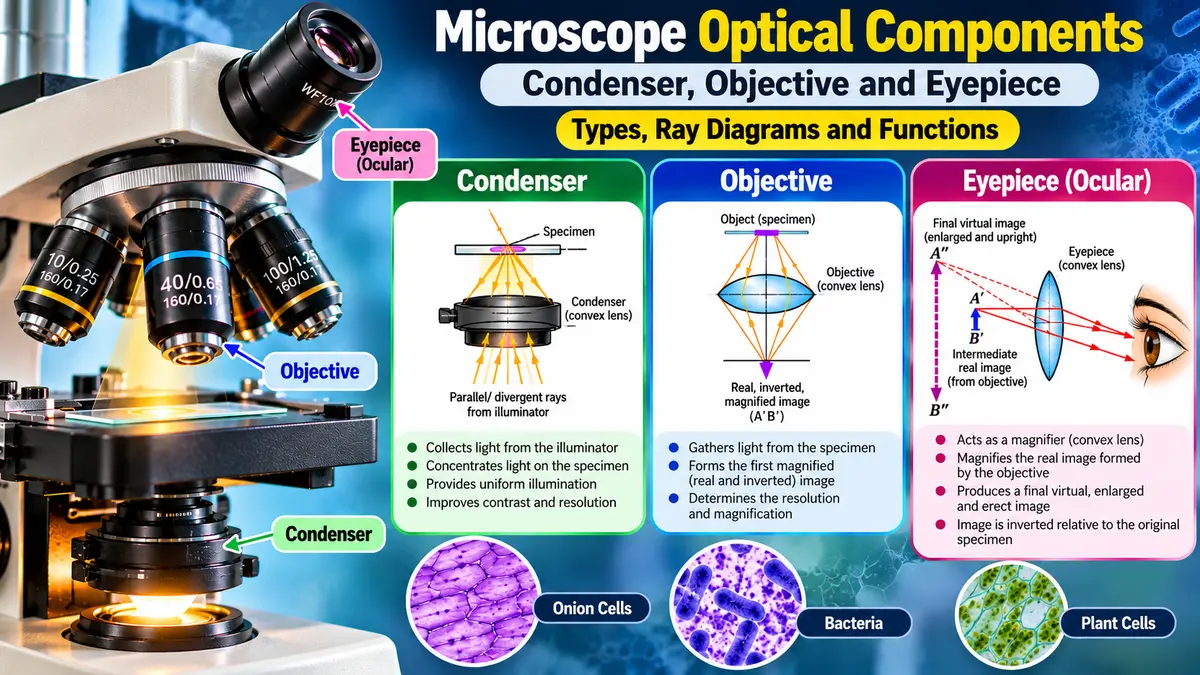
Types, ray diagrams, and functions of condensers, eyepieces, and objectives

Explore the types, ray diagrams, and functions of microscope condensers, eyepieces, and objective lenses with simple, student-friendly explanations and examples. Introduction A Microscope Is More Than Just a Lens. A microscope does not just “make things bigger.” Every part inside it has a role. The condenser focuses light, the objective gathers light and creates the … Read more
What is the Basic Principle of Microscopy? 10 Amazing Facts Every Student Must Know

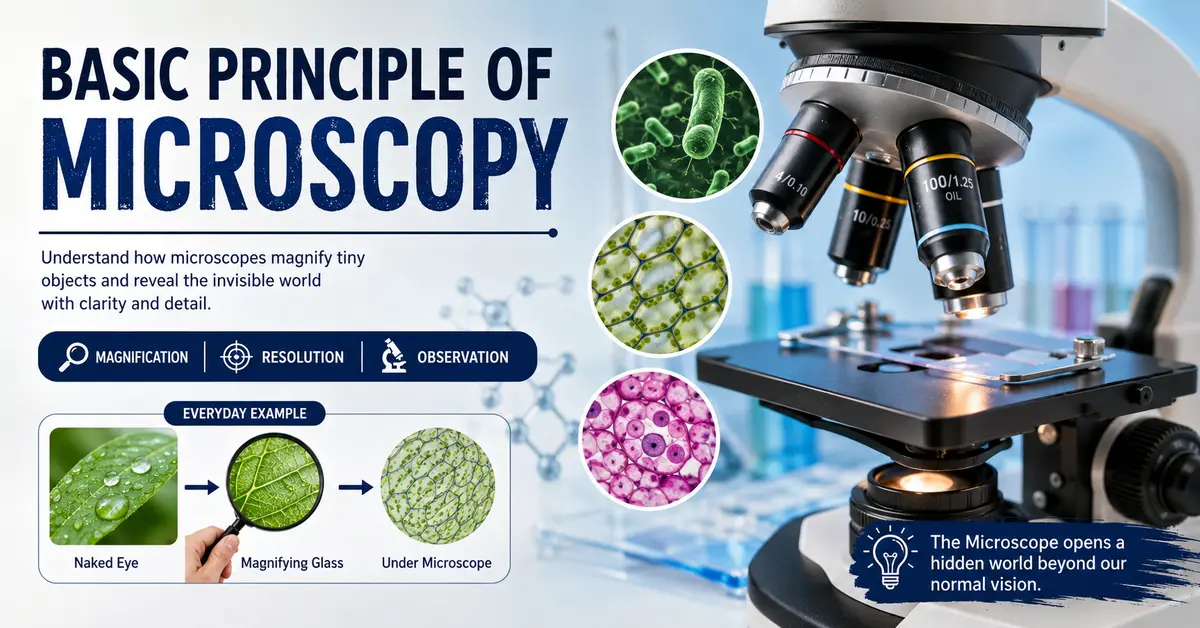
What are the basic principles of microscopy?

Learn what is the basic principle of microscopy is in simple language with easy day-to-day life examples. Perfect for students to understand magnification, resolution, and microscope working. Introduction Have you ever tried to read the tiny expiry date on a medicine strip or looked closely at the fine details of a flower using a magnifying … Read more

Aberrations in Objective Lenses: 7 Essential Types, Causes & Best Corrections

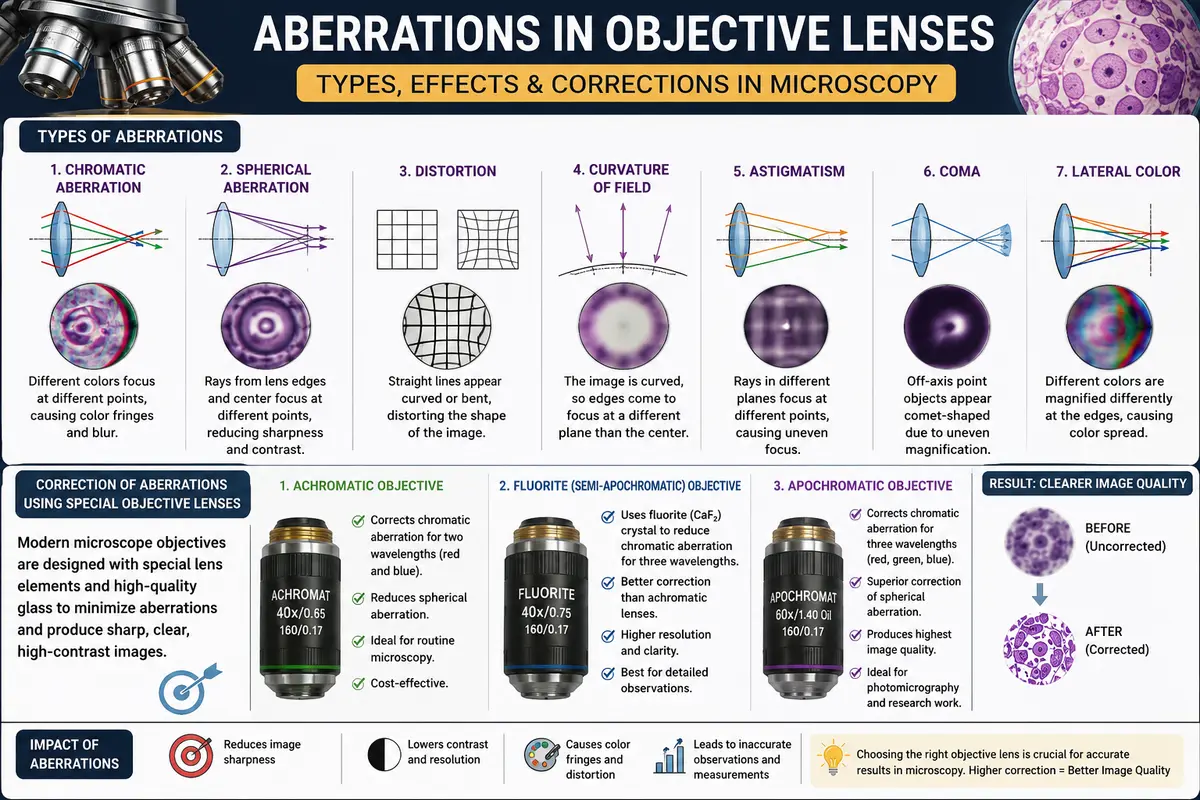
Aberrations in Objective Lenses

Learn about aberrations in objective lenses, including chromatic aberration, spherical aberration, distortion, astigmatism, coma, and their corrections using achromatic, fluorite, and apochromatic objective lenses in microscopy. Aberrations in objective lenses are optical defects that reduce the quality of microscopic images by preventing light rays from focusing accurately. Introduction Aberrations in the objective lens are a … Read more