
Late one evening in a microbiology laboratory, a student named Neha stared through her microscope at a strange fungal sample growing on a Petri plate. The colony looked different from the bread mold she had studied earlier. Confused, she asked her professor why fungi appear in so many forms. Her professor smiled and replied, “That’s why the classification of fungi is one of the most important topics in microbiology. Without classification, understanding fungi would be nearly impossible.”
From mushrooms in forests to microscopic yeasts used in biotechnology, fungi exist in countless forms. Scientists classify fungi based on their structure, reproduction, morphology, and genetic relationships. For students, researchers, and microbiology study lovers, understanding the types of fungi is essential for studying medicine, agriculture, ecology, biotechnology, and environmental science.
In this detailed guide, we will explore the classification of fungi, including traditional and modern systems, examples, diagrams, trends in fungal taxonomy, and important keywords like ‘morphological classification of fungi,’ ‘Ainsworth classification of fungi,’ ‘Alexopoulos and Mims classification of fungi,’ and more.
Understanding the classification of fungi is a fundamental skill for microbiology students and researchers, and it can also help you explore the vast scope of microbiology and exciting career opportunities in the field.
Important Statistics About Fungi
Fungi are one of the most diverse groups of organisms on Earth.
Important fungal statistics include:
- Scientists estimate there are approximately 2.2 to 3.8 million fungal species worldwide.
- Only about 155,000 fungal species have been officially identified and classified so far.
- Fungi contribute significantly to nutrient cycling and decomposition in ecosystems.
- The World Health Organization (WHO) recognized several fungal pathogens as global health threats in 2022.
These statistics highlight why awareness of fungi is becoming increasingly important for microbiology students and researchers.
Kingdom Fungi
A distinct kingdom of heterotrophic creatures is made up of fungi. Their morphology and habitat exhibit a significant amount of variation. You must have seen rotten fruit and fungus on wet bread. Fungi include toadstools and the ordinary mushrooms you eat.
A parasitic fungus causes the white patches on mustard leaves. Beer and bread are produced using some unicellular fungi, such as yeast. Other fungi, such as Puccinia, which causes wheat rust, are responsible for diseases in both plants and animals. Some, like Penicillium, are the source of antibiotics. Fungi are ubiquitous and can be found on plants, animals, water, soil, and the air.
Fungi are filamentous, except for unicellular yeasts. Hyphae are long, thin, thread-like structures that make up their bodies. Mycelium is the term for the network of hyphae. Certain hyphae, known as coenocytic hyphae, are continuous tubes that contain multinucleated cytoplasm. Some have hyphae with septae or cross walls. Fungal cell walls are made of carbohydrates and chitin.
Fungi can reproduce vegetatively through fission, budding, and fragmentation. Spores known as conidia, sporangiospores, or zoospores reproduce asexually, while oospores, ascospores, and basidiospores reproduce sexually. Different spores are produced in unique structures known as fruiting bodies.
The three steps of the sexual cycle are as follows:
(i)Plasmogamy, the fusion of protoplasts between two motile or non-motile gametes.
(ii) Karyogamy, the fusion of two nuclei.
(iii) Zygote meiosis, which produces haploid spores.
The kingdom is divided into different classes based on their morphology, fruiting bodies, spore-generation process, mycelium shape, ability to reproduce, mode of nutrition, cross-walls, infection, evolutionary relationships, modern criteria, etc.
The classification of fungi refers to the scientific arrangement of fungi into groups based on similarities and differences.
Scientists classify fungi according to the following:
- Morphology
- Reproduction
- Spore formation
- Cellular organization
- Genetic relationships
- Evolutionary history
Classification of fungi helps researchers identify species, understand diseases, improve agriculture, and discover medicinal compounds.
The division of mycota, or fungi and molds, includes the genuine slime molds. The classification of fungi is primarily intended for practical use, but it also has some bearing on phylogenetic considerations.
Phycomycetes, the lower fungi, and the Eumycetes, which means higher fungi. The fungi can be categorised based on several factors, such as
- Classification of fungi based on taxonomy hierarchy (Nigerian classification, Gwynne-Vaughan and Barnes system (1926), E. A. Bessey system (1950), G. M. Smith system (1955), Martin (1965))
- Classification of fungi based on spore production.
- Classification of medically important fungi.
- Classification of fungi based on route of acquisition.
- Classification of fungi based on virulence.
- Classification of fungi based on nutrition.
- Classification of fungi based on reproduction.
- Classification of fungi based on evolutionary relationships.
- Classification of fungi based on the cross-wall.
Taxonomical Classification of Fungi
A key component of biology that aids our understanding of fungi’s diversity, evolution, and ecological significance is taxonomy. Fungi are distinct organisms that are different from both plants and mammals in several ways. They obtain nutrients from organic debris through external digestion because they lack chlorophyll and are unable to produce photosynthesis, in contrast to plants.
Molecular research has revealed that fungi have a closer evolutionary relationship with animals despite their outward similarities to plants.
As researchers started to identify the wide variety of shapes and purposes found in this kingdom—from enormous, multicellular mushrooms to single-celled yeasts—the necessity to categorize fungi emerged. Simple traits like appearance, environment, or mode of nourishment were the basis for early classifications.
However, a more accurate and scientific method of classification is now possible thanks to developments in molecular biology and microscopy, which have given greater insights into their cellular architecture and genetic links.
Because they include membrane-bound organelles and a genuine nucleus, fungi are categorized under the Kingdom Fungi (Mycota or Eumycota) within the Domain Eukarya. Based on genetic information, spore development, and reproductive structures, this kingdom is further subdivided into major divisions (phyla).
Chytridiomycota, Zygomycota, Ascomycota, Basidiomycota, and Deuteromycota (also called Fungi Imperfecti) are the main groups. Each group has unique characteristics that are indicative of its ecological role and evolutionary history.
Biologists can better comprehend the vital roles that fungi play in nature, from symbiotic partnerships and nutrient recycling to industrial and medical uses, by classifying fungi and tracing their evolutionary ties. Thus, investigating the diversity and importance of fungi in biological and environmental systems requires an understanding of their taxonomy.
The taxonomical classification of fungi follows hierarchical biological classification.
Taxonomic Hierarchy
- Kingdom
- Division
- Class
- Order
- Family
- Genus
- Species
Example:
| Taxonomic Rank | Example |
| Kingdom | Fungi |
| Division | Ascomycota |
| Class | Saccharomycetes |
| Genus | Saccharomyces |
| Species | cerevisiae |
Taxonomic classification of fungi helps researchers identify and study fungi systematically.
The classification of fungi is a difficult process since it provides a variety of issues that arise from differences of opinion among workers.
The problem becomes increasingly more challenging when we learn new facts about fungi, which frequently necessitate a rethinking of their connection and categorization.
There are numerous fungal classifications since they involve categorizing diverse fungi and identifying them according to an internationally agreed-upon standard. Such as:
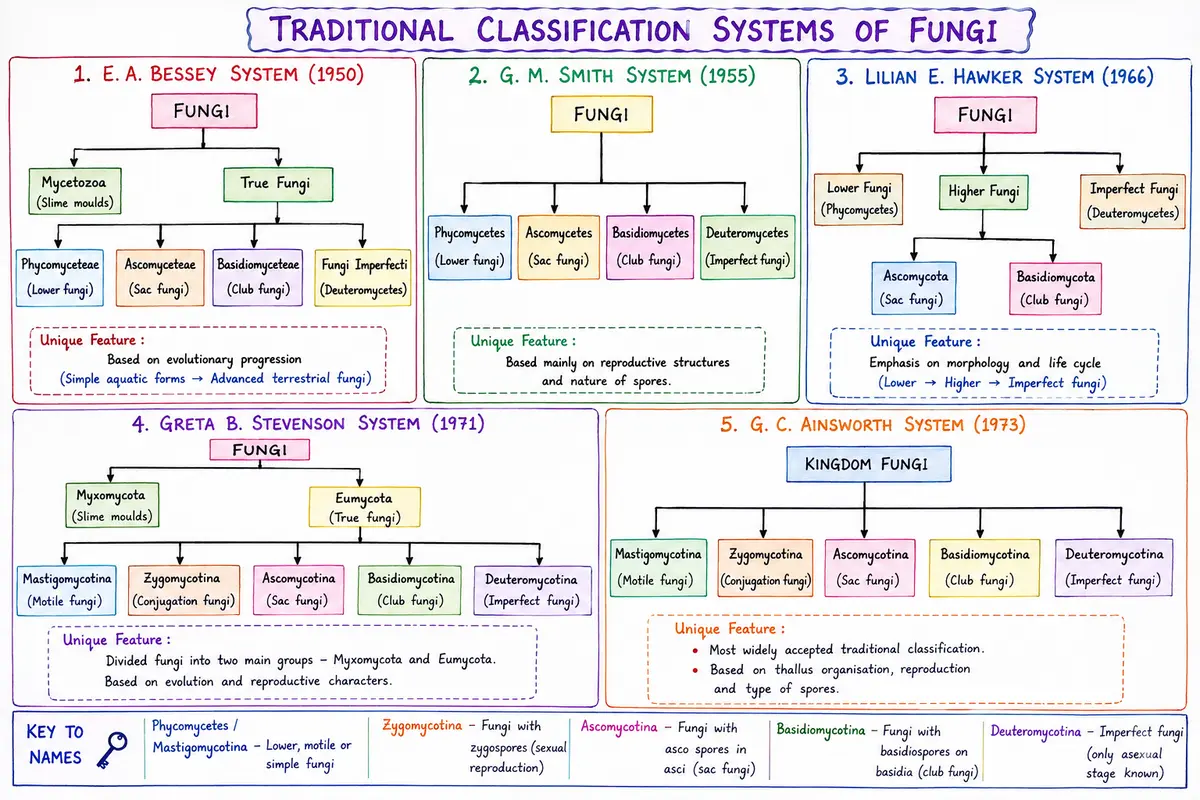
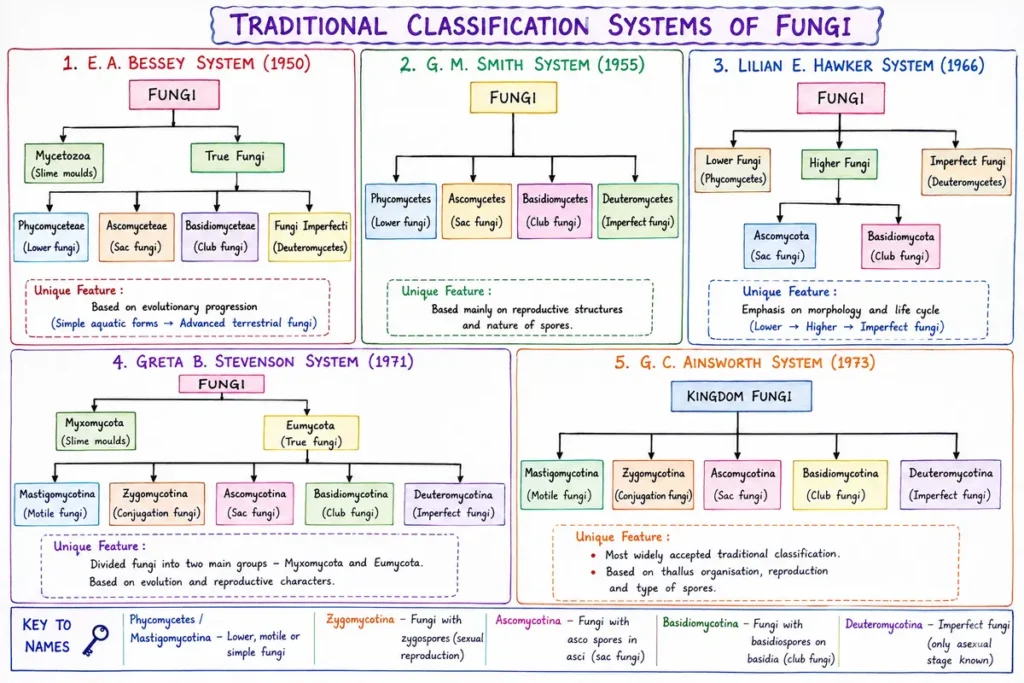
- The Gwynne-Vaughan and Barnes system (1926).
- E.A. Bessey System (1950)
- G. M. Smith System (1955)
- Alexopoulos and Mims System (1962)
- Lilian E. Hawke (1966)
- Greta B. Stevenson (1971)
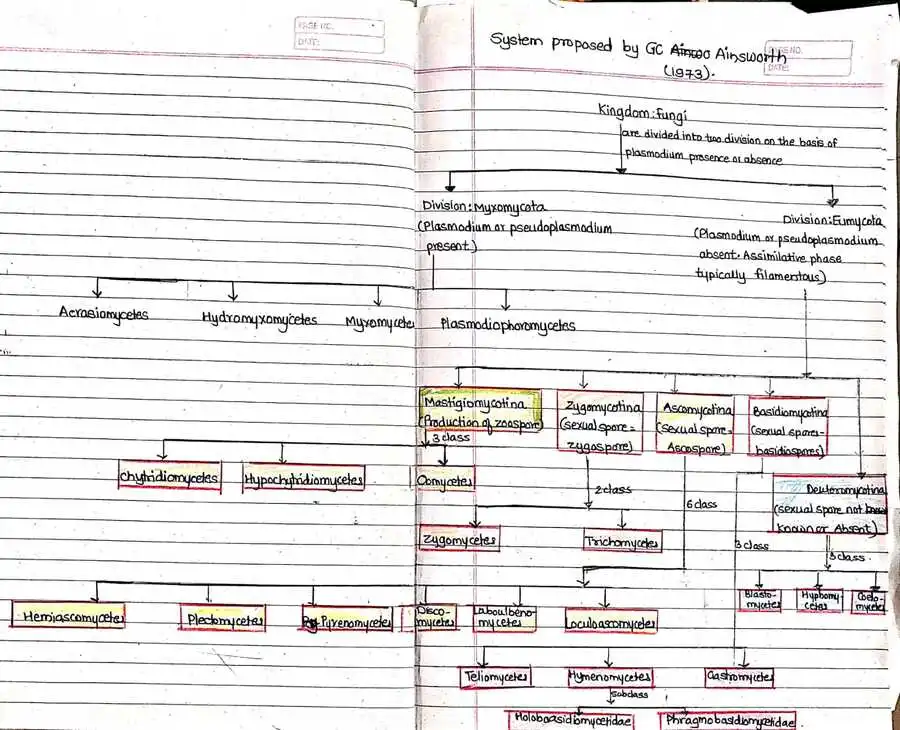
- GC Ainsworth (1973)
Most authors categorize fungi into four primary classes. However, the taxonomy of fungi proposed by Gwynne-Vaughan and Barnes is the most common and widely used.
Gwynne-Vaughan and Barnes system (1926)
Gwynne-Vaughan and Barnes classified fungi into four classes according to mycelium septation and spore features.
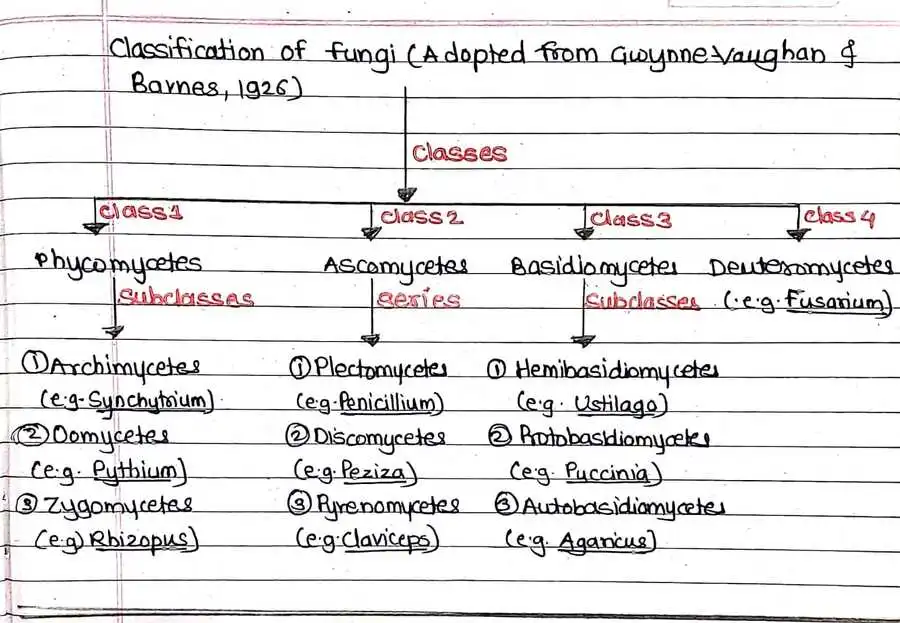
The classification of fungi outline is as follows:
Class 1. Phycomycetes (Lower Fungi)
- Subclass 1: Archimycetes (Order 1: Chytridiales, Order 2. Acrasiales, Order 3. Protomycetales
- Subclass 2: Oomycetes (Oogamous Fungi) (Order 1: Blastocladiales; Order 2: Monoblepharidales; Order 3: Leptomitales; Order 4. Saprolegniales, Order 5. Peronosporales
- Subclass 3: Zygomycetes (Conjunction Fungi).
Class 2: Ascomycetes (Sac Fungi)
- Series 1: Plectomycetes (Order 1: Plectascules, Order 2. Erysiphales, Order 3. Exoskeletons).
- Series 2: Discomycetes (Order 1: Pezizales, Order 2. Helevellales, Order 3. Tuberales, Order 4. Phacidiales,Order 5. Hysteriales).
- Series 3. Pyrenomycetes (Order 1. Hypocreales, Order 2. Dothideales, Order 3. Laboulbeniales, Order 4. Sphaeriales).
Class 3: Basidiomycetes (Club Fungi)
- Subclass 1. Hemibasidiomycetes (Order 1. Ustilaginales)
- Subclass 2. Protobasidiomycetes (Order 1. Uredinales, Order 2. Tremellales, Order 3. Agaricales)
- Subclass 3. Autobasidiomycetes (Order 1. Hymenomycetales, Order 2. Gasteromycetales
Class 4: Deuteromycetes (Imperfect Fungi)
- Order 1: Hyphomycetes
- Order 2. Melanconiales
- Order 3. Sphaeropsidales
The E. A. Bessey system (1950) classification for fungi.
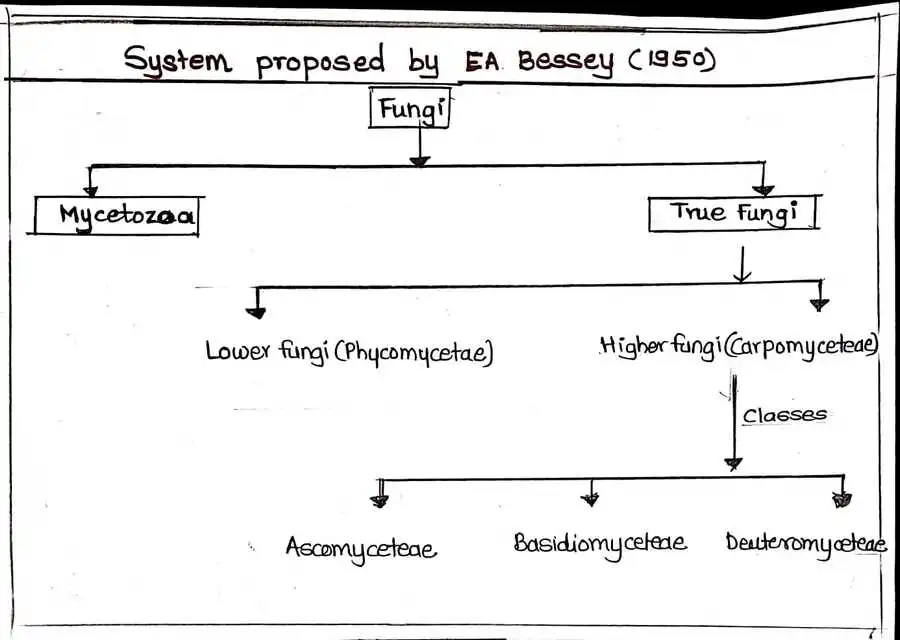
Ernst Athearn Bessey proposed the E. A. Bessey (1950) classification system, which is considered one of the most important traditional fungal classification systems. It is mostly based on the evolutionary relationships, thallus organization, and reproductive systems of fungi.
Bessey believed that fungi evolved from simple watery forms to more complex terrestrial forms, and he classed them based on the development of reproductive organs and spore-producing structures.
Key characteristics of the E. A. Bessey system (1950) classification system:
- E. A. Bessey made the proposal in 1950.
- Morphology, evolution, and reproduction serve as the foundations.
- The evolution of fungus was emphasized.
- Fungi were classified into broad categories based on reproductive features.
- Served as the foundation for numerous subsequent classification systems.
Key to the Major Groups of Fungi
- The vegetative stage is permanently naked and can be flagellate or amoeboid. Encysted spores are created to function as organs of dissemination or to transport organisms through adverse environments. (Subclass: Mycetozoa)
- Vegetative stage for all or part of its growth, characterized by cell walls.
- True fungi begin as one-celled organisms and subsequently develop into planocytes or a coenocytic mycelium. Sexual reproduction causes the generation of a zygospore or an oospore. (Phycomycetaceae class)
- Plants are one-celled and do not produce planocytes or a cellular mycelium. Sexual reproduction leads to the creation of a spore fruit.
- Higher Fungi (Phylum: Carpomyceteae): The ultimate reproductive spores of the sporocarp are formed internally in an ascus. (Class: Ascomyceteae).
- The ultimate reproductive spores of the spore fruit are produced externally on a basidium or comparable. The sexual reproduction stage is unknown. (Class Basidiomyceteae).
- Class: Fungi Imperfect; each chapter concludes with a key to the families and more important genera of the orders discussed.
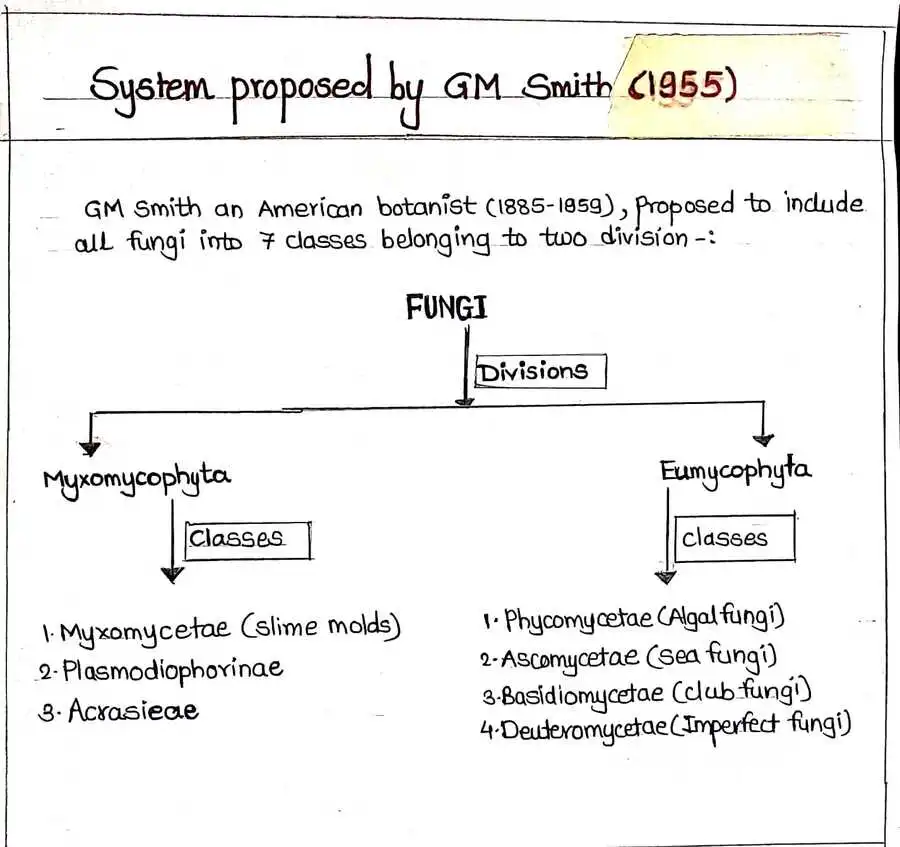
The G. M. Smith system (1955) classification for fungi.
Gilbert Morgan Smith proposed the G. M. Smith (1955) classification system, which is a conventional fungal categorization system. It categorizes fungi mostly based on their vegetative structure, mode of nourishment, and methods of reproduction, including the nature of sexual and asexual spores.
In this approach, fungi were classified based on their evolutionary history and reproductive traits. It was frequently employed in botany and mycology prior to the introduction of contemporary molecular categorization techniques.
Key characteristics of the G. M. Smith system (1955) classification system:
- G. M. Smith made the proposal in 1955.
- Based on morphology and reproductive structure.
- Spore types and life cycle patterns were emphasized.
- Included significant fungus groups such as Phycomycetes, Ascomycetes, Basidiomycetes, and Deuteromycetes.
- Served as a solid foundation for subsequent fungal classification systems.
Alexopoulos and Mims’ (1979) classification system for fungi.
In 1979, Alexopoulos and Mims devised a classification system for fungi. They classify the fungus, including slime molds, under the kingdom. Mycota of the super kingdom Eukarya, which also comprises four other kingdoms. Alexopoulos and Mim (1979) classified fungus within the kingdom. Slime molds are among the eukaryotic mycota. The fungi were classified into three divisions within four kingdoms of Mycetae: (i) (i) (i) Gymnomycota, (ii) Mastigomycota. iii) Amastigomycota.
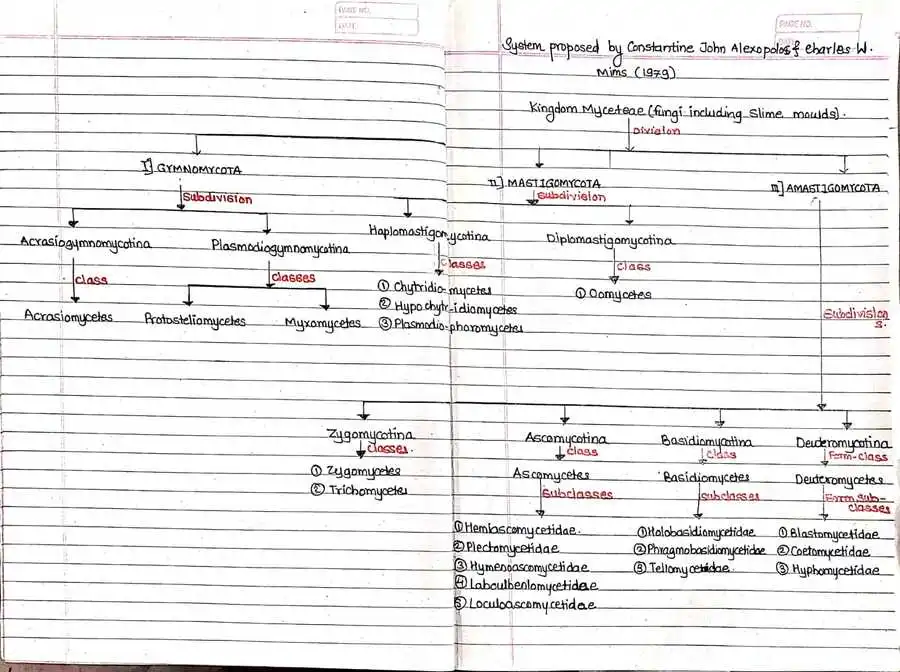
They create three divisions within the kingdom Mycetae:
The division is further classification of fungi into classes, subclasses, orders,
- Gymnomycota
- Mastigomycota
- Amastigomycota.
Division I: Gymnomycota
Phagotrophic organisms without cell walls are among them. Acrasiogymnomycotina and Plasmodiogynomycotina are the two subdivisions that make up this division.
1. Subdivision: Acrasiogymnomycotina: It consists of a single class, Acrasiomycetes.
Class 1. Acrasiomycetes: Except for one species, the organism lacks flagellated cells. The class comprises
Subclass 1. Acrasiomycetidae.
Subclass 2. Dictyosteliomycetidae.
2. Subdivision :Plasmodiogymnomycotina: It is divided into two classes
Class 1. Protosteliomycetes
Class 2. Mycomycetes: It includes the real slime mold and has three subclasses, namely.
Subclass 1. Ceratiomyxomycomycetidae, 1 Order: Ceratiomyxales
Subclass 2. Mycogasteomycetidae, 4 orders: Liceales, Echinosteleales, Trichiales, and Physarales.
Subclass 3. Stemonitomycetidae, 1 order: Stemonitales.
Division II: Mastigomycota
Fungi that absorb nutrients can be unicellular or filamentous, and they have a coenocytic mycelium. They are categorized into two categories.
1. Subdivision: Haplomastigomycotina: Contains fungi with uni- or bi-flagellate zoospores.
Class 1. Chytridiomycetes: Fungi generating zoospores are equipped with a single whiplash flagellum inserted at the posterior end.
Class 2. Hyphochytridiomycetes: Motile cells with a single tinsel flagellum inserted in the anterior end.
Class 3. Plasmodiophoromycetes: Parasitic fungi produce biflagellate motile cells with both whiplash-type flagella inserted at the front end.
2. Subdivision: Diplostigmatomycotima: During sexual reproduction, oogamous zoospores divide.
Class 1: Oomycetes, 4 orders: Lagenidiales Saprolegnailes Leptomitales Peronosporales
Division III: Amastigomycota
Fungi with absorptive nourishment lack motile cells and have aseptate or septate mycelium with four subdivisions.
1. Subdivision: Zygomycotina:
Class 1: Zygomycetes—it includes six orders.
Class 2: Trichomycetes: It comprises five orders.
2. Subdivision :Ascomycotina: Fungi normally have septate mycelium and produce haploid ascospores in sac-like cells called asci.
Class 1: Ascomycetes: Divided into five subclasses
Subclass 1: Hemiascomycetidae, comprising three orders.
Subclass 2. Plectomycetidae: five orders.
Subclass 3: Hymenoascomycetidae: ten orders.
Subclass 4: Laboulbeniomycetidae: Two orders.
Subclass 5: Lowloascomycetidae: five orders.
3. Subdivision: Basidiomycotina: Septate mycelium generates basidiospores exogenously on a variety of basidia.
Class 1 Basidiomycetes: It is divided into three subclasses.
Subclass 1. Holobasidiomycetidae
Subclass 2. Phragmobasidiomycetidae
Subclass 3. Teliomycetidae
4. Subdivision: Deuteromycotina: It comprises imperfect fungi, whose sexual stage is unknown. It contains a single class.
Class 1: Deuteromycetes
Subclass 1. Blastomycetidae
Subclass 2. Coelomycetidae
Subclass 3. Hyphomycetidae
Martin’s (1965) classification system for fungi.
Martin 1965 proposed a classification according to the spore formation in fungi. The outline of classification of fungi is given.
Division: Mycota. These include non-green nucleated thallophytes that are saprophytes or parasites in nourishment.
Subdivision: Myxomycotine. The thallus is an achlorophyllous multinucleated clump of protoplasm termed ‘plasmodium,’ such as slime molds.
Subdivision: Eumycotina: This subdivision includes all fungi except for slime molds.
Lower fungi: They have simple thalli that are unicellular and others filamentous (typically there are no septa).
Class Chytridiomycetes: Motile cells have a single whiplash-type flagellum inserted at the posterior end.
Class Hyphochytridiomycetes: Motile cells have a single tinsel-type flagellum inserted at the anterior end.
Class. Plasmodiophoromycetes: Motile cells are biflagellated (whiplash type), with one being longer than the other.
Class. Oomycetes: Motile cells are biflagellated, of almost equal length, with one pointing ahead and the other trailing behind.
Class. Zygomycetes: Motile cells are lacking. Asexual reproduction occurs by sporangiospores.
Class Trichomycetes: Motile cells are absent. Asexual reproduction occurs through conidia.
Higher fungi: The somatic phase comprises primarily a mycelium that is typically septate.
Class Ascomycetes: The peculiar spores termed ‘ascospores’ are produced endogenously within a sac-like structure known as ‘asci.’
Class Basidiomycetes: Characteristic spores called basidiospores are formed exogenously on club-shaped structures called basidia.
Class Deuteromycetes: The sexual stage is unknown. The somatic phase consists of a septate mycelium that multiplies by conidia.
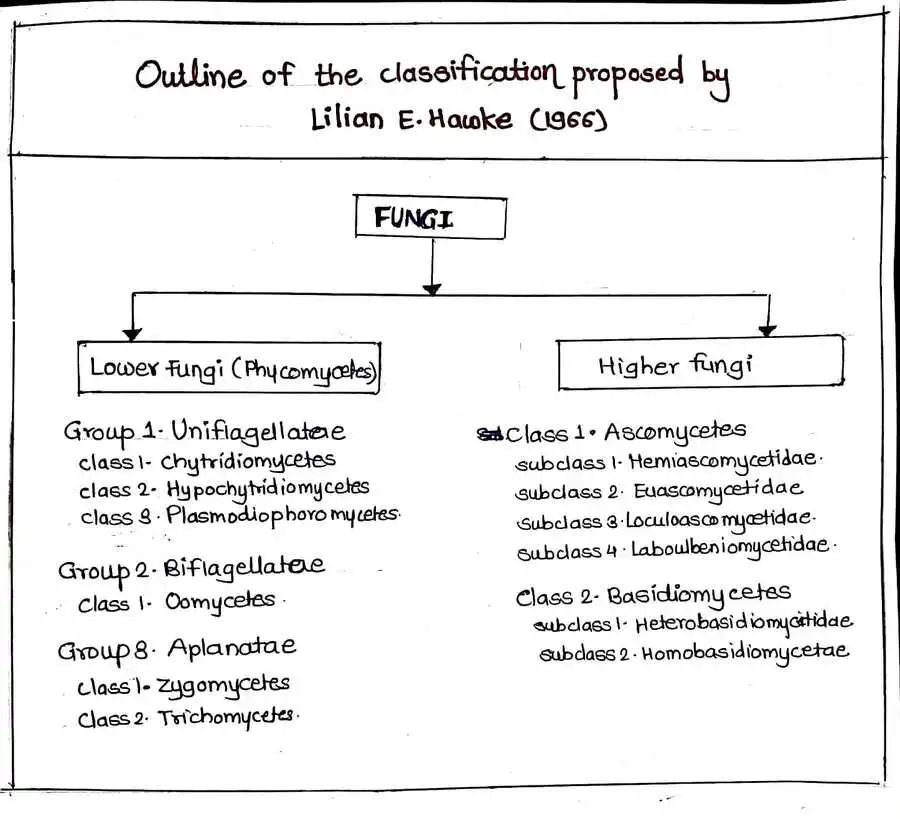
Lilian E. Hawke’s (1966) classification system for fungi.
Lilian E. Hawke’s (1966) classification of fungi scheme is a classic categorization of fungi based mostly on morphological traits, thallus organization, and reproduction processes. This approach classified fungi based on the presence of reproductive structures and the characteristics of sexual and asexual spores.
Hawke categorized fungus into major categories based on evolutionary ties and reproductive characteristics. The categorization was commonly employed in mycology prior to the discovery of contemporary molecular and genetic classification techniques.
Key characteristics of Lilian E. Hawke’s (1966) classification system:
- Lilian E. Hawker proposed it back in 1966.
- Based on morphology and reproduction.
- Focused on fungal life cycles and spore generation.
- Helped in the study and identification of fungal groups.
- Served as a significant step toward contemporary fungal taxonomy.
Greta B. Stevenson’s (1971) classification system for fungi.
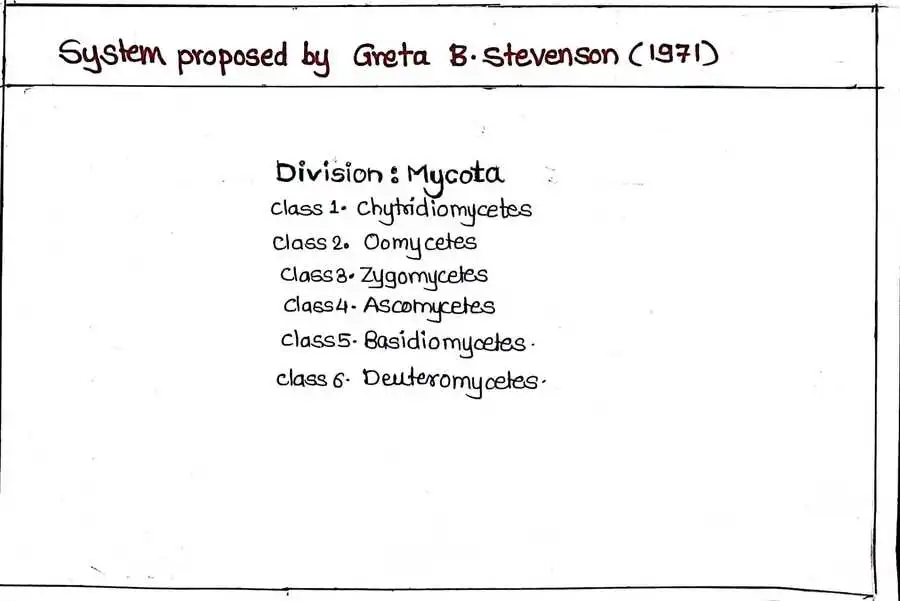
The Greta B. Stevenson (1971) classification system is a classic fungal classification that focuses on thallus anatomy and reproduction techniques. In this approach, classification of fungi is based on their evolutionary history and reproductive traits.
Key characteristics of Greta B. Stevenson’s (1971) classification system:
- Greta B. Stevenson proposed it back in 1971.
- Fungi are classified into Myxomycota and Eumycota.
- Based mostly on morphology and reproduction.
- Prior to the widespread adoption of molecular categorization methods in mycology, this technique was widely utilized.
- Helped to comprehend the evolutionary links between important fungal families.
GC Ainsworth’s (1973) classification system for fungi.
G.C. Ainsworth’s (1973) classification of fungi is one of the most widely acknowledged conventional methods for classifying fungi. It was proposed by Geoffrey Clough Ainsworth, a British mycologist, and is mostly based on thallus shape, mechanism of reproduction, and spore type.
Key characteristics of Ainsworth’s (1973) classification of fungi:
- Based primarily on physical and reproductive traits.
- Classification of fungi based on the sort of sexual and asexual spores produced.
- Highlights fungal life cycles and reproductive systems.
- It divides fungi into subdivisions, classes, subclasses, and orders.
- Serves as the foundation for many modern classification systems.
Morphological Classification of Fungi
Classification of fungi based on their morphology into four groups, i.e., yeast, yeast-like fungi, filamentous fungi, and dimorphic fungi.
1. Yeasts
Unicellular fungi are nothing but yeast. Compared to bacteria, yeast cells are much larger, oval or round, unicellular microscopic creatures.
Characteristics:
- Yeasts are single-celled fungi that are important for their ability to ferment sugars and produce alcohol and carbon dioxide. Yeast is mostly used in the production of bread, beer, wine, and other fermented foods and beverages. Saccharomyces cerevisiae, commonly known as baker’s yeast, is one of the most well-known and widely used yeasts.
- The mode of reproduction of yeast is budding.
- Yeasts are round or oval in shape.
- They lack any kind of motility structure, including flagella.
- They are mostly saprophytic fungi that proliferate in sugar-rich organic materials.
- They can also be found in animal waste, soil, and the air.
- Additionally, some yeasts can infect people as parasites.
- Most yeasts are good for humans, but some, like Cryptococcus neoformans, can be harmful.
- Usually, yeast cells divide via budding and create spores.
Example:
- Saccharomyces cerevisiae
Uses:
- Bread making: Yeast, mostly Saccharomyces cerevisiae, is used in bread making.
- Alcohol fermentation: Brewer’s yeast, Saccharomyces cerevisiae, ferments the sugar and produces alcohol as the main product and carbon dioxide as a byproduct.
2. Yeast-like Fungi
Molds are multicellular filamentous fungi. Yeast-like fungi develop into chains of elongated budding cells that produce pseudomycelium, as well as round or oval yeast cells. For instance, Candida albicans, which causes human candidiasis.
Characteristics:
- Thread-like hyphae
- Cottony appearance
- Spore formation
Example:
- Rhizopus
- Aspergillus
3. Filamentous fungi or moulds
Mycelial fungi, often known as filamentous fungi or molds, are fungi that produce mycelia.
Example: Mucor, Rhizopus, and Penicillium are a few examples.
4. Dimorphic Fungi
- Depending on the environment, these fungi can transform from molds (filamentous) to yeast forms.
- These fungi, such as Histoplasma capsulatum and Blastomyces dermatidis, are primarily parasitic and cause systemic illnesses.
- Yeast-like dimorphic fungi can be found in host tissue, while filamentous fungi can live freely in soil.
Classification of fungi based on Spore formation
Phycomycetes (Lower fungi)
Phycomycetes can be found in aquatic environments, on decaying wood in damp and moist environments, or as obligatory parasites on plants. The mycelium is aseptate.
and coenocytic. Both motile zoospores and non-motile aplanospores can reproduce asexually. The sporangium produces these spores on its own. Two gametes fuse to generate a zygospore. These gametes differ in morphology (anisogamous or oogamous) or are similar (isogamous). Mucor, Rhizopus (the bread mold), and Albugo (the parasitic fungi on mustard) are a few typical examples.
Over time, the Phycomycetes classification has evolved. They were formerly a formal class, but contemporary fungal taxonomy has reclassified them into distinct phyla based on molecular and genetic data.
Oomycetes
- Water molds are another name for oomycetes.
- Cellulose makes up the cell wall.
- Zoospores are used in asexual reproduction.
- Oogamous sexual reproduction results in the formation of oospores.
- Saprolegnia, a water mold, and Albugo, a parasitic fungus that causes white rust on plants, are two examples of phycomycetes. Another important example is Phytophthora infestans, which causes potato late blight.
- Asexual reproduction: Through the development of conidia and zoospores.
- Sexual reproduction: Through gametangial touch, a sexual reproduction type, oogamous (every member).
- Examples: (i) Potato late blight is caused by Phytophthora infestans. (ii) Pythium species: causes the “damping-off” illness in tobacco and “vegetable crops”; this disease is known as the “Famine of Ireland” (1845). (ii) Albugo candida, also known as Cystopus candidus, produces “white rust” or “white spot disease” in cruciferae.
Zygomycetes
- Also referred to as “pin molds” or “bread molds.”
- Chitin makes up their cell wall.
- Non-motile spores, or aplanospores, are used in asexual reproduction.
- Two gametangia fuse to form a thick-walled, tough zygospore during sexual reproduction.
- For instance, (i) Pilobolus (ii), Rhizopus & Mucor: These are referred to as ‘bread mold.’ They would rather grow on bread.
Ascomycetes (sac fungi)
Often referred to as ‘sac-fungi,’ ascomycetes are either unicellular, like yeast (Saccharomyces), or multicellular, like Penicillium. They might be parasitic, coprophilous (growing on excrement), saprophytic, or decomposers. The mycelium is septate and branching. Conidia, formed exogenously on the unique mycelium known as conidiophores, are the asexual spores.
Mycelium is produced when conidia germinate. Ascospores are sexual spores that are produced endogenously in sacs that resemble asci (one ascus). Ascocarps are various fruiting bodies made up of these asci. Aspergillus, Claviceps, and Neurospora are a few examples.
Neurospora is widely utilized in genetic and biochemical research. Many members are edible and regarded as a delicacy, such as truffles and morels.
Basidiomycetes (club Fungi)
Bracket fungi, puffballs, and mushrooms are common examples of basidiomycetes. They develop as parasites in living plant bodies, such as rusts and smuts, as well as in soil, logs, and tree stumps. The mycelium is septate and branching.
Although vegetative reproduction by fragmentation is prevalent, asexual spores are rarely detected. Plasmogamy occurs when two vegetative or somatic cells from different strains or genotypes fuse; sex organs are not present. The dikaryotic complex that results eventually gives rise to a basidium. The basidium undergoes meiosis and karyogamy to produce four basidiospores. The basidium (plural: basidia) produces the basidiospores exogenously. The fruiting bodies known as basidiocarps contain the basidia.
Some common examples are Agaricus (mushroom), Ustilago (smut), and Puccinia (rust fungus).
Deuteromycetes (The imperfect fungi or fungi imperfecti)
Because only the asexual or vegetative phases of these fungi are known, they are frequently referred to as imperfect fungi. These mushrooms were placed in the appropriate classes when their sexual forms were identified. It’s also possible that the sexual stage has been given a different name (and placed under a different class), and the asexual and vegetative stage has been given a different name (and placed under Deuteromycetes).
The fungi were accurately recognized and removed from the Deuteromycota once the links were discovered. Members of the Dikarya were frequently transferred to the Ascomycota and the Basidiomycota once perfect (sexual) stages were identified. Only asexual spores called conidia are used by deuteromycetes to reproduce. The mycelium has branches and is septate.
While many individuals aid in the cycling of minerals and break down garbage, others are saprophytes or parasites. Alternaria, Colletotrichum, and Trichoderma are a few examples.
Classification of fungi based on Nutrition
There is no chlorophyll in the fungi. As a result, they are unable to produce their own food. Fungi come in the following varieties, depending on where and how they obtain their nourishment.
Saprophytic
- They eat decomposing and dead organic stuff.
- They release digestive enzymes, such as Mucor agarius and Rhizopus, that break down the substratum and subsequently absorb nutrients.
Parasitic
- They eat living things.
- They can be either obligatory or facultative.
- Facultative parasites, like Ustilago, thrive on a range of tissues.
- Only proper hosts, such as downy mildews, allow the obligate parasites to proliferate.
- Examples: Ectoparasites, also known as ectophytic parasites (e.g., Mucor Erisphae), are parasitic fungi that grow on the surface of host cells and absorb nourishment through haustoria; endoparasites, also known as endophytic parasites (e.g., Pythium Puccinia), are parasitic fungi that grow inside the host tissue.
Symbiotic
- They coexist in a mutually beneficial relationship with another organism.
- Mycorrhiza and lichens are the two typical examples.
- Lichens are symbiotic relationships between algae and fungi. The algal partner is a green alga or cyanobacteria that produces food through photosynthesis, while the fungal partner is a member of ascomycetes or basidiomycetes that supplies water and nutrients.
Predacious
- Certain soil fungi, such as Arthrobotrys, produce ring-like nostrils to capture nematodes, annelids, and other organisms.
- Example: Dactylella, Zoophagus, etc.
Mycorrhizas
- The mutualistic symbiotic relationships between soil fungi and the roots of the majority of plant species are known as mycorrhizae.
- According to Bjorkman’s 1949 carbohydrate theory, plants that grow in high-intensity light and P and N-deficient soils form mycorrhizas.
- Ectomycorrhizas and endomycorrhizas, also called arbuscular mycorrhizas, are the two most prevalent types of mycorrhizas.
- The hyphae of ectomycorrhizal fungi do not penetrate the cell wall of the plant’s root cells, whereas the hyphae of arbuscular mycorrhizal fungi do.
Classification of fungi based on reproduction
The five main phyla that make up the kingdom Fungi were identified using molecular data or based on how they reproduce sexually. Because they seemed similar on the surface, polyphyletic, unrelated fungi that reproduce without a sexual cycle were originally conveniently grouped in the Deuteromycota, a sixth group known as a “form phylum.” But the majority of mycologists no longer do this. Rapid advancements in molecular biology and 18S rRNA (ribosomal RNA) sequencing continue to uncover new and unique relationships among the various kinds of fungi.
The Chytridiomycota (chytrids), Zygomycota (conjugated fungi), Ascomycota (sac fungi), Basidiomycota (club fungi), and the recently identified phylum Glomeromycota are the five true phyla of fungi.
Chytridiomycota or The Chytrids,
The Chytridiomycetes are the sole class within the phylum Chytridiomycota. The most basic Eumycota, or real fungi, are the chytrids. The earliest known chytrids emerged almost 500 million years ago in the late pre-Cambrian period, according to the evolutionary record. One type of chytrid has both cellulose and chitin in its cell walls, while chitin is present in the cell walls of all fungi. The majority of chytrids are unicellular, although some develop into multicellular organisms and hyphae, which lack septa (coenocytic). The only fungi that still have flagella are chytrids. They generate diploid zoospores that use a single flagellum to swim as well as gametes. The flagellation of both male and female gametes is a peculiar characteristic of chytrids.
Protists and chytrids share many similarities in their cell structure and biological environment. Although some species are terrestrial, chytrids mostly inhabit watery habitats. While some species are saprobes, others flourish as parasites on plants, insects, or amphibians. Allomyces is a well-characterized chytrid species used in experiments. There are both asexual and sexual stages to its reproductive cycle. In a sporangium, Allomyces develops either haploid or diploid flagellated zoospores.
Zygomycota – The Conjugated Fungi
The phylum Zygomycota has a relatively tiny group of fungi called zygomycetes. Among these is the well-known bread mold, Rhizopus stolonifer, which spreads quickly across bread, fruit, and vegetable surfaces. A few species are parasites, especially of insects, whereas the majority are saprobes that feed on decomposing organic matter. Zygomycetes have a significant business impact. For example, the metabolic products of some species of Rhizopus are intermediates in the manufacture of semi-synthetic steroid hormones.
When zygomycetes are in the vegetative stage, they have a thallus of coenocytic hyphae with haploid nuclei. Typically, the fungus produces sporangiospores as a means of asexual reproduction. The enlarged sporangia filled with black spores are the black points of bread mold. Spores germinate and create a new mycelium when they land on an appropriate substrate. When unfavorable environmental conditions arise, sexual reproduction begins. For gametangia from the hyphae to form and fuse, resulting in karyogamy, two opposing mating strains (type + and type –) must be in proximity. Multiple diploid nuclei may be present in each zygospore. The thick coats of the developing diploid zygospores shield them against deterioration and other dangers. Until the environment is conducive, they can stay dormant.
The zygospore undergoes meiosis during germination, producing haploid spores that will eventually develop into a new creature. The term “conjugated fungi” refers to this type of sexual reproduction in fungi, which is known as conjugation (though it differs significantly from conjugation in bacteria and protists).
Ascomycota: The Sac Fungi
The phylum Ascomycota, which includes most known fungi, is distinguished by the development of an ascus (plural: asci), a sac-like structure that houses haploid ascospores. The hyphae produced by filamentous ascomycetes are split by perforated septa, which permit cytoplasm to flow between cells. Blocked (non-perforated) septa often separate conidia and asci, which are employed for asexual and sexual reproduction, respectively, from the vegetative hyphae. Numerous ascomycetes have significant commercial value. Certain yeasts, like those employed in baking, brewing, and wine fermentation, as well as those found directly in foods like truffles and morels, are helpful to humanity. Sake is made by fermenting rice with Aspergillus oryzae. Humans and other animals are parasitized by other ascomycetes.
For instance, AIDS patients with weakened immune systems are particularly vulnerable to fungal pneumonia. In addition to directly infesting and destroying crops, ascomycetes also create toxic secondary metabolites that render crops unfit for human consumption.
Conidiophores, which release haploid conidiospores, are frequently produced during asexual reproduction. The creation of unique hyphae from one of two types of mating strains is the first step in sexual reproduction. The “female” strain grows an ascogonium, while the “male” strain generates an antheridium. Without nuclear fusion, the antheridium and ascogonium unite in plasmogamy during fertilization. This dikaryon gives rise to unique dikaryotic ascogenous (ascus-producing) hyphae, each of which has two nuclei—one from the “male” strain and one from the “female” strain. Two haploid nuclei fuse in karyogamy within each ascus.
The ascocarp, a fruiting body, is filled with thousands of asci. Each ascus’s diploid nucleus undergoes meiosis to produce haploid nuclei, and each nucleus is surrounded by a spore wall. The meiotic products of a single diploid nucleus are found in each ascus’ spores. After being released, the ascospores germinate and produce hyphae, which spread throughout the environment and initiate new mycelia.
Basidiomycota: The Club Fungi
Under a light microscope, the fungi in the Phylum Basidiomycota are easily identified by their club-shaped fruiting bodies, known as basidia (singular, basidium), which are the enlarged terminal cells of hyphae. These fungi’s reproductive organs, called “basidia,” are frequently found inside the well-known mushrooms that grow on your lawn, on store shelves, and in fields after rain. Because of the gill-like projections on the underside of the cap, these basidiomycetes that produce mushrooms are frequently called “gill fungi.” In reality, the gills are compacted hyphae that support the basidia. Shelf fungus, which adheres to tree bark like little shelves, is also a member of this group.
Important plant diseases like rusts and smuts are also members of the Basidiomycota. The Phylum Basidiomycota includes the majority of edible fungi, but some of them are poisonous and inedible. For instance, severe respiratory disease is caused by Cryptococcus neoformans. The fly agaric mentioned at the start of the previous section is related to the notorious death cap mushroom (Amanita phalloides).
Generational alternation is a part of the lifecycle of basidiomycetes. While most fungi are haploid for the majority of their life cycles, basidiomycetes generate both haploid and dikaryotic mycelia, with the dikaryotic phase predominating. (Note: Since the nuclei do not fuse until just before spore generation, the dikaryotic phase is not technically diploid.) Sexual spores are more prevalent than asexual spores in basidiomycetes. Basidiospores are the sexual spores that develop in the club-shaped basidium. A diploid zygote that subsequently goes through meiosis is created in the basidium when the nuclei of two distinct mating strains unite (karyogamy). After migrating into four distinct chambers attached to the basidium, the haploid nuclei develop into basidiospores.
After germination, each basidiospore produces monokaryotic haploid hyphae. The resulting mycelium is referred to as the main mycelium. A secondary mycelium containing the haploid nuclei of two distinct mating strains can be created by combining mycelia from different mating strains. In the life cycle of basidiomycetes, this is the predominant dikaryotic stage. Because of this, every cell in this mycelium contains two haploid nuclei, which will not unite until the basidium forms. The secondary mycelium eventually produces a fruiting body that emerges from the ground called a basidiocarp, which is what we consider to be a mushroom. The developing basidia are seen on the gills beneath the cap of the basidiocarp.
Asexual Ascomycota and Basidiomycota
In the past, imperfect fungi—those without a sexual phase—were categorized under the phylum Deuteromycota, an incorrect taxon that is no longer utilized in the current, constantly evolving classification of species. Although Deuteromycota was formerly a categorizing taxon, new genetic research has revealed that some of its species are actually members of the Ascomycota or the Basidiomycota. Compared to members of other fungal taxa, some members of this group are less well documented because they have not yet been properly classified. Except for a few aquatic species, the majority of imperfect fungi are found on land. They are sometimes referred to as mold and produce visible, fluffy mycelia.
This category of fungus has a significant influence on daily human life. They are used by the food sector to mature certain cheeses. Fungal growth is what gives Roquefort cheese its blue veins and Camembert its white crust. Penicillin was first found on an enlarged Petri dish where a colony of Penicillium fungi had destroyed the surrounding bacterial development. Other fungi in this group can create strong toxic substances, such as the aflatoxins released by fungi of the genus Aspergillus, or they can directly cause significant diseases as parasites that infect both humans and plants.
This category of fungus has a significant influence on daily human life. They are used by the food sector to mature certain cheeses. Fungal growth is what gives Roquefort cheese its blue veins and Camembert its white crust. Penicillin was first found on an enlarged Petri dish where a colony of Penicillium fungi had destroyed the surrounding bacterial development. Other fungi in this group can create strong toxic substances, such as the aflatoxins released by fungi of the genus Aspergillus, or they can directly cause significant diseases as parasites that infect both humans and plants.
Glomeromycota
About 230 species make up the recently discovered phylum Glomeromycota, all of which are closely associated with tree roots. Trees and their root symbionts have a lengthy evolutionary history together, according to fossil records. Nearly all members of this family seem to form arbuscular mycorrhizae, in which the hyphae interact with the root cells to form a mutually beneficial relationship in which the fungus provides the plant with vital minerals from the soil and the plant provides the fungus with a carbon source and energy in the form of carbohydrates. The cyanobacterium Nostoc is an endosymbiont of Geosiphon pyriformis, which is an exception.
Without the presence of plant roots, the glomeromycetes cannot reproduce sexually. They do not produce zygospores, despite having coenocytic hyphae like zygomycetes. According to a DNA study, glomeromycetes are a monophyletic lineage that most likely shared a single ancestor.
Classification of fungi based on evolutionary relationships
Lower fungi (Phycomycetes)
- Ancient ancestry with distinctive characteristics.
- Mostly soil-dwelling or aquatic.
- Lack sophisticated fruiting bodies.
- Asexual reproduction is common (sporangia or zoospores).
This pack contains three subgroups that are likely to be confusing to non-mycologists. Let’s get to know them better.
1. Chytridiomycetes (Chytrid Fungi)
Characteristics:
- Tiny zoospores with flagella that may swim on damp surfaces or in water.
- Reproduction through zoospores produced by sporangia.
- Some parasitize amphibians and algae.
- Thelochaete thalassophila, a parasite on algae, is an example species.
Why they’re “lower”
- They retain the flagellum—a relic of their ancestral eukaryotic kin.
- Simple dikaryotic life cycles without elaborate fruiting structures.
- Morphologically they’re akin to algae, not the “classic” mushroom form.
2. Oomycetes (water moulds)
Characteristics
- Previously lumped with fungi, now classified as stramenopiles (related to brown algae and diatoms).
- Produce zoospores with two flagella.
- Include devastating plant pathogens such as Phytophthora infestans (the potato blight).
- Afford the “quagmires” of wet, decaying organic matter.
Why they’re not true fungi
- Their cell walls are made of cellulose + glucuronic acid instead of chitin.
- Molecular data shows them diverging earlier from the fungal lineage.
3. Zygomycetes (Zygomycota)
Zygospores are the hallmark of this group:
- Reproduction: Sexual reproduction occurs when two compatible hyphae meet, forming a thick, resistant zygospore.
- Asexual life: Hyphae produce fast-sporing sporangia.
- Rapid growth: Many species are notable for their quick colonization of sugary or protein-rich substrates, which is why they’re common kitchen molds.
- Medical relevance: Invasive infections like mucormycosis affect immunocompromised patients.
Higher fungi (Eumycetes)
Ever heard “the kingdom of the living dead” and thought everyone was talking about zombies? In reality, that quote better describes higher fungi (Eumycetes)—a fascinating group of organisms that play a pivotal role in the planet’s ecological balance. Let’s dive into the world of these spores, mycelium, and the root web that keeps ecosystems thriving.
What Are Higher Fungi (Eumycetes)?
Higher fungi (Eumycetes) are a subgroup of the fungal kingdom characterized by complex fruiting bodies, specialized structures for spore dispersal, and a highly organized developmental cycle. They differ from lower fungi like yeasts and molds in the following:
- Complex multicellularity: They form visible organisms such as mushrooms, puffballs, truffles, and bracket fungi.
- Reproductive strategies: Sexual reproduction via spores produced within intricate fruiting bodies.
- Ecological roles: Predominantly decomposers (saprotrophs), mutualists (mycorrhizal partners), and occasionally parasites.
The term “Eumycetes” literally means true fungi, highlighting their placement within the broader fungal realm.
1. Deuteromycetes, or imperfect fungi
- Unusual status: Because they reproduce asexually and do not exhibit a sexual stage, these mushrooms are referred to as “imperfect fungi.”
- Why do they still matter? Numerous Deuteromycetes, such as Aspergillus and Fusarium species, are breeding grounds for human illness. Spores to keep an eye on: Their asexual spores, or conidia, can be club-shaped, helical, or even have bleached “spines.”
Interesting fact: the faint, greenish-black dots you may observe on rotting fruit are caused by a Deuteromycete called Cladosporium.
2. Ascomycetes
- Highlight: Ascomycetes make up more than 75% of all known fungus species!
- The ascus, a sac where spores (ascospores) are generated during the sexual phase, is a crucial feature.
- Diversity: From “good” partners like yeast used in baking and brewing to the deadly Coccidioides.
- Ecology: Some serve as parasites on insects or plants, while others replenish soils with essential nutrients.
- “Ascomycete” is derived from the Greek words “askos” (sac) and “mycos” (fungus).
3. Basidiomycetes
- The iconic group: When we hear the word “fungi,” we all picture the traditional mushroom.
- Reproduction: Within a sizable, specialized structure known as the basidium, spores develop on the hypha, the elongated fungal thread.
- Unique characteristics: gills or pores, cap, and stem (see Amanita vs. Boletus). Some yield fruiting structures that resemble clubs.
Classification of fungi based on the cross-wall
From the well-known mushroom on a forest floor to the unseen yeasts in your bread dough, the fungal kingdom is a patchwork of sizes, forms, and lifestyles. Although most people are familiar with a few general categories (such as molds, lichens, and mushrooms), one of the most basic methods used by scientists to distinguish between fungi is by examining their internal architecture, namely the cross-walls that divide hyphae. Fungi get their names from these microscopic divisions called septae, or the absence of them. They also dictate how they develop and procreate and even how they can be utilized in industry or medicine.
We will delve deeply into the realm of septate and aseptate mushrooms in this guide. We’ll examine what cross-walls are, how they influence fungal biology, and how we may use this tiny characteristic to dissect the fungal tree of life with the use of contemporary techniques.
What Is a Septum Cross-Wall?
The body of most fungi is composed of a long, filamentous thread called a hypha. Imagine it as the road system of a city, with cells (similar to residences) arranged side by side on a single highway. The partitions that divide these cells in septate fungi are called septa (plural of septum).
Definition: A septum is a cross-wall that divides adjacent compartments by bisecting a hyphal filament.
Goal: It offers structural assistance. Organelles and cytoplasm are separated. It regulates the movement of nutrients and cell-to-cell communication.
Structure: Frequently has pores, which are holes that resemble canals and permit connection while preserving separation.
A hypha is referred to as aseptate or coenocytic when it lacks septa. With a common cytoplasm, the entire filament functions as a single-cell organism.
1. Septate Fungi – The World of “Cut‑Up” Hyphae
In septate fungi, reproduction often involves the formation of spores that are precisely produced within individual cells. The compartmentalization helps maintain genetic continuity and can reduce the spread of cellular damage—think of it as a safety network.
Examples – Most Ascomycota (e.g., Penicillium, Aspergillus, and Saccharomyces) and Basidiomycota (e.g., Agaricus and Cortinarius).
Subcategories
- True septate – septa with distinct, well‑formed pores that allow cytoplasmic flow.
- Pseudo‑Septate – “Pseudosepta” that may appear like septa under light microscopy but are actually swellings or irregularities.
- Di‑Septate – Hyphae having two longitudinal septa.
2. Aseptate Fungi – The Unbroken Earth
Key Characteristics
- Evolutionary link: Aseptate forms are considered more primitive in fungal evolution, offering a snapshot of early fungal lifestyles.
- Speed of growth: Aseptate hyphae can expand rapidly because there’s no need to create septa.
- Infection strategies: Many plant‑pathogenic molds grow aseptate to infiltrate host tissues efficiently.
Examples: Zygomycota (e.g., Rhizopus stolonifer) and many Monilophyta lichen-forming fungi.
Classification of medically important fungi
When you think of fungi, you might picture a mushroom on a forest floor or the cozy scent of bread crusts. But for healthcare professionals, the microscopic kingdom has a different face—one that can cause everything from a mild dandruff episode to a life-threatening systemic infection. Because of this wide spectrum, categorizing fungi by their clinical impact isn’t just academic. It’s a practical roadmap that helps doctors decide what tests to run, what treatment to prescribe, and how to prevent outbreaks.
In this guide, we’ll walk through the main classifications of medically important fungi, exploring superficial mycoses, cutaneous mycoses, subcutaneous infections, systemic disease, and opportunistic pathogens. We’ll sprinkle in some fun facts, highlight real‑world examples, and give you the nut‑meat of when each group nods or warps.
Why Classification Matters
- Targeted Diagnosis: Knowing whether an infection is superficial, cutaneous, subcutaneous, systemic, or opportunistic guides the choice of tests (e.g., KOH prep versus biopsy).
- Therapeutic Decisions: Topical agents are great for superficial lesions, but systemic antifungals are required in deeper or disseminated disease.
- Prevention & Infection Control: Occupational risk factors differ dramatically between, say, a farmer handling Aspergillus spores and a hospital patient on immunosuppressants.
- Public Health Tracking: Outbreaks of cutaneous tinea can signal hot spots for incomplete hygiene practices or contaminated products.
1. Superficial Mycoses
What Are They?
Superficial mycoses involve fungi that colonize the outermost layers of the skin, hair, or nails. They stay on the “surface” and generally don’t invade the dermis or deeper tissues. Think of a pretty little “black dot” on the scalp or a rash that looks like a bunch of lime‑green beads.
They stay on the skin’s surface. Think of a topcoat on a car—beautiful color, easy to clean, not involved in the paint job itself. The fungi get their food from keratin in dead skin cells. How does this look under the microscope? A thick, yellow‑brown layer of fungal filaments sticking mixed in skin debris. Diagnosis is quick with a potassium hydroxide (KOH) prep or a simple fungal culture.
Treatment
- Topical antifungals (e.g., clotrimazole, terbinafine) are first‑line.
- Systemic therapy is reserved for extensive or recalcitrant cases (oral terbinafine or itraconazole).
- Prevention: keep feet dry, change socks regularly, and use breathable footwear.
Examples
Trichophyton rubrum, Microsporum canis, dandruff-like scaling, hair loss, tinea pedis (athlete’s foot), cracked soles, itching, Epidermophyton floccosum, hyperkeratotic patches, Candida sp., and Trichophyton rubrum (onychomycosis).
Cutaneous Mycoses
While some call it cutaneous mycoses, it’s more than what you see on skin: it includes fungi that penetrate the epidermis and sometimes the dermis but usually don’t breach the basement membrane or enter the bloodstream.
Examples
Trichophyton (dermatophytes), Tinea corporis (ringworm), a circular itchy rash that spreads, and dermatophytes.
Subcutaneous
These fungi often make their entrance through traumatic implantation, a thorn, or a splinter. Once inside the deeper layers—subcutaneous—they can form draining sinuses or nodules that can look like skin cancers if untreated.
Examples
Sporothrix schenckii, Curvularia, and Scedosporium apiospermum.
Treatments
Usually start with antifungals like itraconazole or terbinafine, but stubborn cases require surgical excision.
Systemic
Systemic mycoses are serious fungal infections that start in the lungs or other internal organs and spread into the bloodstream, affecting various body systems. They are primarily classified as endemic respiratory infections and opportunistic mycoses, and they are frequently lethal if not treated.
- Histoplasmosis is caused by Histoplasma capsulatum and is associated with bird and bat droppings. It is primarily endemic to the Ohio and Mississippi River Valleys.
- Coccidioidomycosis: Caused by Coccidioides immitis and C. posadasii, sometimes known as Valley Fever, it is endemic to the southwestern United States and dry portions of Latin America.
- Blastomycosis is caused by Blastomyces dermatitidis and is related to rotting wood and moist soil. It is indigenous to North America, particularly the Great Lakes and southeastern regions.
- Paracoccidioidomycosis: Caused by Paracoccidioides brasiliensis; primarily found in Latin America (particularly Brazil).
Opportunistic
Opportunistic mycoses are caused by common fungi that seldom infect healthy people but cause severe, widespread disease in immunocompromised patients (for example, those with HIV/AIDS, cancer, or organ transplants).
- Candidiasis (Candida species): Candida can spread from the gastrointestinal tract or catheters into the circulation and organs.
- Aspergillosis (Aspergillus species): Spores inhaled by severely immunocompromised hosts can develop invasive lung illness and spread to the brain and other organs.
- Cryptococcosis (Cryptococcus neoformans/gattii) is contracted by inhaling spores from soil contaminated with bird droppings; it causes severe lung infections and potentially fatal meningitis.
- Mucormycosis (Mucorales species) is a rare but very aggressive, fast-spreading infection that often affects the sinuses, brain, and lungs in diabetics and immunocompromised individuals.
Classification Based on Route of Acquisition
Fungal infections can be either endogenous or exogenous. A fungal infection can be categorized as either endogenous or exogenous based on the mode of acquisition.
If an organism is considered exogenous, it can spread through cutaneous, percutaneous, or airborne pathways. Fungal colonization or reactivation from latent infection might result in an endogenously acquired fungal infection.
Exogenous
- Infection occurs when fungal spores enter the body from the environment.
- Entry may occur through:
- Inhalation (lungs)
- Traumatic implantation through skin
- Direct contact
Examples:
- Histoplasmosis
- Aspergillosis
- Cryptococcosis
- Sporotrichosis
Endogenous
- Caused by fungi already present as normal flora in the body.
- Disease develops when host defenses are compromised.
- Common in:
- Diabetes mellitus
- HIV/AIDS
- Cancer patients
- Long-term antibiotic or steroid therapy
Example:
- Candidiasis caused by Candida albicans
Modern Classification of Fungi
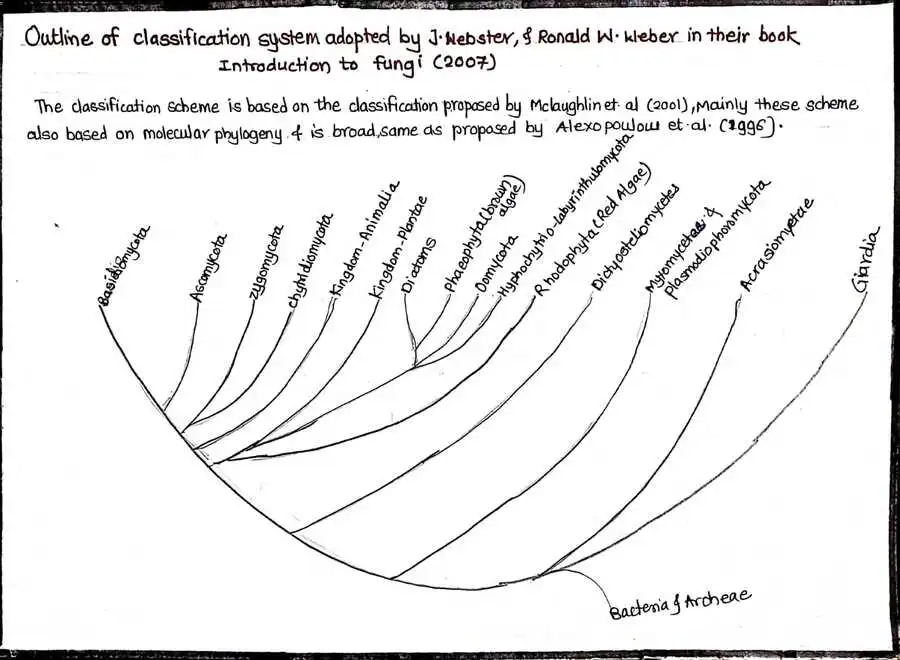
The modern classification of fungi is mainly based on molecular biology and genetic sequencing.
Traditional classification relied heavily on morphology, but modern systems use the following:
- DNA sequencing
- Ribosomal RNA analysis
- Molecular phylogeny
- Evolutionary relationships
Modern fungal taxonomy has improved the accuracy of fungal identification significantly.
“Students interested in fungal classification, medical mycology, and biotechnology should also explore the latest microbiology courses that can open doors to research, healthcare, and industrial careers.”
Conclusion
The classification of fungi is one of the most important foundations of microbiology because it helps students, researchers, and microbiology study lovers understand the enormous diversity of fungal organisms. From traditional systems like the Ainsworth classification of fungi to modern DNA-based taxonomy, fungal classification continues to evolve with scientific advancements. As researchers discover new fungal species and explore their applications in medicine, biotechnology, agriculture, and environmental science, awareness of fungi becomes increasingly valuable for future scientific progress—so could the next revolutionary discovery in microbiology come from a fungus that is still waiting to be classified?
Frequently Asked Questions (FAQ’s)
1. What are the major types of fungi?
The major fungal groups are:
Phycomycetes
Ascomycetes
Basidiomycetes
Deuteromycetes
2. What is the classification of fungi?
Answer: Fungi can be classified in several ways depending on their structure, reproduction, nutrition, medical importance, and evolutionary relationships.
3. What is the morphological classification of fungi?
Answer: It is the classification of fungi based on fungal structure and appearance, such as yeasts, molds, and mushrooms.
4. What is Ainsworth’s classification of fungi
Answer: It is a traditional fungal classification system proposed by G.C. Ainsworth based on reproductive and structural characteristics.
5. What is Alexopoulos and Mims’ classification of fungi?
Answer: It is a fungal classification system emphasizing morphology, reproduction, and evolutionary relationships.
6. Why is fungal classification important?
Answer: It helps in identifying fungi for medicine, agriculture, biotechnology, and disease control.
7. What is the modern classification of fungi?
Answer: Modern classification of fungi uses DNA sequencing and molecular biology for accurate fungal taxonomy.
8. What are recent trends in classification of fungi?
Answer: Recent trends include molecular phylogeny, genome sequencing, environmental studies, and AI-based taxonomy.
One of the best article I have read on classification of fungi. It’s very informative and well structure. Amazing explanation.