
Learn what are the properties of cytokines and chemokines are with simple explanations, day-to-day examples, and their role in immune cell communication and inflammation.
Introduction
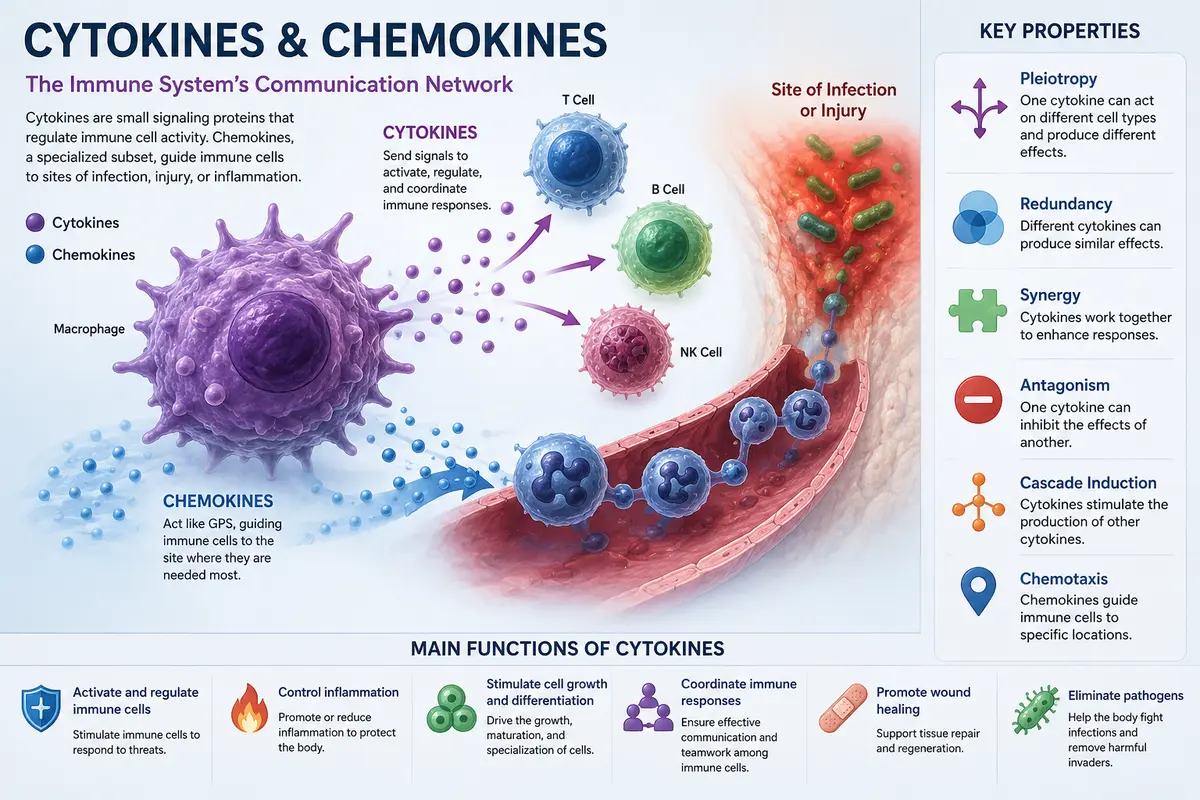
Imagine your neighborhood in flames. Within seconds someone calls the fire department, police are directing traffic, ambulances are arriving to rescue the injured, and volunteers are leading people to safety. Each group has a different responsibility, but they communicate and work together to solve the emergency quickly. Your immune system works pretty much the same way. When your body gets injured or invaded by bacteria, viruses, or other bad germs, millions of immune cells have to talk and coordinate their behavior. To do this they use small signaling proteins called cytokines and chemokines.
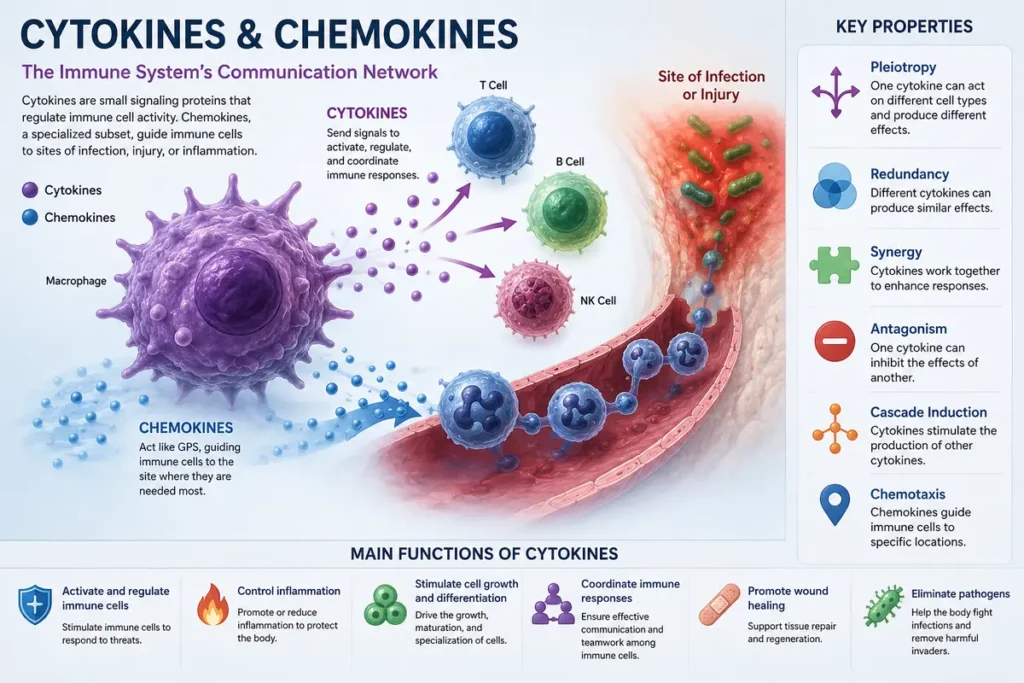
Cytokines are the body’s messaging system, sending out signals to tell immune cells when to activate, multiply, attack pathogens, regulate inflammation, or stop the immune response once the danger has passed. Chemokines are a specialized subset of cytokines that act like a GPS navigation system, guiding immune cells to the exact location of infection, injury, or inflammation where they are needed most.
A simple everyday example is ordering food on this delivery app. When you place an order, the app tells the restaurant to make your meal. This notification is like a cytokine, which relays instructions among immune cells. When your food is ready, our delivery partner uses GPS to find your address.
The GPS guidance is like a chemokine guiding immune cells to the exact location of infection or tissue damage. If the notification is not received, the restaurant will not prepare the food, and if the GPS is not working, the delivery partner will not know where to deliver. Similarly, without cytokines and chemokines, immune cells would not know what to do or where to go, and the body would not be able to mount an effective immune response.
To carry out these important functions, cytokines and chemokines have a number of unique properties: pleiotropy (one cytokine may act on different cell types), redundancy (different cytokines may have similar effects), synergy (working together to enhance a response), antagonism (one cytokine may inhibit another), cascade induction (stimulating the release of additional cytokines), and chemotaxis (guiding immune cells to specific locations).
These amazing properties allow the immune system to communicate effectively, to control inflammation, to destroy pathogens, to restore damaged tissues, and to maintain overall immune homeostasis. Cytokines and chemokines are thus essential coordinators of the body’s defense system.
To understand the basics of immune signaling molecules, explore the National Library of Medicine (PubMed).
History
The activity of cytokines was first identified in the mid-1960s, when soluble factors, usually proteins or glycoproteins, were found in supernatants from in vitro cultures of lymphocytes that could control the proliferation, differentiation, and maturation of cells of the immune system.
These factors were produced by cultured lymphocytes when stimulated to do so by activation with antigens or nonspecific mitogens (molecules that induce cell division or mitosis). However, biochemical isolation and purification of cytokines were initially hampered by their low concentrations in culture supernatants and the lack of well-defined assay systems for individual cytokines.
The introduction of hybridoma technology allowed the production of artificially created T-cell malignancies that constitutively produced IL-2, allowing for its purification and characterization. Gene cloning techniques developed during the 1970s and 1980s then made it possible to create pure cytokines by expressing the proteins from cloned genes taken from hybridomas or from normal leukocytes after transfection into bacterial or yeast cells.
Using these pure cytokine preparations, researchers were able to identify cell lines whose proliferation depended on the presence of a particular cytokine, thereby providing them with biological cytokine testing systems.
Since then, monoclonal antibodies specific for several cytokines have made it possible to build quick, quantitative, cytokine-specific immunoassays. ELISA assays measure the concentrations of cytokines in solution, ELISPOT assays quantitate the cytokines secreted by individual cells, and cytokine-specific antibodies can be used to identify cytokine-secreting cells using intracellular cytokine staining followed by flow cytometry or immunofluorescence microscopy.
What are the properties of cytokines and chemokines?
Understanding the characteristics of cytokines and chemokines helps us comprehend how these extraordinary signaling molecules govern immunity, inflammation, tissue repair, and overall health through precise communication and coordination among immune cells.
Cytokines Mediate the Activation, Proliferation, and Differentiation of Target Cells
Cytokines attach to specific receptors on the membranes of target cells, generating signal transduction pathways that ultimately modify enzyme activity and gene expression. The susceptibility of a target cell to a particular cytokine is determined by the presence of unique mem-brane receptors. In general, cytokines and their fully assembled receptors exhibit very high affinity for one another, with dissociation constants for cytokines and their receptors ranging from 10⁻⁸ to 10⁻¹² M−1.
By stimulating or inhibiting the activation, proliferation, and/or differentiation of different cells, controlling the secretion of other cytokines or antibodies, or, in certain situations, actually causing programmed cell death in the target cell, cytokines control the strength and duration of the immune response.
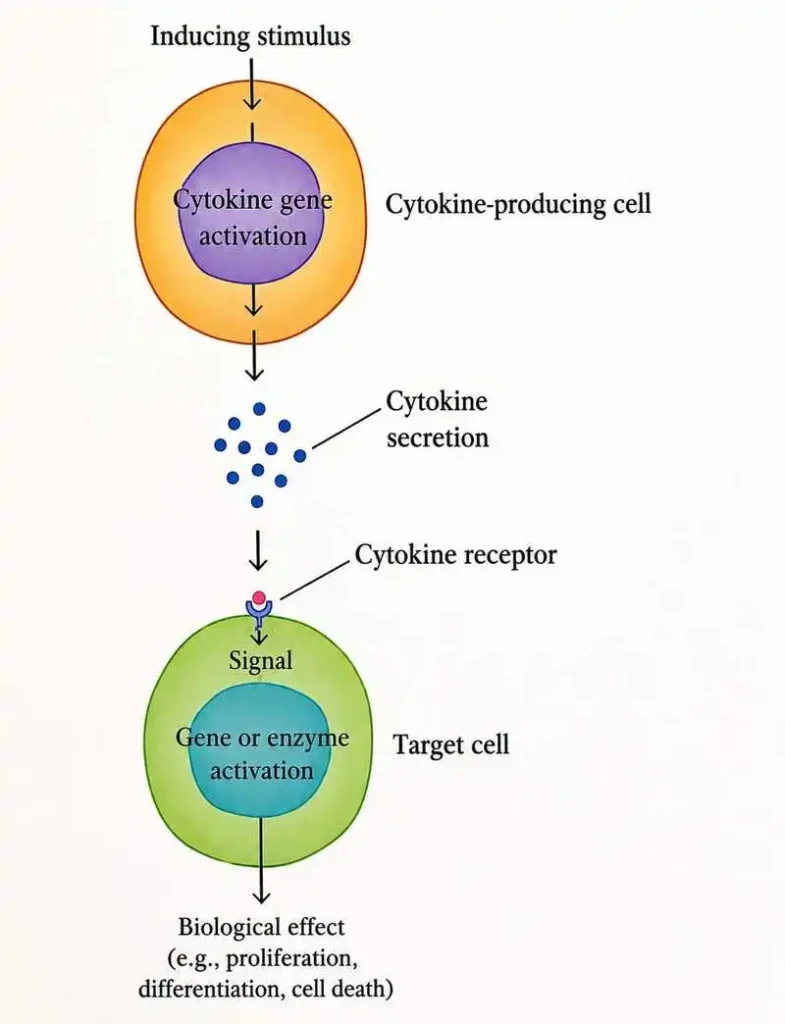
Cytokines regulate the intensity and duration of the immune response by stimulating or inhibiting the activation, proliferation, and/or differentiation of various cells; by regulating the secretion of other cytokines or of antibodies; or, in some cases, by actually inducing programmed cell death in the target cell.
In addition, cytokines can alter the expression of numerous cell-surface receptors for chemokines, other cytokines, or even for themselves. Therefore, the activity of numerous cell types involved in the immune response can be influenced by the cytokines released by even a small number of antigen-activated lymphocytes.
Cytokines show the qualities of pleiotropy, redundancy, synergism, antagonism, and cascade induction, which permit them to regulate cellular activity in a coordinated, interactive way. A cytokine that generates different biological effects depending on the nature of the target cells is said to have a pleiotropic activity, whereas two or more cytokines that mediate similar functions are said to be redundant.
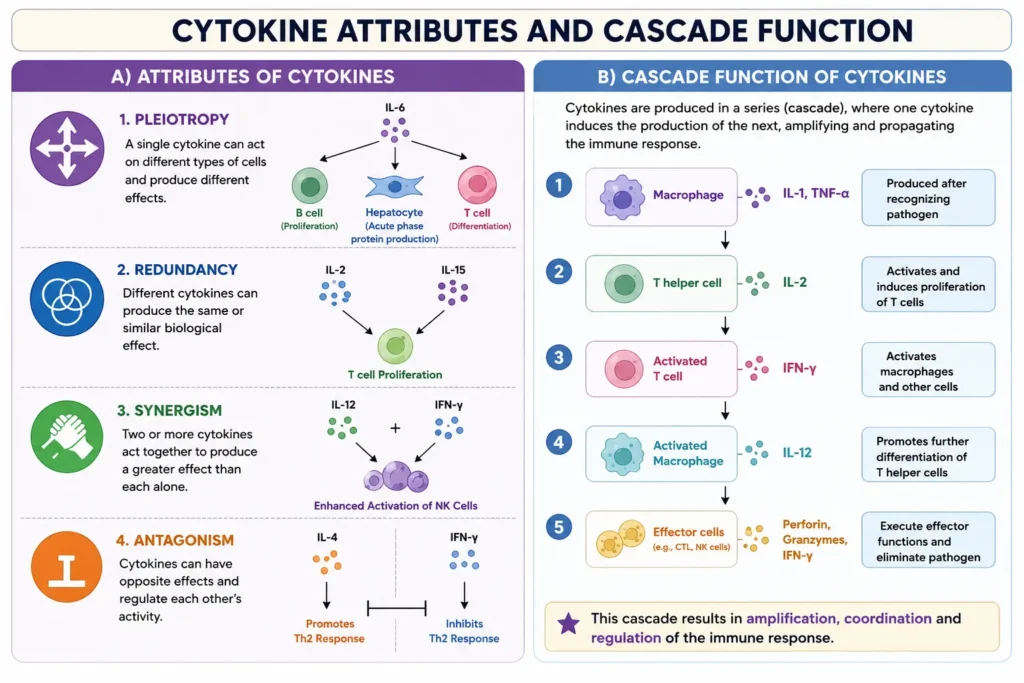
Cytokine synergy occurs when the combined effect of two cytokines on cellular activity is larger than the additive effects of the separate cytokines. In some circumstances, the effects of one cytokine impede or antagonize the effects of another. When one cytokine acts on a target cell, it causes that cell to create one or more cytokines, a process known as cascade induction.
Cytokines Have Numerous Biological Functions
Although a variety of cells can generate cytokines that educate the immune system, the primary producers are TH cells, dendritic cells, and macrophages. Cytokines secreted from various cell types are capable of stimulating large networks of interacting cells. Among the several physiological reactions that need cytokine involvement are the production of cellular and humoral immune responses, the activation of the inflammatory response, the regulation of hematopoiesis, and wound healing.
As new proteins are discovered through study, the total number of proteins exhibiting cytokine activity increases every day. However, it should be noted that many of the functions described have been discovered through investigations of the effects of recombinant cytokines, which are occasionally introduced alone to in vitro systems at doses that are not physiologic.
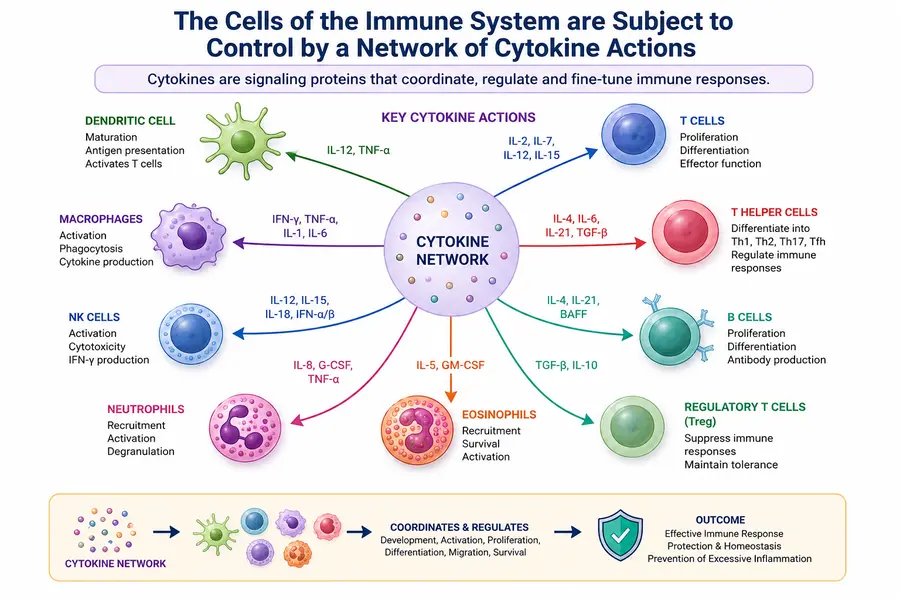
Cytokines seldom, if ever, function independently in vivo. Rather, a target cell is exposed to a milieu that contains a number of cytokines, whose combined antagonistic or synergistic activities might have a wide range of outcomes. Furthermore, as we now know, cytokines frequently trigger the production of additional cytokines, creating cascades of activity.
Cytokines Can Elicit and Support the Activation of Specific T-Cell Subpopulations
Each subpopulation of helper T cells is in charge of supporting a distinct set of immunological tasks. For instance, TH1 cells release cytokines that stimulate the differentiation and activation of cytotoxic T cells and macrophages, resulting in a mostly cytotoxic immune response that identifies and eliminates intracellular bacteria and virus-infected cells.
Interferon (IFN) and IL-12 are cytokines that cause T cell differentiation. TH2 cells, on the other hand, stimulate B cells to produce antibodies that neutralize and bind extracellular pathogens, making them vulnerable to complement-mediated destruction and phagocytosis. TH2 cell generation is aided by IL-4 and IL-5.
IL-17 and IL-23 stimulate the production of TH17 cells, which sustain the inflammatory state and encourage the differentiation of activated neutrophils and macrophages. The binding of various cytokine combinations to T-cell surface receptors, each of which contains a distinctive array of intracellular signals and directs the helper T cell along a specific differentiation pathway, thus supports the differentiation and activity of each distinct T-cell subpopulation.
Cell Activation May Alter the Expression of Receptors and Adhesion Molecules
The established specificity of the immune system seems to be at odds with cytokines’ capacity to activate the majority, if not all, of members of specific immune cell subpopulations. For instance, during the immunological response, what prevents cytokines from nonspecifically activating all T cells?
A cell must express receptors for a signaling molecule in order to react to it; hence, the expression of signal receptors can regulate a cell’s responsiveness to a chemical signal. For instance, chemokine receptor expression on the T-cell surface changes when a T cell is stimulated by an antigen.
Therefore, only cells that have already been triggered by antigen are instructed to migrate to neighboring lymph nodes or the spleen when chemokine signals are received through these receptors. Additionally, activation-induced modifications to the adhesion molecules produced on the cell membrane guarantee that stimulated cells move to and stay in the area most appropriate for their activity.
Antigen-induced T-cell activation also increases the expression of receptors for proliferative cytokines like IL-2 and differentiative cytokines like IL-4. Thus, only T cells that have been activated by antigen are primed to migrate and receive the proliferative and differentiative signals required for them to operate as mature immunological effector cells after antigen encounter.
The immune system frequently uses this pattern of activation-induced change in the expression of adhesion molecules, chemokine receptors, and cytokine receptors on the cell surface.
Cytokines Are Concentrated Between Secreting and Target Cells
When a B-lymphocyte is activated by a cognate T cell or a T-cell is activated by an antigen-presenting dendritic cell, the corresponding pairs of cells are kept in close proximity to one another for several hours without ever entering the bloodstream. Additionally, the stimulating cell’s secretory apparatus is oriented during this time of intimate cell-cell contact such that the cytokines are released directly at the area of the cell membrane that is closest to the recipient cell.
The effective concentration of cytokines in the area of the membrane receptors may be orders of magnitude higher than that observed outside the contact region of the two cells due to the close nature of the cell-cell interaction and the directed release of cytokines by the secretory apparatus. Therefore, the biology of the responding system and the geography of the cell contacts involved must always be considered when discussing membrane receptor affinity and cytokine concentrations within tissue fluids.
Furthermore, cytokines often work for a brief period of time and across a short distance due to their short half-lives in the bloodstream or other extracellular fluids into which they are produced.
Signaling Through Multiple Receptors Can Fine-Tune a Cellular Response
In the immune response, cytokine and chemokine signaling can be a remarkably intricate and sometimes redundant process. Receptors can bind to several signaling molecules, while effector chemicals like cytokines can bind to multiple receptors. The chemokine system, where about 20 receptors bind to almost 50 different chemokines, is the best example of the latter idea. Additionally, signaling via antigen-specific receptors can collaborate with effector molecule signaling.
At the level of the biological response, signals from many receptors must then be integrated, with various pathways working to adjust the expression of certain transcription factors or the activity of specific enzymes. As a result, a cell’s real biological reaction to a given chemical signal depends on all of the receiver cell’s downstream adapters and enzymes in addition to the specific receptor for that signal.
Conclusion
Cytokines and chemokines are essential signaling molecules that coordinate and regulate the body’s immune response. While cytokines function as communication messengers that activate, regulate, or suppress immune cells, chemokines specialize in directing these cells to sites of infection, inflammation, or tissue injury. Their unique properties—including pleiotropy, redundancy, synergy, antagonism, cascade induction, chemotaxis, receptor specificity, and localized signaling—enable the immune system to respond rapidly and precisely to harmful pathogens while maintaining immune homeostasis.
A thorough understanding of these properties not only explains how the immune system protects the body but also provides the foundation for developing targeted therapies against infections, autoimmune diseases, inflammatory disorders, and cancer. Thus, cytokines and chemokines serve as indispensable coordinators of immunity, ensuring effective communication, controlled inflammation, tissue repair, and overall health.
FAQs
1. What do cytokines and chemokines do?
Answer: Cytokines are signaling proteins that help immune cells communicate, regulate inflammation, fight infections, and promote tissue repair. Chemokines are a specialized type of cytokine that guide immune cells to the exact site of infection or injury, ensuring a rapid and targeted immune response.
2. What are the general properties of cytokines and chemokines?
Answer: Pleiotropy (one molecule acting on different cell types), redundancy (different molecules producing similar effects), synergy (working together to enhance responses), antagonism (one inhibiting another), cascade induction (stimulating the release of other cytokines), and chemotaxis (chemokines guiding immune cells to sites of infection or injury) are among the general characteristics of cytokines and chemokines. These characteristics guarantee efficient immunological cooperation and communication.
3. What are three characteristics of cytokines?
Answer: Three key characteristics of cytokines are the following:
Pleiotropy – One cytokine can produce different effects on different cell types.
Redundancy – Different cytokines can perform similar functions.
Synergy – Two or more cytokines can work together to produce a stronger immune response.
4. What are the main functions of cytokines?
Answer: The main functions of cytokines are to activate and regulate immune cells, control inflammation, stimulate cell growth and differentiation, coordinate immune responses, promote wound healing, and help eliminate pathogens.
5. What are the main functions of cytokines?
Answer: The main functions of cytokines are to activate immune cells, regulate inflammation, stimulate cell growth and differentiation, coordinate immune responses, promote wound healing, and help eliminate pathogens.
References
- Abbas, A. K., Lightman, A. H., & Pillai, S. (2024). Cellular and Molecular Immunology (11th ed.). Elsevier.
- Delves, P. J., Martin, S. J., Burton, D. R., & Roitt, I. M. (2023). Roitt’s Essential Immunology (14th ed.). Wiley-Blackwell.
- Murphy, K., & Weaver, C. (2022). Janeway’s Immunobiology (10th ed.). W. W. Norton & Company.
- Kindt, T. J., Goldsby, R. A., Osborne, B. A., & Kuby, J. (2013). Kuby Immunology (7th ed.). W. H. Freeman and Company.
- Punt, J., Stranford, S. A., Jones, P. P., & Owen, J. A. (2021). Kuby Immunology (9th ed.). W. H. Freeman.
- Compiled notes on Properties of Cytokines and Chemokines (adapted from standard immunology texts and prepared for educational purposes).