Welcome to Microbiology World

Learn about Bacteriology, Virology, Immunology, Genetics, Molecular Biology, Laboratory Techniques, and much more. Our goal is to make microbiology education accessible, accurate, and enjoyable for everyone.

Start your journey into the invisible world of microbes and expand your scientific knowledge with trusted educational resources.

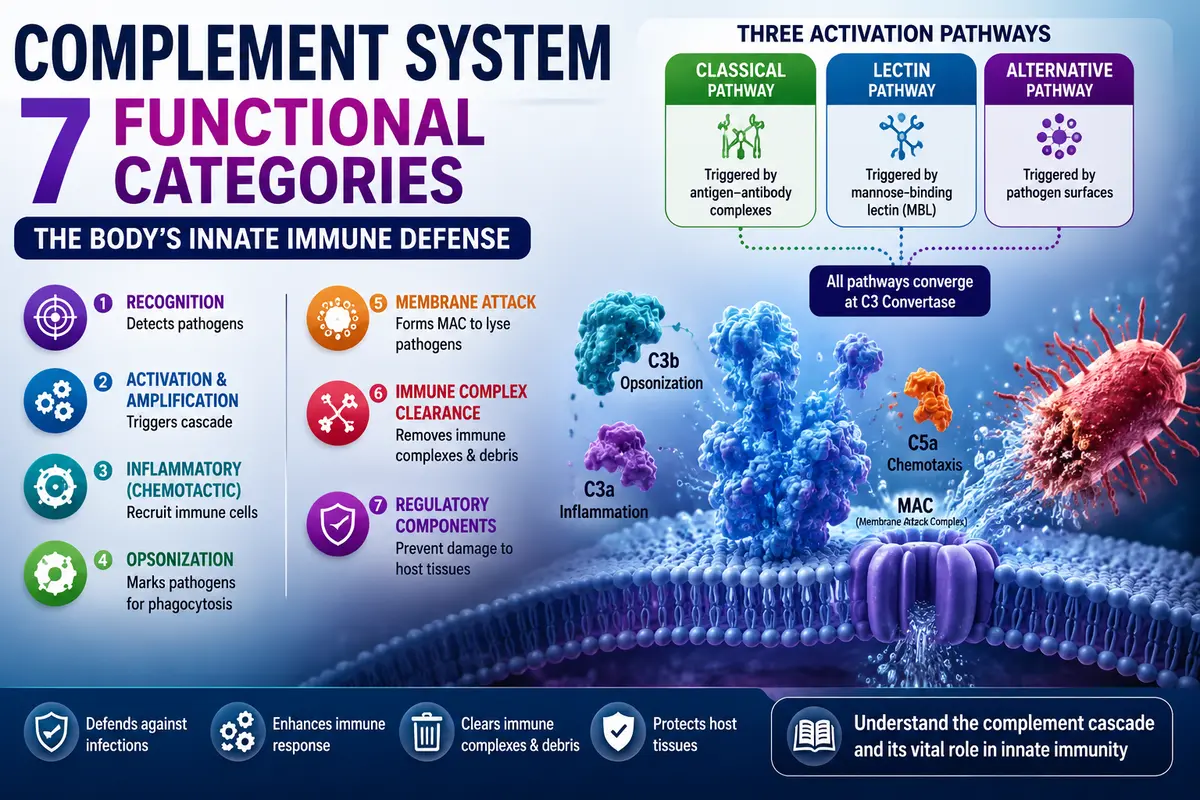
Which Are the Proteins Involved in the Complement System? 7 Essential Immune Defenders

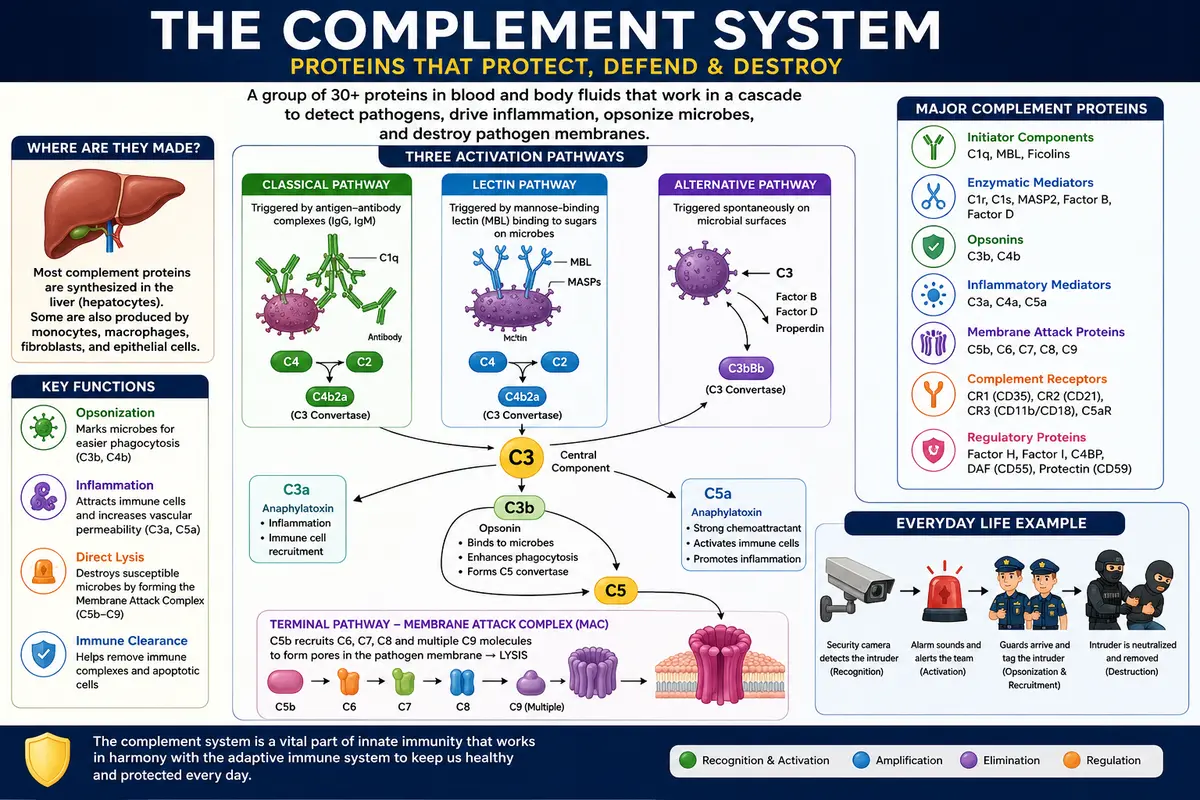
Which are the proteins involved in the complement system?

Learn about the which are the proteins involved in the complement system, their functions, activation pathways, and role in immunity with simple explanations and a day-to-day life example. Introduction Think of your body like a city well protected. The city uses police officers, security cameras, alarms, and emergency teams to work together to find and … Read more

Steps in Staining Processes: 3 Powerful Steps for Clear Microscopic Results

Learn the steps in staining processes, including smear preparation, fixation, and staining, with clear explanations and practical examples for microbiology students. Introduction Staining is a key technique in microbiology for visualizing microorganisms and their cell structures using the microscope. Most bacterial cells have little natural color and are very hard to distinguish, as they are almost transparent. This problem is solved by staining, where specific dyes are used to produce contrast between the microbial cell and the surrounding background. Depending on the purpose, the shape, arrangement, size, cellular architecture, and some characteristics of microorganisms can be identified with different staining methods. The process of staining can be likened to painting a small object in everyday life. Suppose, for example, you need to find the details of a small design … Read more

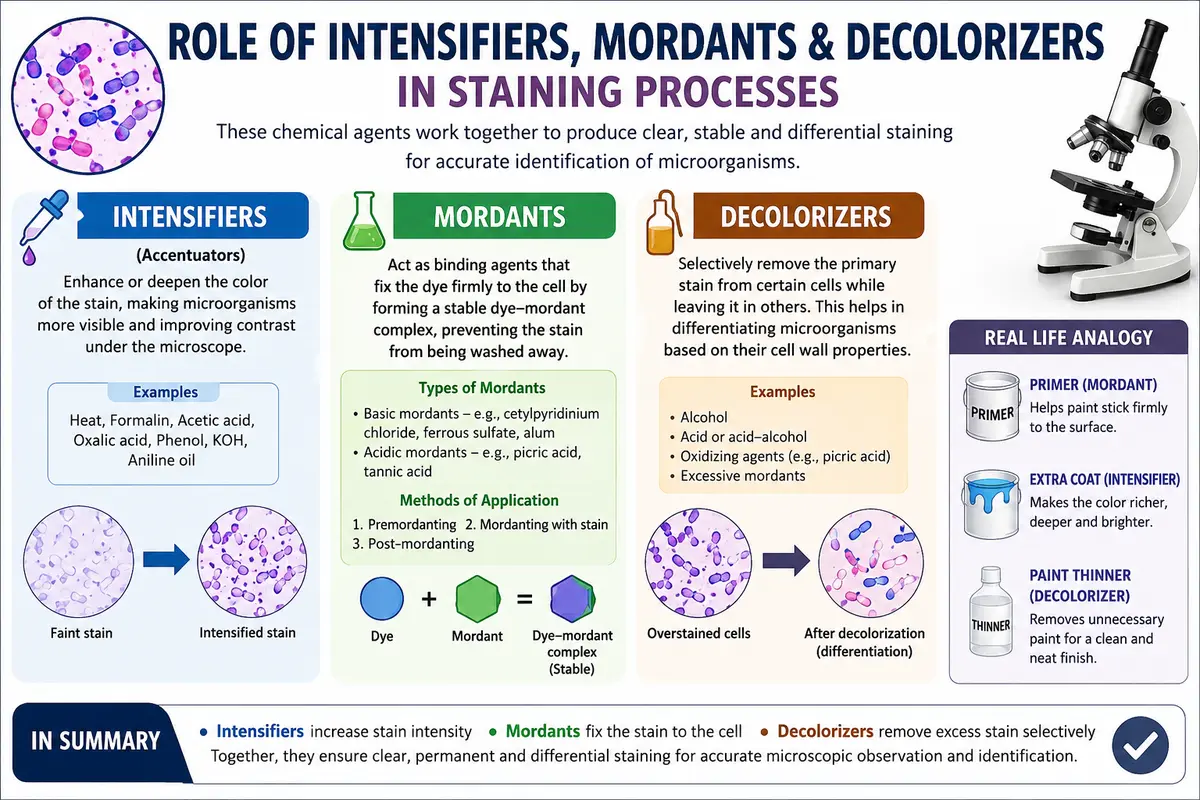
What is the role of intensifiers, mordants, and decolorizers in staining processes? Powerful Facts Explained

role of intensifiers, mordants, and decolorizers in staining processes

Learn the role of intensifiers, mordants, and decolorizers in staining processes, their mechanism, types, examples, and importance in microbiology and Gram staining. Introduction Consider yourself painting a wooden door or producing a stunning piece of art. To ensure that the paint sticks to the surface firmly, you first apply a primer. To make the color … Read more

The Nature of Staining Processes: 2 Proven Concepts and Theories

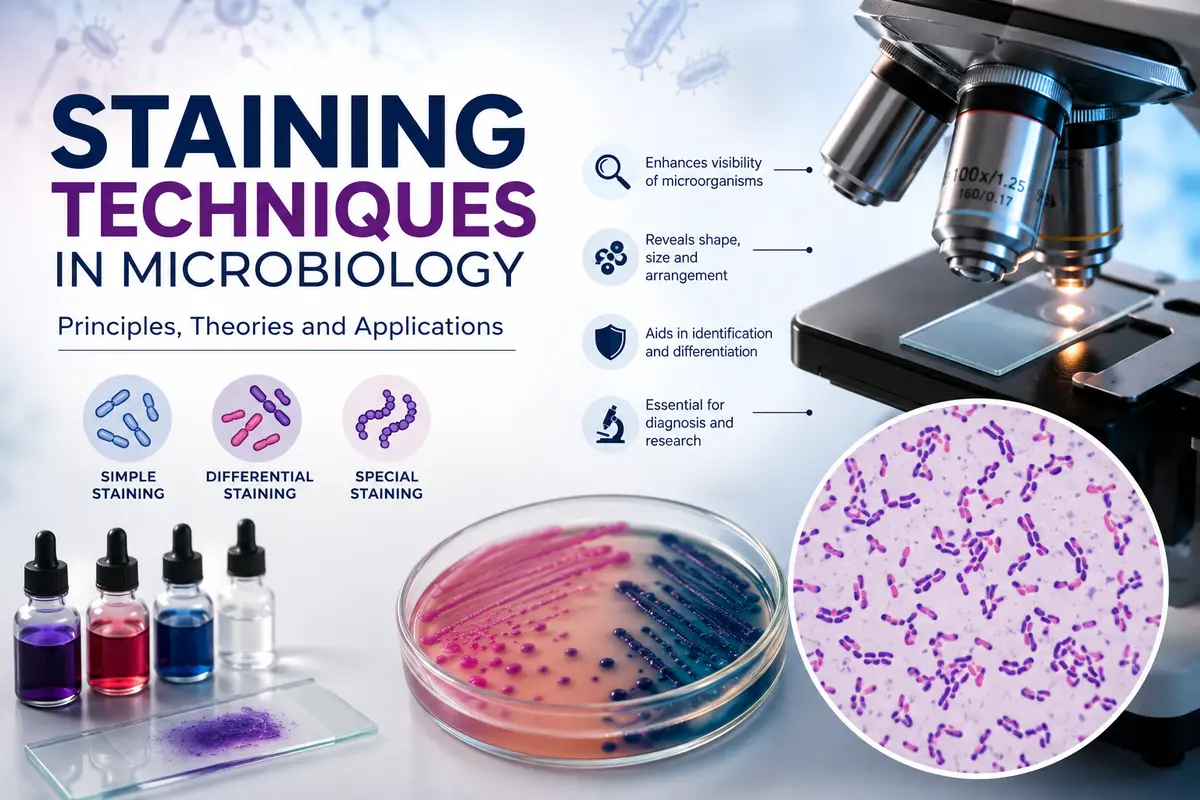
The Nature of staining processes

Master staining techniques in microbiology with easy explanations of the nature of staining processes, with physical and chemical theories, principles, applications, and exam-oriented notes. Introduction Staining is an essential technique in microbiology, histology, and pathology to view microscopic organisms and cells under a microscope. Most bacteria and other microorganisms are naturally transparent and almost colorless. … Read more

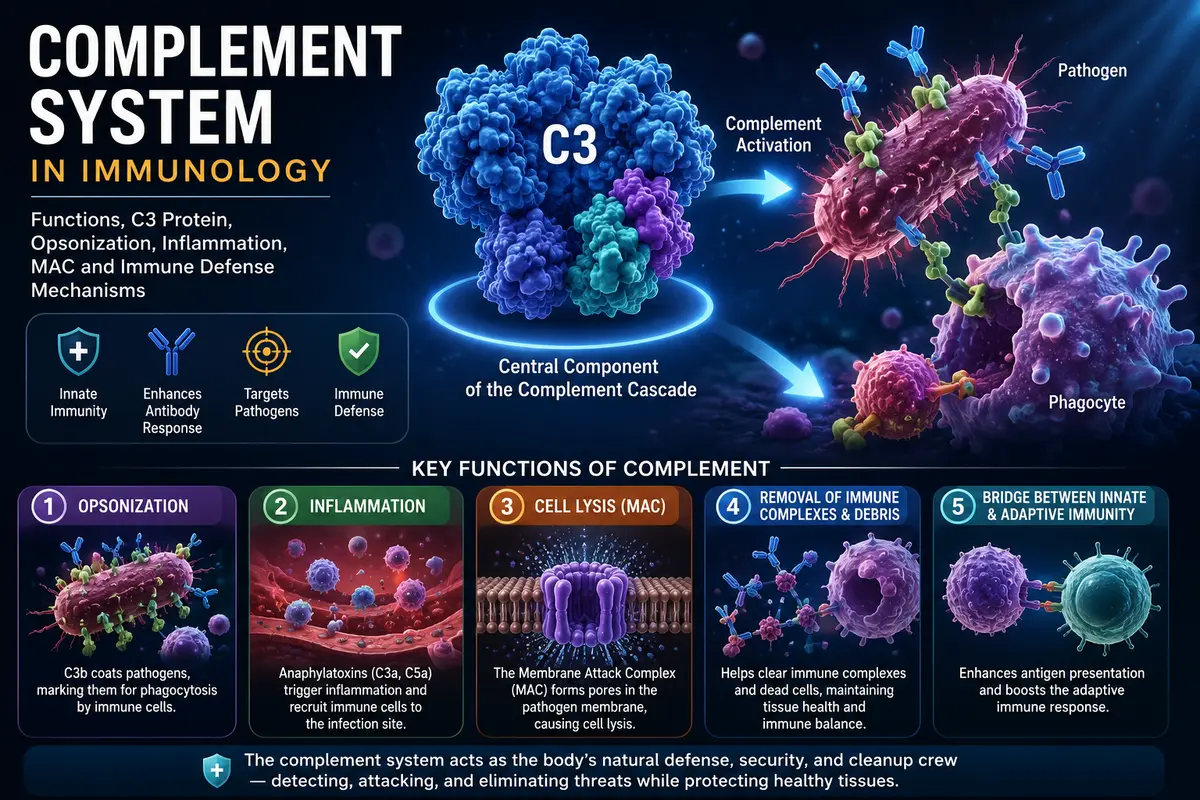
What are functions of complement?

What are functions of complement?

Explore the complement system in immunology, including What are functions of complement?, C3 protein, opsonization, inflammation, MAC, and immune defense mechanisms. Introduction An integral component of the body’s innate (natural) immune system is the complement system. It is made up of about thirty membrane-bound and plasma-bound proteins that are inactive and circulate in bodily fluids … Read more

Seven Functional Categories of Complement Components: 7 Powerful Roles in Immunity

Seven functional categories of complement components

Learn about the seven functional categories of complement components, its components, functions, three activation pathways, seven functional categories, and role in innate immunity. Introduction Imagine a fire emergency response system. A smoke detector identifies the fire, an alarm alerts everyone, firefighters arrive to control it, the fire is extinguished, the area is cleaned, and safety … Read more

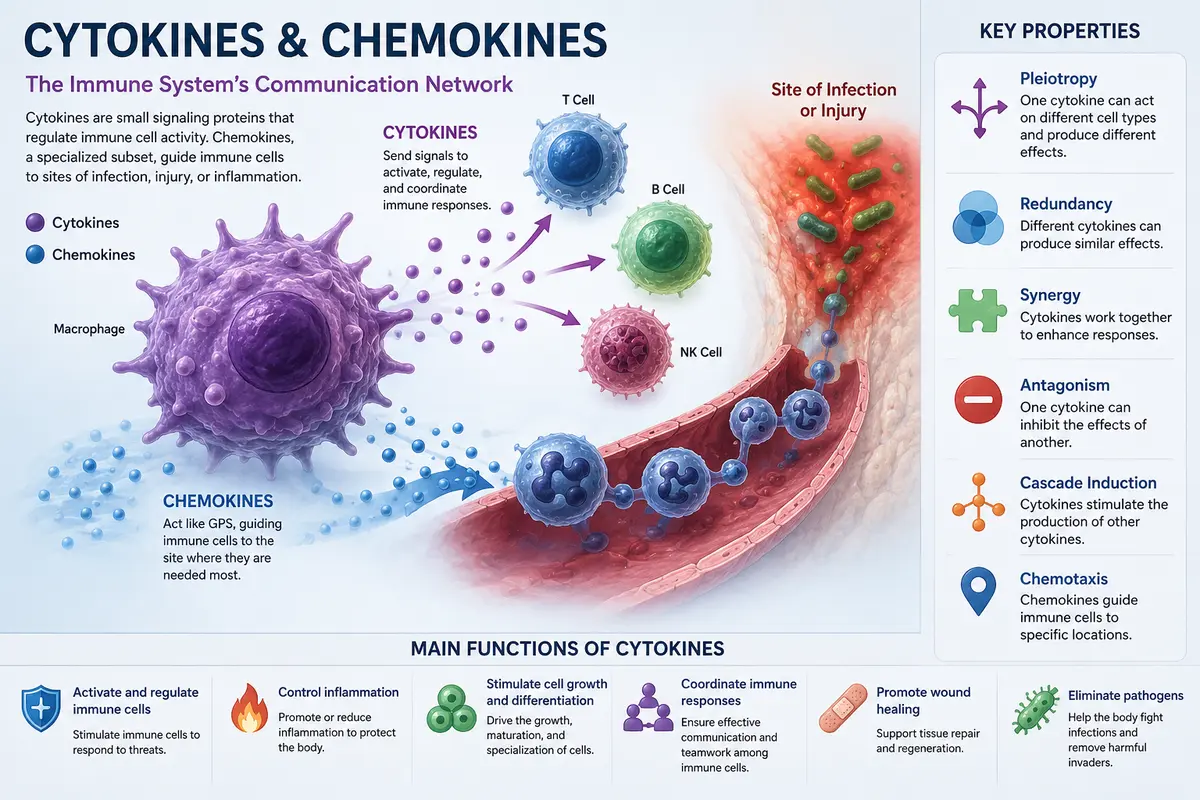
What Are the Properties of Cytokines and Chemokines? 8 Important Facts

What are the properties of cytokines and chemokines?

Learn what are the properties of cytokines and chemokines are with simple explanations, day-to-day examples, and their role in immune cell communication and inflammation. Introduction Imagine your neighborhood in flames. Within seconds someone calls the fire department, police are directing traffic, ambulances are arriving to rescue the injured, and volunteers are leading people to safety. … Read more

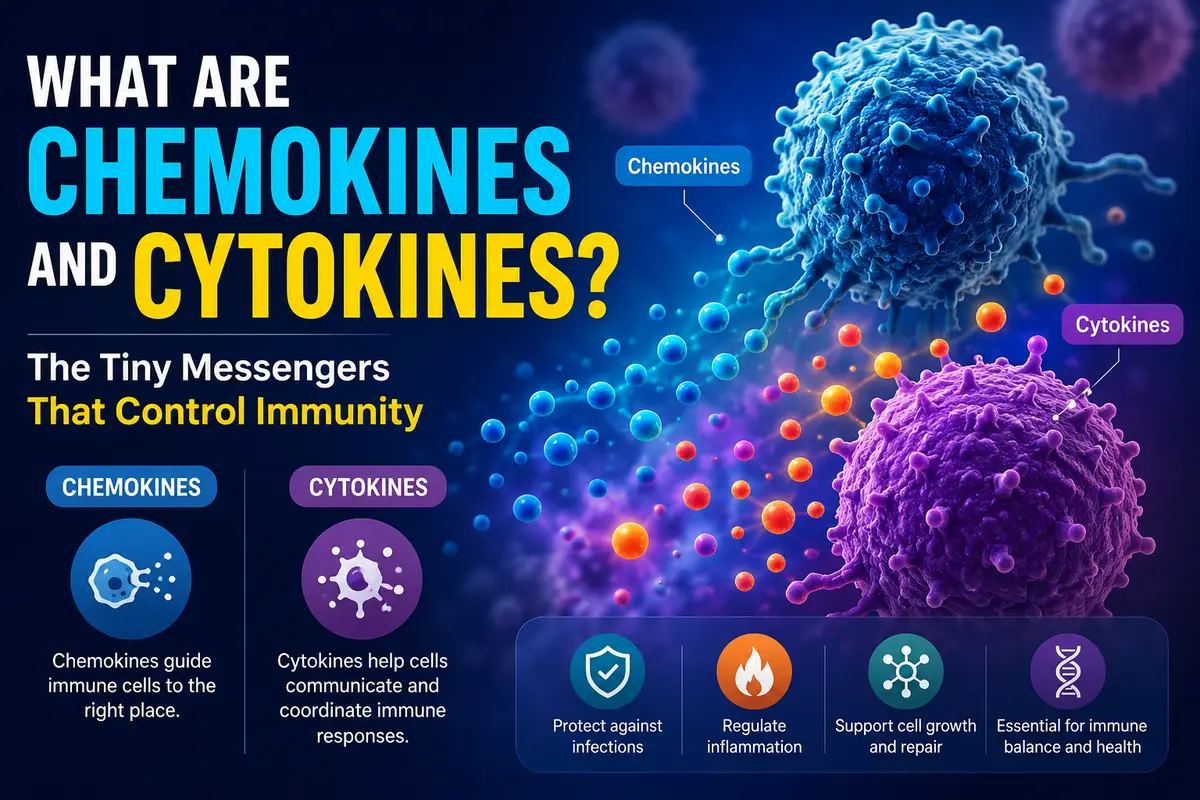
What Are Chemokines and Cytokines? 7 Easy Facts You Need to Know

What are chemokines and cytokines?

Learn what are chemokines and cytokines are, their types, functions, signaling mechanisms, receptors, and roles in immune response, inflammation, disease, and therapy. Introduction Suppose you slice your finger while cutting vegetables. Within a few minutes the injured area will turn slightly red and swollen, and your body will soon be repairing the wound without you even thinking about it. This incredible process is regulated by your immune system, like a city’s emergency response system. A fire emergency is when someone raises the alarm, the emergency responders get instructions, and the firefighters rush to the exact location. In much the same way the immune system relies on efficient communication among its cells. Small signaling proteins known as cytokines and chemokines mediate this communication. When bacteria, viruses, fungi, or damaged cells are found, immune cells release cytokines, chemical messengers that alert, activate, and coordinate other immune cells. When bacteria, viruses, fungi, or damaged cells are recognized, immune cells release cytokines, which operate as chemical messengers that warn, activate, and coordinate other immune cells. … Read more
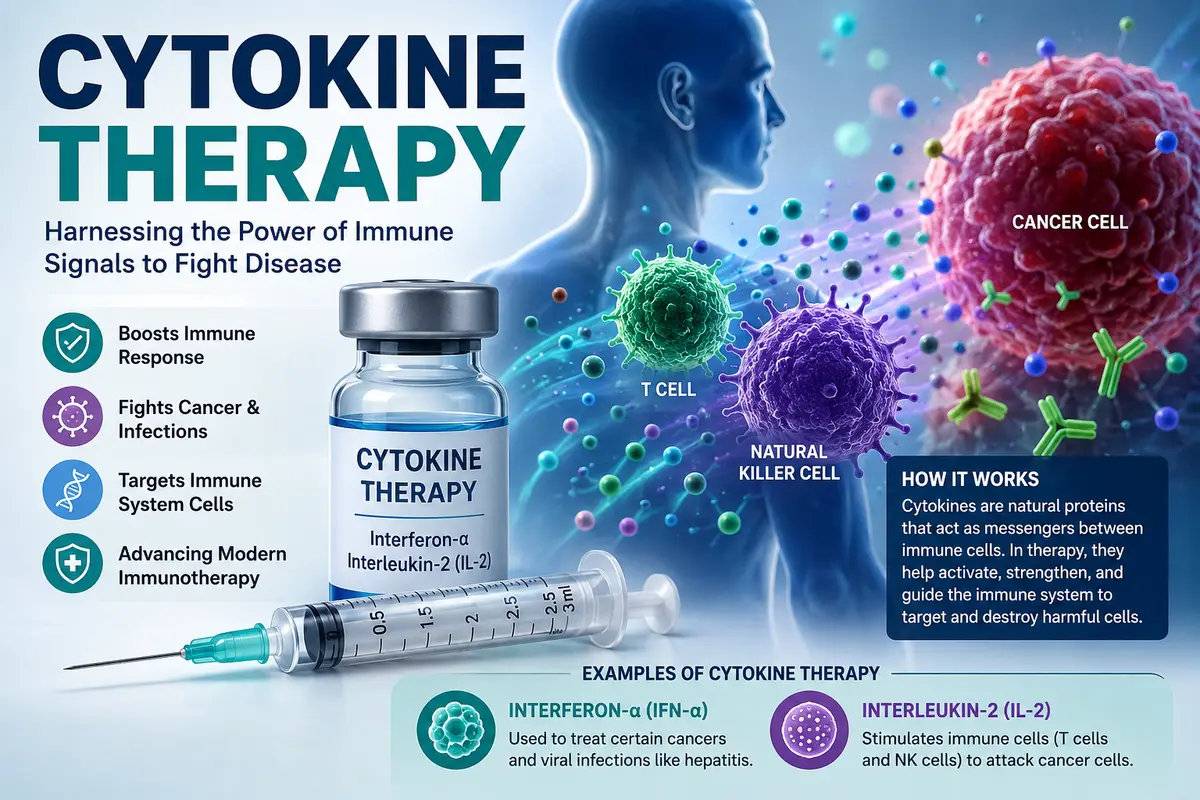
What Is an Example of Cytokine Therapy? Powerful Proven Examples & Benefits

What is an example of cytokine therapy?

Learn what is an example of cytokine therapy is with real-life examples. Explore interferon, interleukin-2, how cytokine therapy works, its benefits, uses, and side effects. Introduction Picture Your City With a Well-Trained Emergency Response Team When there is fire, firemen rush in, police control traffic, and medical teams help injured people. But these teams don’t … Read more

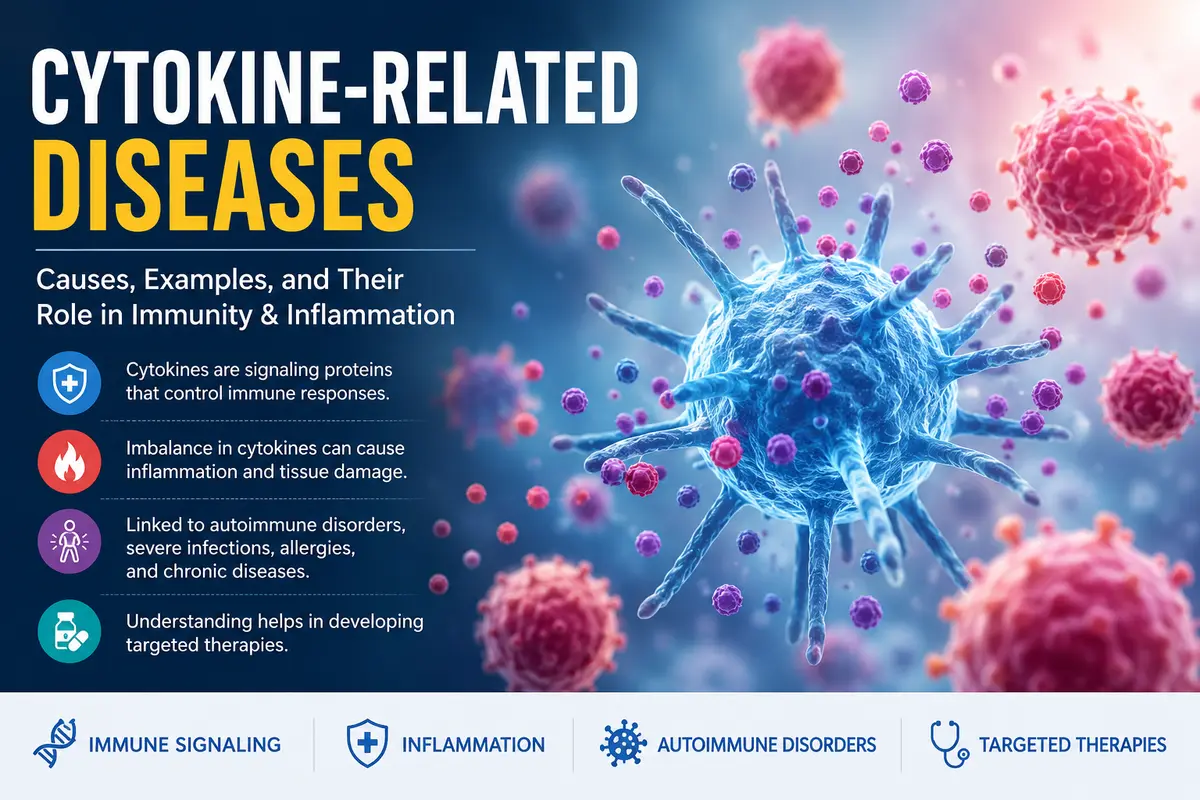
What are cytokine-related diseases?

What are cytokine-related diseases?

Learn what are cytokine-related diseases are, how abnormal cytokine signaling affects the immune system, common examples, causes, and their role in inflammation and immunity. Introduction Imagine your home’s fire alarm system. When there is a small amount of smoke, the alarm alerts everyone so they can quickly put out the fire. But if the alarm … Read more

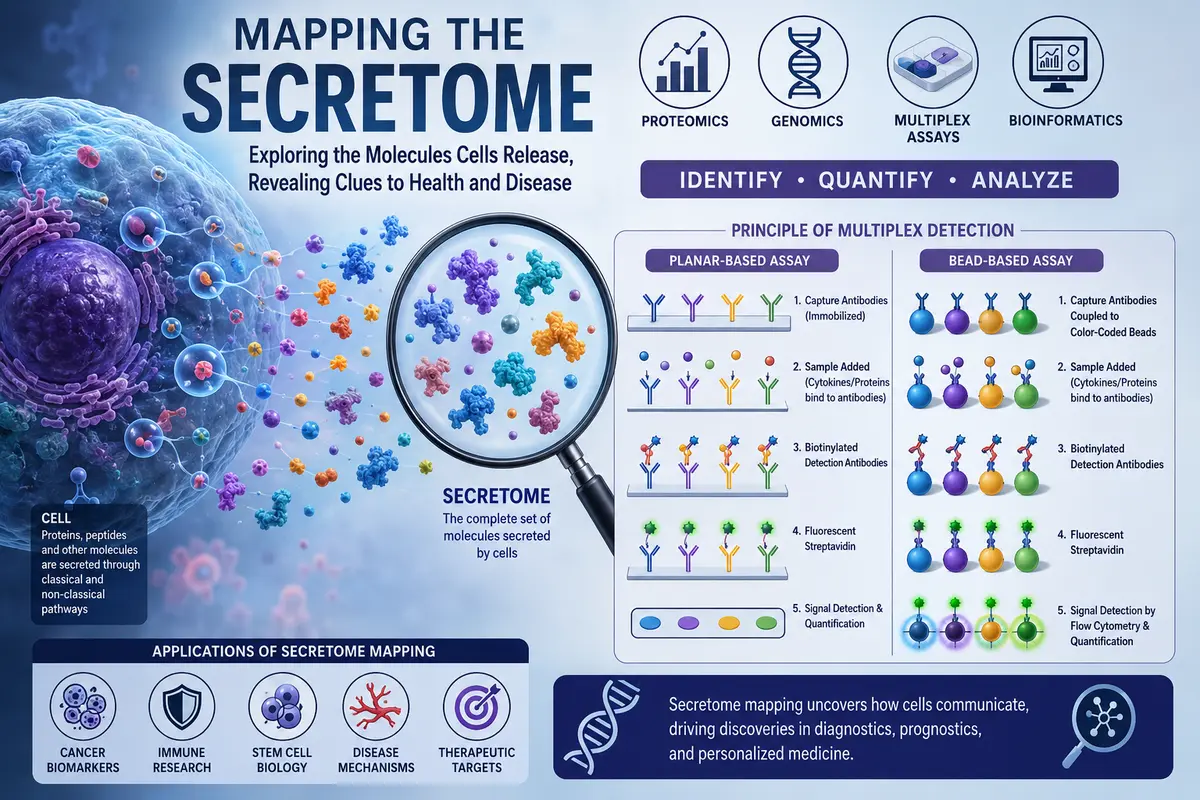
Methods Used to Map the Secretome: 10 Powerful Secrets Explained

Methods used to map the secretome

Learn about methods used to map the secretome; secretome mapping; its methods; multiplex assays; proteomics; bioinformatics tools; and applications in cancer research, biomarkers, and precision medicine. Introduction Imagine your neighborhood has a group of people who quietly leave useful items outside their homes every morning—fresh milk, newspapers, or food parcels. By looking at what is … Read more

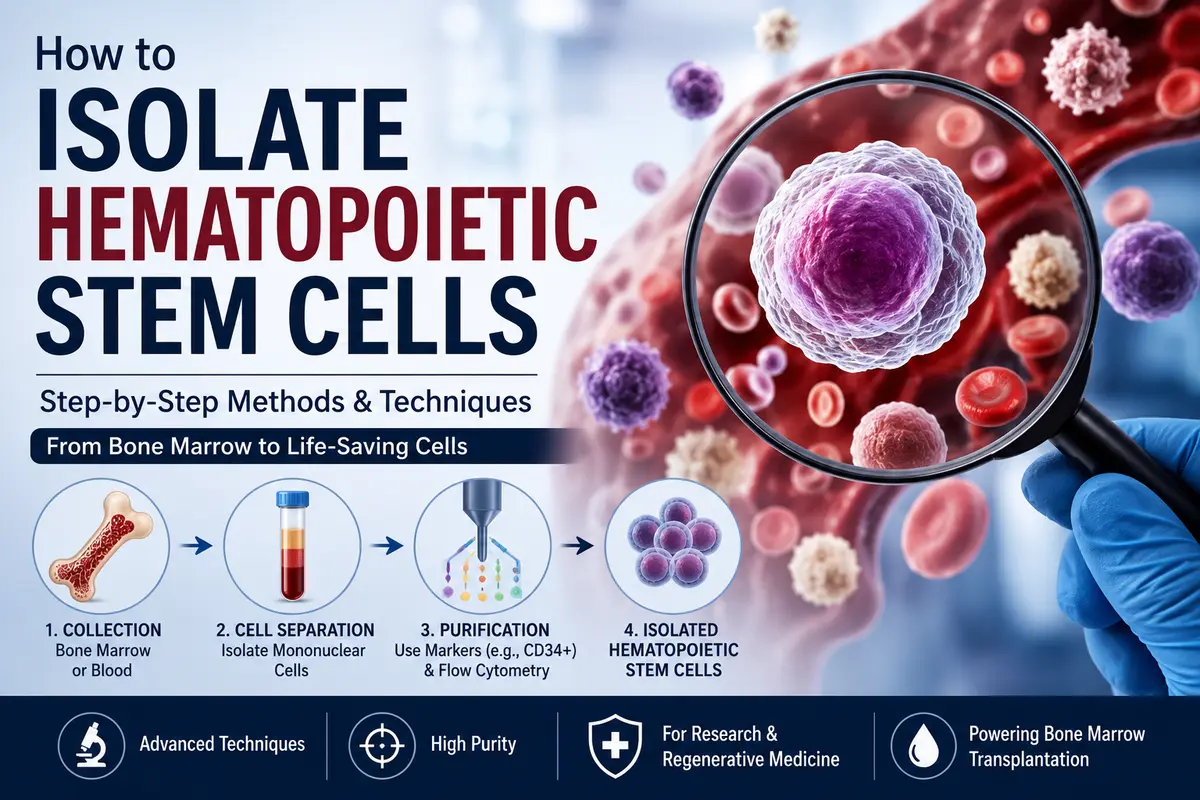
How to Isolate Hematopoietic Stem Cells? best explained

How to isolate hematopoietic stem cells?

Learn how to isolate hematopoietic stem cells using simple, step-by-step methods. Understand bone marrow collection, cell separation, and purification techniques. Introduction Imagine you have a huge basket filled with different kinds of fruits—apples, oranges, bananas, grapes, and mangoes—but your teacher asks you to pick only the apples. You wouldn’t throw away the whole basket. Instead, … Read more